
Since April this year, rebels – made up of Tuareg separatists and radical Islamists with links to Al-Qaeda – have gained hold of northern Mali. Boosted by the surplus of weapons plundered from Gaddafi’s stashes and the skills developed in fighting for the dictator, the rebels consolidated their hold on the north after a coup in the south ousted President Amadou Toumani Toure. A ragtag bunch of mercenaries and jihadists, the rebels hardly count as freedom fighters.
Since the putsch, regional security organisation Ecowas has been both encouraging a return to democracy and promoting the case for a military deployment to oust the northern rebels. Up until now the UN has refused to give its blessing to any intervention before more detailed plans are drawn up. The deadline for those plans is nearing and the will appears to be there, from the people both in southern and northern Mali, Mali’s West African neighbours, France and increasingly the US. Things are moving into place for another Libyan-style intervention – about time too.
Conditions are right. The outcome of the rebellion is most likely not quite the Tuareg’s cup of gunpowder tea. Not long after their handy alliance with ever-trustworthy Islamist extremists, the Tuareg found themselves being subjected once again to laws by unwanted powers. Sharia law was imposed upon the northern half of Mali (the size of France) and the cultural heritage which the residents have protected for so long (citizens often had to hide some of Africa’s oldest literature from foreign invaders), was being torn down in the name of Islam, including mosques, shrines and libraries. The treachery of the Islamists has led many to believe that ordinary Tuareg fighters may be more amenable to peace talks, leaving the Islamists isolated. Ecowas members have already offered troops to a potential force, France is cajoling Algeria into supporting the move and the US is also interested. After the close presidential election, Obama might finally feel ready to do something more risky than hugging grannies and buying pizza.
But why intervene at all? The suffering of those fleeing or living under Sharia law is convincing enough. Locals have endured executions, amputations and enforced prostitution, whilst their children have been ‘recruited’ by the military. Refugees exceed 200,000 and many are training in combat, in what are worryingly ethnocentric divisions. The separatist crisis has exacerbated the growing hunger crisis.
The case for Ecowas to intervene makes itself heard nearly every day in the streets of Ecowas’ driving member, Nigeria. An Islamist insurgency led by the group Boko Haram leaves scores dead all too frequently. Recent reports have suggested that the organisation is receiving training at Al-Qaeda’s new digs in Mali. The kind of zealous violence that Nigeria is experiencing might be expected to then be exported to the rest of the neighbourhood. Allowing Al-Qaeda a new stronghold in the Sahel region would threaten to destabilise a region that already suffers greatly from droughts and poor governance.
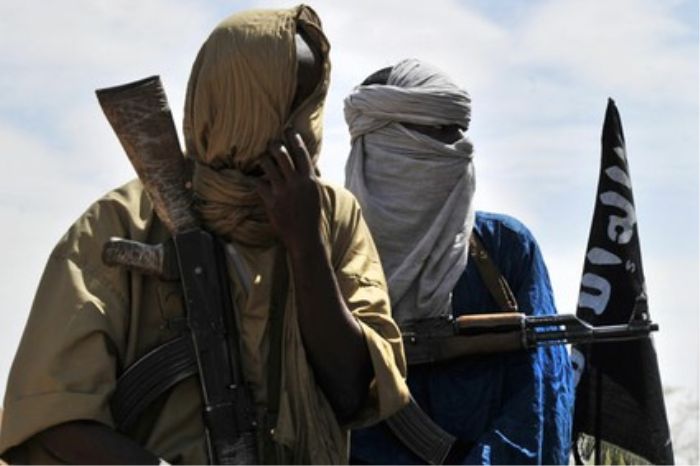
(Issouf Sanogo/AFP/Getty Images)
The West has its share of work to do too. It was the Libyan intervention that triggered this crisis on the other side of the Sahel. Having saved one population from tyranny, it’s time to save another. Moreover, the threat of Islamic extremism is clearly not constrained to the uniformly barren landscapes that Al-Qaeda and company usually inhabit. The ability of radicals to strike all over the world means that the need to combat them takes place on a global scale.
There are significant benefits to Western help. Any form of intervention from the West would be primarily airborne. And it is airborne capability that Ecowas most need. Nigeria, Burkina Faso and Niger have already promised troops that will compliment the Malian government’s own. Air support would provide intelligence and precision strikes. This would minimize the civilian death toll as Malian and Ecowas troops would be less reliant on attrition tactics to avoid losses. It would also mean the eyes of the West would be on the ground force, deterring against human rights abuses. Rebel movement of soldiers would be greatly curtailed, which would in turn bring about a speedier end to the conflict.
The weight of Western involvement in itself may be enough to drive those in the north who are less keen on the sport of temple-bashing to the bargaining table. It would also give the West more influence over the outcome where it could press for a political solution to the Tuareg’s grievances, i.e. a degree of autonomy. If the West can offer its support on the basis of a political settlement afterwards, it may also prevent another Tuareg uprising from occurring again.
About the Author






[…] depth can be added to the background with this article from International Political […]
[…] dispersion of vast amounts of artillery in the region have had a direct effect on facilitating the Malian crisis emergence and AQMI rearmament. Today we are faced with an even more devastating type of weaponry in […]