
The polls in Italy are closed. As things stand, it looks clear from every angle that the results of the vote are disappointing. Controversial considerations draw in as it unfolds that parliamentary elections will not result in a clear majority in the upper house, whilst in the lower house bargain will be required on a daily basis. Hence, some points can be outlined:
Firstly, the Center Left coalition – formed by the Democratic Party and some leftist-green parties – managed to be the winner party with 29.6% of the votes in the lower chamber (Camera dei Deputati) and 31.2 % in the upper house (Senato). However, they overcome the Center-Right forerunners by a slim 0.5%, dumping any cheerful prediction, and despite a comfortable 10% buffer gap in polls drafted only a month ago. In brief, the winning coalition margin is so slight that it will not allow for the creation of a stable government to lead the country in turbulent times.
Secondly, as difficult as it may seem to believe, he did it again. Berlusconi is back. The Center Right alliance, that put together the disgraced Northern League and the Freedom People Party, was supposed to barely reach enough votes to have a good significance in Parliament. Then, Berlusconi came back. He showed to everyone, to European watchers, to the financial markets, and to whoever did not see him fit to rule Italy, despised him and his “bunga bunga” parties, that he and only he knows exactly what Italians want.
In the space of few weeks, he brought back a disbanded party to a prime political force, managing to line up classic flamboyant performances on the TV screen with launches of populistic initiatives that would be unrealizable in any foreseeable future, and gained consensus day after day.
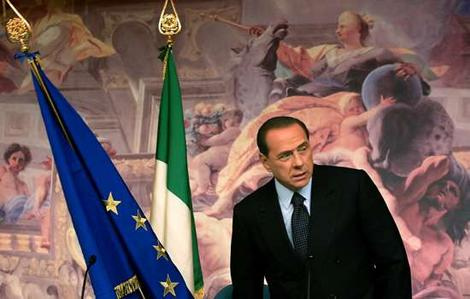
Image credit: rockcohen/Flickr
Thirdly, new entities appeared on the Italian political spectrum. On the one hand, Five Stars Movement (M5S), a civic organisation lead by the former comedian Beppe Grillo, is unexpectedly the third political party of Italy, reaching an impressive margin of 25.5 % of votes. Its members participate on voluntary basis, call for the political disarray of the traditional forces of Italian politics, and argue against corruption and the gerontocracy of “the old parties”.
On the other, Mario Monti, the economist who ruled the country for the past year, managed to lead a newly formed party in Parliament, but he will not be able to make any numerical difference, having reached a slim 10% in both houses. His Civil Choice underperformed, confirming that the government he lead in the past year did not meet the high expectations of the first months in office, and ending up largely seen as the example of a gray European technocracy who buried the country in taxes.
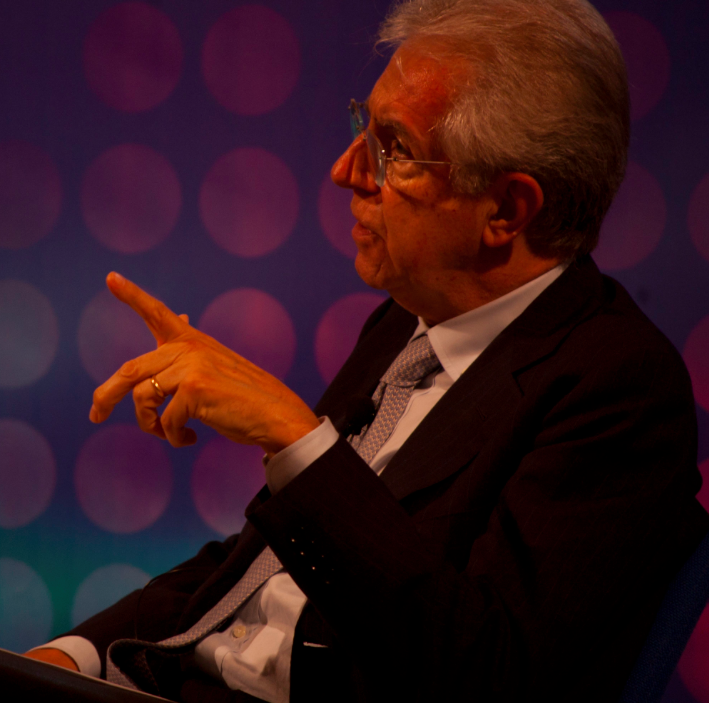
Image Credit: Photopedia
In the past 20 years, elections in Italy have been largely dominated by a stale political class that has lead the country towards a deep and acute recession, with no ability to take any serious economical counter measure until too late. Berlusconi was Prime Minister most of those years, and it seemed a relief to many that Mr Monti acted as an acceptable exit strategy just over a year ago. A comeback looked unlikely, but observers and political analysts forgot to understand the divided and distressed Italian society that lives through dire years of economic depression and zero growth. There is an Italy that looks outside the boundaries of Italy, who believes in new technologies and in modernisation as the way not to be caught in stagnation, who thinks that Italy needs to exploit its younger forces and that the political class is outdated and corrupt. On the other hand, there is an Italy who smirks with suspect at the discrepancies of globalisation and of the European Union, at the dull rules of gray technocrats, who experiences a social tissue lacerated by divisions made difficult by daily counter-positions of one-too-many rules difficult to understand. People who look around them, in their own backyard, and believe in localism, who hate political claques and feel that the State is unfair and uneven, and see Rome as a distant exorcism of something they hardly belong to. Then, there is a large ageing population that feels unrest at the mercy of the economic crisis, who feel naked in front of a world too different and new to be understood, afraid to lose any privilege acquired over the years and doubtful of too much innovation.
The elections are a fine balance among these elements, and it is clear that Berlusconi is able to respond to all of them. To the first Italians, he is the one they despise or love, he is the amazing catharsis of evil and bad practice, or , on the opposite, the enlightening example of a successful self-made man, champion of machismo and savoir faire. To the second, he is appealing because he knows how to talk to them, he knows what to say and how to say it at the right moment, or he is able to present himself as the right hand who understands. To the pensioners and aging people, he is the example of the man who came out of their younger years, he is sympathetic, polished, and talks the right words and makes the perfect gesture when the climax is reached.
It is to no surprise that it is him, and him alone, who managed to raise the stakes of the Center Right coalition. Berlusconi’s commitment has eventually payed.
The Center Left coalition made several mistakes in their campaign. Their paramount moment was reached when they hold primaries to choose the Prime Minister candidate. Impressive popular participation gave them such a leading in the polls, that apparently the Democratic Party in particular disregarded any serious long-term strategy until too late. In the end, the primaries elected the incumbent Secretary Mr Bersani as the runner, who evidently thought that the huge gap would lead him straight to the Prime Minister jo. However, many were unhappy with his choice, a representative of the old and never changing guard, and Mr Bersani was unable to revolt the positive energy created by the Primaries fervor into a winning strategy.
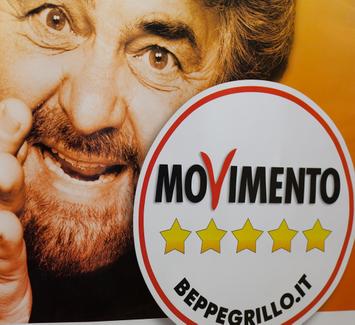 The real novelty of 2013 elections is the Five Stars Movement, and the stunning percentages reached are bringing turmoil to the traditional political forces. The Five Stars Movement has been able to differentiate its political offer and challenge the kingdom of the former mass parties, steered by a leader who battles with unrivaled stamina and language properties – even though not exactly Cicero in elegance. Beppe Grillo created an online community that was able to mobilise and make public every single step they took. They openly criticised the incumbent political class as being corrupted, nepotist and unfit to drive the country out of the mud of economic depression. Their slogans have been strong and direct, calling the political “dinosaurs” to resign and retire. The Movement argues for direct, web-based democracy, even though Beppe Grillo, an ex-comedian, sometimes exaggerates and swerves into populism and demagogy. The power of a party – they do not like to be called party! – born around the founder’s blog lies all in the polished and naive faces of its candidates. Far from being a candidate himself, Grillo has suggested online primaries to fill the lists of candidates to the Parliament, calls for strict rules that prohibits explicitly to be part of the mainstream media and broadcasts everything online, encouraging discussions on forums and meet-ups organised using the web. The newly elected MPs of his party have never been classical party members. They are nice common people, young and active, apparently driven into the political arena by a real will to change the traditional never changing environment.
Their presence in Parliament is a novelty that will, if they stick to the promise of “no compromise”, will make things difficult for anyone who is in government.
In conclusion, 2013 Italian Elections are disappointing. They are disappointing because it is unlikely that the new Parliament will support a Cabinet able to undergo strict reforms needed to keep Italy away from the shadows of a new Greece. It has yet to be seen how the financial markets will respond, but it is already clear that the dimmest dreams almost came true, and Berlusconi is yet again the one with a say in the sorts of Italy.
Moreover, there is a further issue to be added. The President of the Republic Napolitano, who was the main figure behind the Monti cabinet, is due to resign in May; by Constitution he cannot call off a new election in the last six months in office. Hence, one of the early duties of a foreseeable divided Parliament will be to nominate the next President of the Republic. Will Italy be able to survive the pressures?
See also:
About the Author






While Italy’s general election looks set to be inconclusive, the only real victors of the vote are the M5S, which was set to claim over 25% of the votes for the House, according to the interior ministry.
Grillo, whose Internet-based movement had tapped into public disenchantment with the established parties caused in part by a series of corruption scandals, said that “honesty will become fashionable now”.
The movement five star is strongly attacked by main televisions and newspapers (which are financed by the old political class) when it is an expression of democracy unprecedented in contemporary Europe.
Five star movement is not xenophobic or unconstitutional or anti-European.
Is a pacefully “non-association” internet based (last media free in Italy) consists of housewives, businessmen, workers, students, unemployed people, ordinary people, who are working to return their country to its citizens. They are trying to rescue Italy from mafia and corruption. http://en.wikipedia.org/wiki/Five_Star_Movement http://en.wikipedia.org/wiki/Beppe_Grillo
Questions: can President Giorgio Napolitano form a government without consent of any other elected officials?