
We all knew this day was bound to come sooner or later. Margaret Thatcher, Conservative Prime Minister from 1979 to 1990, has long suffered from ill-health, including a severe case of dementia. The hero of the right, and villain of the left, has finally passed away.
I happen to think that as death is something that is visited upon us all, and is upsetting for all who knew the person concerned, it is always in bad taste to celebrate the passing of anyone, no matter what they did. Sadly, it seems like not all people on the left agree with this sentiment.
The chant ‘Jelly and Ice Cream when Thatcher Dies’ is popular amongst many on the left, and whilst their anger and bitterness at Thatcher’s legacy is perfectly understandable, the macabre celebration of someone’s death is not. The same goes for the ‘Is Thatcher Dead Yet?’ website and the inevitable scores of ‘Death Parties’ in the coming days.
That said, how from a leftist perspective can Thatcher’s legacy be assessed? Broadly speaking, it is a highly negative one, that reversed gains made by ordinary people in the post-1945 consensus. Thatcherism was a counter-hegemonic force that reversed the leftward turn made in 1945 with a rightward one that owed more to pre-war free-marketeering than it did to her one nation predecessors like Ted Heath or Harold Macmillan.
The political space for Thatcherism derived from the crisis in the post-war consensus caused by a number of factors, including the ending of fixed exchange rates by President Nixon, the 1973 oil crisis that ended the cheap oil that was underpinning growth, and the ‘stagflation’ caused by a dramatic slowing of economic growth and rising inflation. Most controversially of all, trade unions, designed to be balanced against big business in the corporatist consensus, had reached their political zenith, and radical leaders wielded huge economic power. Thatcherism was not the best solution to these problems, if it was a solution at all. But the perception that something had to be done was a strong one and enough to carry the Conservatives to victory in the 1979 General Election.

In office it quickly became clear that Thatcher had planned a programme more radical than hardly anyone could remember. Her creed of monetarism decreed strict control of the money supply – which tackled inflation but caused unemployment to rise considerably. Worse, the policies of privatisation and sharp cuts in government spending meant that many state industries were closed for being not economically viable in a free-market sense. Whilst British industry was in a parlous state, simply removing it, rather than replacing it with a new, more modern strategy, devastated many Northern towns and cities, and put them into downward spirals from which they have never recovered. Worse, by relying instead on a City boom (there was huge deregulation of financial services in this period) and a housing bubble to drive growth, Thatcherism sowed the seeds for the current financial crisis by putting all of Britain’s economic eggs in one basket, and causing today’s chronic shortage of housing that has led to impossibly high house prices, a shortage of social housing, and a rising housing benefit bill in a bid to subsidise landlords.
Thatcher’s premiership also changed the political, as well as the economic weather. To their eternal shame, the opposition to Thatcher was hopelessly divided and incoherent. Thatcher’s share of the vote decreased in every election, but a combination of a Labour Party that swung violently to the left for the 1983 election and a Social Democrat-Liberal Alliance that hovered up an almost equal number of moderate voters meant the opposition to the government’s radical programme was never united enough to stop the economic and social misery.
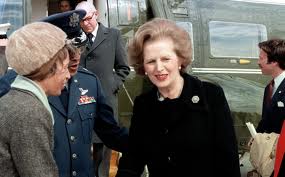
When asked what her greatest achievement was, Thatcher once replied ‘Tony Blair’, and the transformation of the Labour Party under Blair and Gordon Brown from a party that opposed Thatcherism, to one that merely tried to give it a more compassionate face, is certainly a remarkable feat. For me, the course set by Neil Kinnock in the late 1980s and early 1990s represented a sensible and credible stance for Labour and it was only the poor presentation of the party’s ideas to the electorate that cost Labour victory in 1992, not the social-democratic platform the party ran on. The defeat allowed the right of the party under Blair to take over and run from the centre, making important advances in government on human rights, low pay and peace in Northern Ireland, but fatally not challenging Thatcher’s legacy of inequality, deregulation and economic imbalance, again relying on the City and housing, leaving Labour and the country in a mess when the music stopped playing in 2008.
All paradigms have their day. The post-war consensus was put to an end by Thatcher, and it may be that her ideas soon face a Waterloo of their own, in the wreckage of the failed neoliberal model she helped to create. The main reason I so strongly back Ed Miliband’s leadership of the Labour Party is his talk of a new, progressive counter-hegemonic order, based on social-democratic conviction, not ‘Third Way’ consensus. As Margaret Thatcher, along with her post-war equivalent Clement Attlee, the only Prime Minister to really change Britain passes away, the fact that her ideas have endured and have to still be resisted so strongly is surely her greatest legacy.
About the Author






[…] agenda above his own country’s interests. It is remarkable how European leaders have learnt with the late Margaret Thatcherto be unflinching in the face of agony and suffering. Angela Merkel this week was reported as saying […]