
We gave her the name Nirbhaya – ‘fearless’.
We made an icon of a terrified woman, brutalised by six men on the night of 16th December – a date we will not be soon to forget. On Friday afternoon, friends texted friends, people were watching their living room TVs and citizens were waiting outside the District Court of Saket, when the nation found out that Akshay Thakur, Vinay Sharma, Mukesh Singh and Pawan Gupta had been sentenced to death.
Related: Rape: It’s Time To Stop Blaming The Victim
“We want justice”.
But is this it? Is this what the higher-ups call justice and is this what we, the people of India, must accept as justice?
Thousands had raised their voices, calling for the six rapists to be hung, one of whom needed no prompting and killed himself in his Tihar jail cell in March. The ‘juvenile’ was given three years’ jail time and the other four the death penalty – a cause for much celebration amongst Delhiites.
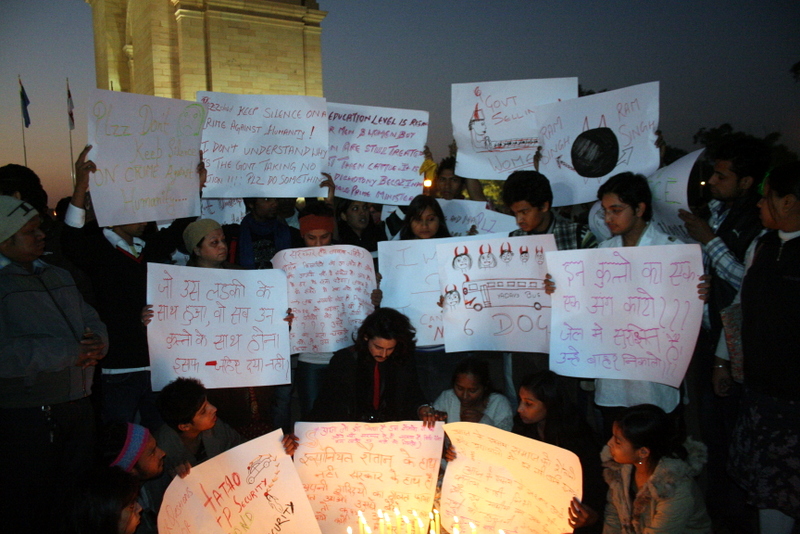
Silent protest at the India Gate. Image credit: ramesh_lalwani
In the nine months that it took to make a move on the rapists, 806 other rapes have taken place in Delhi alone, and the Mumbai gang-rape has found itself a spot in India’s ‘Hall of Shame’. Back in February and March I would read, on almost a daily basis, about women and children being rape and murdered – as if rapists out there had formed a conclave, determined to do as much damage as possible just in case they were booked before they were done. This isn’t because rapes are now taking place at an unprecedented rate. They always were. We’re only getting to hear about them now.
Related: Are female vigilantes the answer to stopping rapes in India?
If anything at all came out from the spate of protests in December 2012, it’s that people are no longer skirting the issue, no longer staying silent. Directives given to the police have made reporting sexual harassment less harrowing than before. But only just. The way sexual crimes are dealt with, nearly a year after outpourings on the streets has not changed much. Sentencing four men to death in a country where over 23,000 rape cases are pending in courts is too little, too late. It is a quick-fix and it is appeasement, but it is not justice. Why, then, are Soni Sori’s assailants not on death row with the country baying for their blood? Ankit Garg was shockingly rewarded a gallantry award, while his crimes went unnoticed. Two decades on and Bhanwari Devi’s assault lies forgotten, as does Thangjam Manorama, Aruna Shanbaug and the women of Kunan Poshpora. These are names that perhaps even some present at the December protests are unfamiliar with. Just how many people are we going to put on death row? Fathers, uncles, cab drivers, sons, brothers, husbands and ministers? Surely it would seem completely impractical. A mammoth task that would be lost to apathy and slow paperwork and crisp bank notes no doubt.
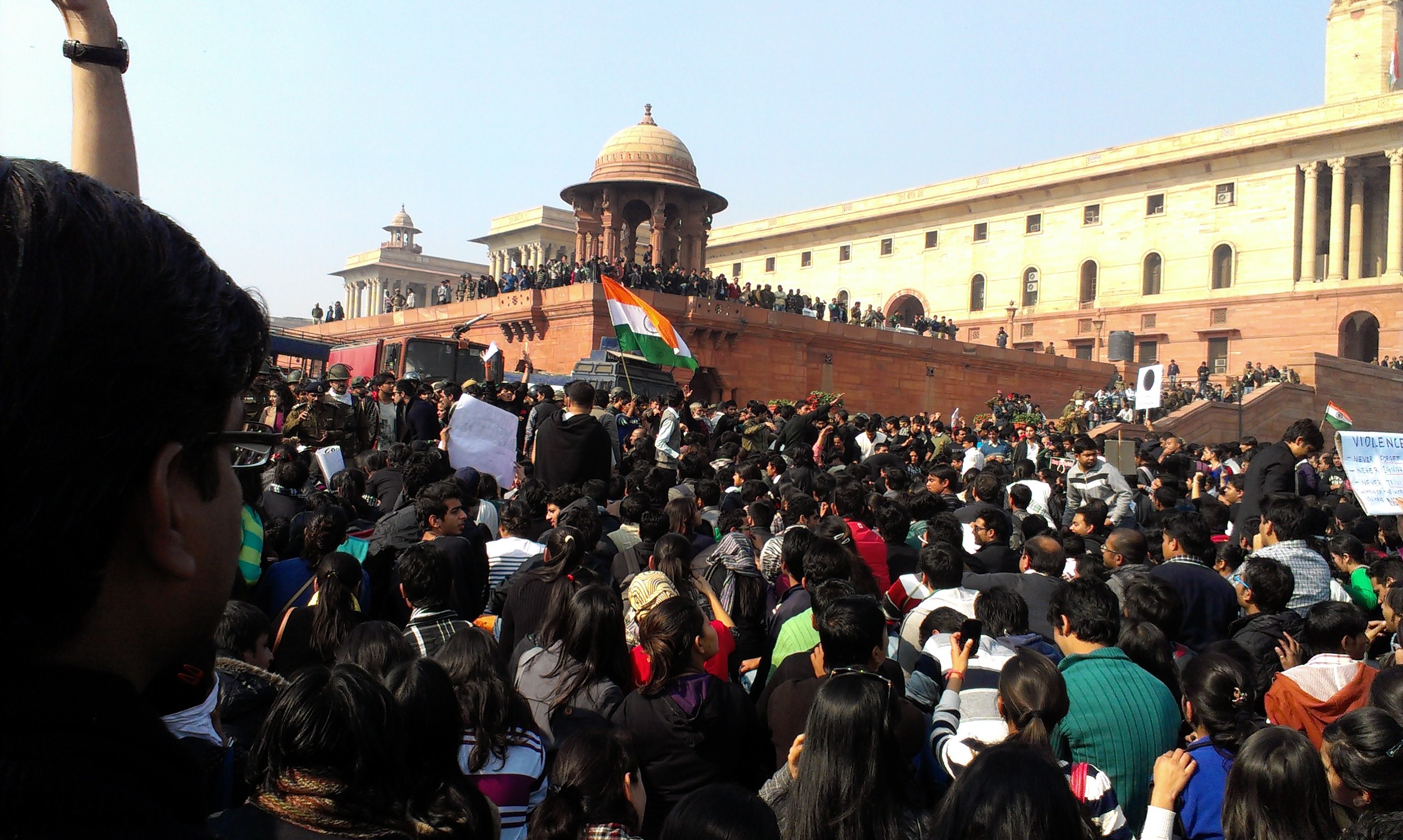
December 22, students protest the rising violence against women, Raisina Hill/ Rajpath. Image credit: Nilroy
From a purely emotional point of view, the death penalty can certainly masquerade as justice. But as far as solutions go, it isn’t a convincing one. In an interview, back in December, All India Progressive Women’s Association’s Kavita Krishnan refuted the death penalty as an effective punishment. For rape to be seen as an aberration meriting the very worst penalty shows a poor understanding of social realities in India, where sexual assault is about as routine as your morning cup of chai. The death penalty, statistically, does not deter sexual harassment, in fact it may even aggravate it, provoking murder and disposal of the body. The continued insistence on death for rape is in congruence with patriarchal customs that locate a woman’s honour between her legs. Perhaps the first step to countering the history and tradition of sexual domination and crime in India is dialogue and deep introspection, because you can kill the rapists, but you can’t really kill the rape culture.
About the Author






We should consider the fact here,in the Delhi rape case, that it was not just a rape case.. but a rape and MURDER case. And thus the death sentence. Perhaps only a rape case would have deserved a lighter sentencing, if that would make you feel more judiciously correct.