
A 22-year-old intern working as a photojournalist at a magazine was gang-raped in Mumbai, India while on assignment on August 22, 2013.
The injured victim underwent surgery and is now recuperating. One man out of five suspects has been arrested so far. Like the Delhi gang-rape case in December 2012, this incident has also evoked nationwide outrage and a renewed search for solutions.
The mainstream and social media are buzzing with discussions on how to stop these rapes.
But why this frustration? According to Catholic Online, reports of rape, dowry deaths, molestation, sexual harassment and other crimes against women in India rose by 6.4 percent in 2012 from the previous year. Statistics showed that 244,270 crimes against women were reported to the Indian police in 2012 compared with 228,650 in 2011, according to the National Crimes Records Bureau. India’s rape problem has been reported as “bad enough to jump out of a window” by The Atlantic magazine, referring to the case of a British tourist who jumped out the window in March 2013 to escape the unwanted advances of the owner of the hotel she was staying in.
Vishal Bheeroo identified the problem:
Since the Delhi gang rape, the Justice Verma Report has been submitted, (though not without criticisms), and the Sexual Harassment of Women at the Workplace Bill has been made into a law. However, violence against women persists. Representatives of women’s groups, democratic and human rights groups and activists are alarmed about major ommissions in current legislative protectionto women which can leave women even more vulnerable than they already are.
So, what is the best means of response to what seems to be continuous rape cases in India?
To many, it is clear that rape is a problem in India, but the responses have been varied. There have been campaigns to arm women with pepper and knives, gender sensitivity training and changing laws.
Members of the the Red Brigade from a small village in Lucknow, the capital of the state of Uttar Pradesh, are taking matters into their own hands by taking direct action against sexual harassment. Led by 25-year-old teacher Usha Vishwakarma, the Red Brigade began in 2010, about four years after the similar Gulabi Gang.
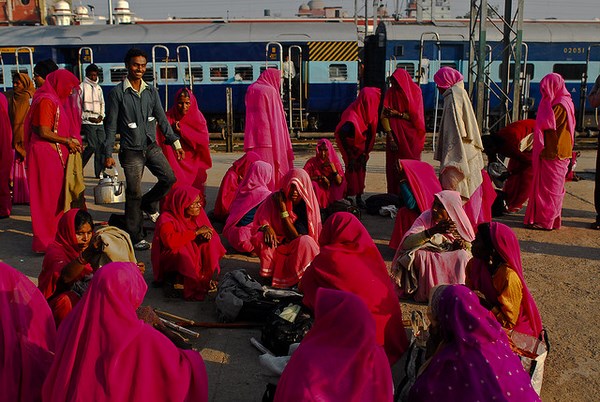
Gulabi Gang. Image Credit: Lecerle/Flickr
The Gulabi Gang served as the subject for a 2010 movie called Pink Sari’s. However, the Red Brigade is a younger version comprised of girls ages 11 to 25 years old. As the Guardian reported, members of The Red Brigade take:

The Red Brigade girls. Screenshot from Red Brigades Blog
Dressed in red and black salwaar kameez (traditional Indian-style dress) many of the girls were victims of violence in the past. They now take martial arts classes and participate in protests.
If a man has been found to be harassing a girl, he is ordered to stop. The consequences may escalate from there and if he does not stop, he may be punished by public mocking or violence. Though they have only resorted to violence on one occasion.
When asked where her courage comes from the leader of the group, Usha Vishwakarma said:
Not only fighting, the red brigade members are continuing their education to make a career:
#NewsPositive of #ABPNews, meet girls of Red Brigade in Lucknow who are making themselves stronger. http://t.co/a2ppfNHz6e
— ABP News (@abpnewstv) August 23, 2013
Meet India’s Red Brigade in Lucknow, they protect women and Girls from rapists!!! http://t.co/WogM9Cygyh
— Tosin (@Olutosin) August 14, 2013
As of August 23, activists and journalists gathered at Hutatama Chowk in south Mumbai in a silent protest. The opposition parties took up the issue in parliament and organizations took out rallies in different cities. What they missing are perhaps more pro-active people like vigilantes.
Originally published on Global Voices.
About the Author






[…] Related: Are female vigilantes the answer to stopping rapes in India? […]