
Unemployment rates, population data and gross domestic product (GDP) – I’m no economist but the collection of this sort of information seems rather important.
Well, not according to some Republican Congressmen in the United States.
On the 18th of April 2013, Republican congressman Jeff Duncan introduced his Census Reform Act to the floor of the House of Representatives. If passed, it would prevent the US Census bureau from conducting nearly all surveys apart from the decennial population survey.
Are Republicans having an ‘Alice in Wonderland’ moment, whereby reality is turned on its head and fantasy rules the day, or is there some logic to this proposal?
In Congressman Duncan’s own words, the proposed bill would ‘end harassing Census surveys’ which he argues ‘amount to legalized government harassment.’
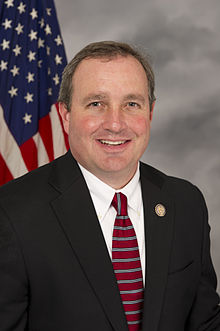
Congressman Jeff Duncan introduced the Census Reform Act to the US House of Representatives
The bill excludes the decennial census which is a short survey asking for name, sex, age, date of birth, race, ethnicity, relationship and housing tenure. Its exclusion is not necessarily due to Congressmen Duncan’s enthusiasm for it, but rather that pesky thing called the Constitution (Article 1, Section 2 of the US Constitution mandates that the US government collect such data every 10 years).
Given the limited scope of the decennial census, the American Community Survey (ACS) has been established as a complimentary survey which 1/6 US households receive containing additional questions on more ‘detailed socioeconomic information about the population.’
The contentious ACS is thought to be the main target of Rep. Duncan’s Census Reform Act, having long been the target of Republicans to defund and eliminate it.
This adverse view of the Census is at odds with mainstream thinking. Many economists and scholars have been quick to respond to Congressman Duncan’s legislation heralding it as irresponsible.
Maurine Haver, founder of business research firm Haver Analytics and a past president of the National Association for Business Economics told the Huffington Post, “it’s hard to take this seriously because they’re really saying also they don’t want GDP. They want no facts about what’s going on in the U.S. economy. It’s so fundamental to a free society that we have this kind of information, I can’t fathom where they’re coming from.”
Congressman Duncan is quick to rebut such claims arguing in a press release that: “as a former small business owner, I recognize that some economic data gathering is beneficial. However, it should be voluntary, industry driven, and not mandated by the government under penalty of law. I’m confident in our ability to develop innovative ways to gather information without harassing people, invading their privacy, or threatening them with fines. Americans are tired of too much government meddling in their daily lives.”
Representative Duncan was hardly alone in his push for this reform – the bill garnered 14 Republican co-sponsors. The voting records of these Congressmen reveals interest correlations and helps to explain why they supported the proposal. Six of them voted against the election of Speaker Boehner earlier in 2013 and only two voted for the Fiscal Cliff compromise bill in the New Year.
Further than this, 12/14 of them are members of the Republican Study Committee, a self-identified conservative grouping formed to push the Republican Party further to the right. The average American Conservative Union rating score of these co-sponsors was 92.5, which is five points higher than the broader Republican conference.

2010 US Census Form
All this illustrates the extremely conservative nature of these Representatives and also their willingness to buck the party line. In other words, co-sponsoring this bill, which has no support from the Republican leadership, is not out of character for these Congressmen.
It should be clear that the proposed Census Reform Act is very unlikely to pass. It has been referred to three House committees – House Oversight and Government Reform, House Agriculture and House Appropriations – and as of June, the bill has been shelved indeterminately in all three committees.
So why would Rep. Duncan and his 14 co-sponsors go to the trouble of introducing the bill which has no chance of passing?
Well, the explanation resides in the idea of serving the district.
Rep. Duncan argued that the inspiration for the legislation was the multitude of complaints his office had received from constituents. In a press release, Duncan states “that many of his constituents believe the surveys are invasive and ask too many person questions.” Constituents cannot simply refuse to answer the Census without facing fines of up to $5,000. However, the concern extends beyond the financial penalty to a broader concern with the protection of privacy.
Fellow co-sponsor Rep. Walter Jones told Port City Daily, “our office has heard from dozens, if not hundreds, of constituents about the intrusive nature of a number of Census-driven surveys.”
This sort of fear is understandable in an age where the IRS has targeted conservative Tea Party groups, where the Justice Department monitors the phone records of Associated Press reporters and where the NSA collects the details of all phone calls in the United States.

14 Co-sponsors of Census Reform Act 2013: Top row (L-R) Jim Bridenstine, Steve Stockman, Walter B. Jones, Thomas Massie; Middle row (L-R) Stevan Pearce, Jason Chaffetz, Andy Harris, Raul Labrador, Reid Ribble; Bottom row (L-R) Todd Rokita, Austin Scott, Steve Southerland, Howard Cobble.
The pre-existing fear that the government cannot be trusted has only been reinforced through these recent revelations and has put more pressure on conservative members of Congress in particular. Attempts by Congressmen to halt the incursion of the government into the private sphere of citizens will be viewed favourably by those who feel this way.
Critics of the Census Reform Act portray this group of Congressmen as foolish. Ken Prewitt, the former director of the U.S. Census and professor of public affairs at Columbia University, told the Huffington Post, “to say suddenly we don’t need statistical information about the American economy, or American society, or American demography, or American trade, or whatever — it’s an Alice in Wonderland moment.”
However, Prewitt wilfully ignores the larger reality that such Congressmen are faced with.
Whilst it is easy to mock this legislation – in reality these Congressmen are living up to task they are sent to Congress to do. That is, represent the views of their constituents.
About the Author






[…] http://archive.the-ipf.com/end-the-us-census-is-this-the-republicans-alice-in-wonderland… […]