
“Have you heard of the plastic bulb?” It is a question passed around, that in most cases received this answer; does it melt? To most people plastic around heat equals melting. But, according to scientists in the US, a plastic bulb is possible. In fact, a group of researchers from Wake University in the US have gone ahead and developed one using layers of polymers.
The plastic bulb does not produce heat but rather light only, unlike other bulbs. Many people do not know that most bulbs generate heat, which in turn affects the room temperature, something that can be very detrimental and costly in certain environments, such as museums.
Producing just light and not heat also reduces the energy consumption in houses, because the bulbs require very little electricity to generate the light; this is made possible by the properties of the materials used inside the bulb. The bulb does not use mercury which is harmful to our environment and causes skin cancer and conditions.
The bulb is also known as FIPEL because of the form of technology used in creating it: ‘field-induced polymer electroluminescent’. The bulb gives out better light than other bulbs because it has a malleable light source; meaning the source can be shaped in any way. Dr. David Carroll, a physics professor and the inventor of the new bulb, assures of the sustainability of the bulb claiming to have one that he has used for a decade.
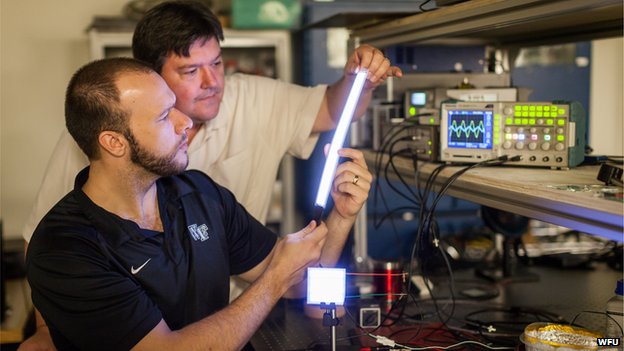
According to Engineers Association of Kenya, production of the bulb is expected to be cheaper and sturdier than all bulbs currently available, because the cost of manufacturing is very low and the bulbs will be less likely to shatter as they are plastic, not glass. The use of plastic will also facilitate recycling, another bonus to these new bulbs. Equally, the FIPEL bulb does not contain harmful chemicals such as mercury, making recycling cheaper and less dangerous.
What of the energy saving bulbs that Kenya has currently adopted? Energy saving bulbs in Kenya are mostly compact florescent light (CFL), which contain mercury, which is very dangerous hence the precautions that come with handling the bulbs – users are advised to run outside of the room if the bulb shatters!
Another type of energy saving bulb is Light Emitting Diode (LEDs), which are good for the environment, but use more energy to light compared to the FIPEL. Also, they can shatter because they are made of glass, and are expensive in comparison to the plastic bulbs that may well become the new standard for lighting.
Less energy, no hazardous chemicals and shatterproof – fantastic qualities that put the plastic bulb on top of the list of the fight for saving our planet.
About the Author






[…] of LED lighting, you might not be aware of how much it’s actually revolutionizing the way we source and utilize light. Across the world, traditional bulbs are being replaced with LED. You may have seen local […]
[…] Related: Saving the future with plastic bulbs […]
[…] “Have you heard of the plastic bulb?” It is a question passed around, that in most cases received this answer; does it melt? To most people plastic around heat equals melting. But, according to scientists in the US, a plastic bulb is possible. In fact, a group of researchers from Wake University in the US have… […]
Dear Fridah Mlemwa.
As a writer of a book about the energy saving bulbs I would appreciate very much if you inform me the recycling situation in Kenya. (akodikas@otenet.gr)