
The National Film board of Canada has collaborated with the The New York Times Archive Department to create four interactive short films about the history of the highrise and modern living. These great feats of engineering have come to symbolise business and wealth, as well as this idea of ‘urban living’ and the modern world. But they have their failures. Today they still represent social inequality, sprawling urban populations and crowded living.
The four short films – Mud, Concrete, Glass and Home tell the story of humanity, how engineering has developed the idea of communal living and our identity with the word ‘home’. Mud takes us right back through history, from the Tower of Babel, the first Roman tower blocks, to the early concept of the elevator and perhaps most importantly the tenements – a symbol of poverty, crowded living and social inequality.
Jacob Riis famously documented the lives of families living in such tenements. His photographs of squalid New York living highlighted the extreme poverty housed within these buildings. He used his images to promote social reform and eventually in 1901 the New York State Tenement House Act was passed. Going forward tenements had to be well ventilated, each room had to have a window, indoor toilets were introduced and safeguards against fires put in place.
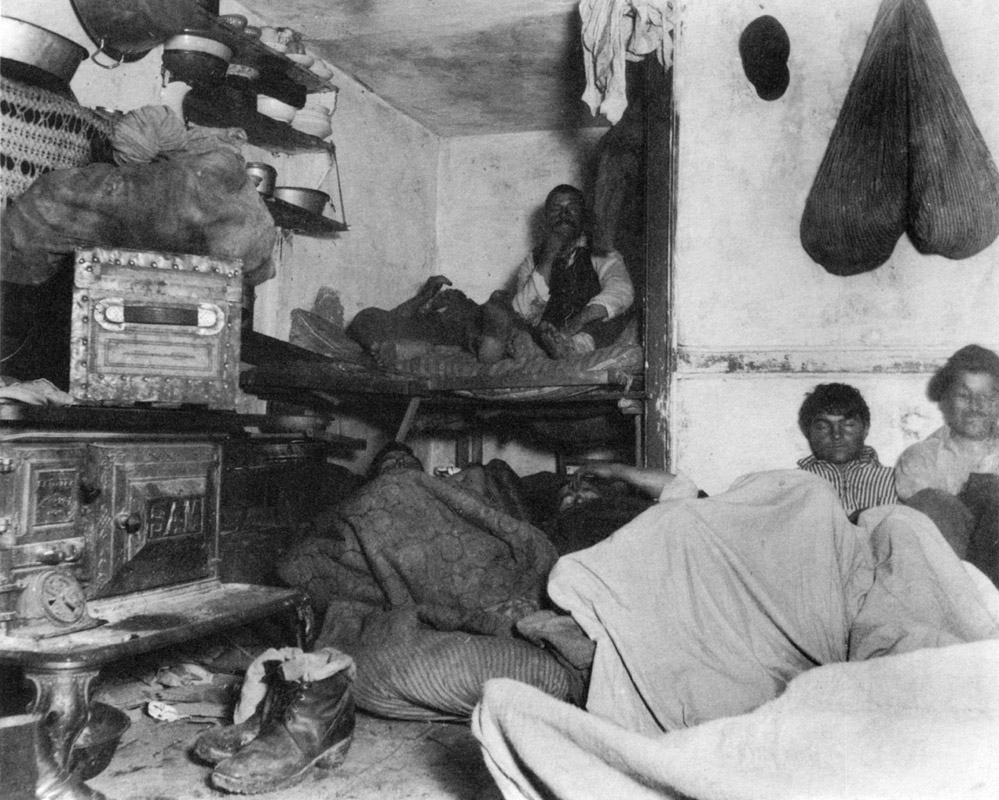
Jacob Riis, “Lodgers in a Crowded Bayard Street Tenement-‘Five Cents a Spot’ “. Image credit: Jacob August Riis (1849-1914)
After WW2 the highrise became a place for the middle class. Somewhere in-between the rich and the poor, these families started to set up home in relatively luxury apartments. With the boom in concrete came the boom in high-rise living and state funded housing projects. From America to Europe, and even Asia, the middle class crammed into these urban experiments. But as the economy changed and the depression hit, these symbols of hope and affordable living soon became towers of poverty, crime and dilapidation. Such government initiated plans as the ‘the projects’ in the Bronx brought an end to this new ideology. The response was to tear down the buildings.
Then came the new modern glass structures of today. Pushing the urban slums further out and building over the poverty without dealing with it, resulting in new ‘high rise slums’ mixed with powerful buildings representing business and capitalism. We are seeing a social pattern and re-development where high-rise living represents the modern world, business, power and poverty all under one social umbrella.
http://www.youtube.com/watch?v=hSgJBqczX5o
These animated films bring the history of the high-rise to life, allowing the viewer to dig deep into The New York Times archives and follow the history of how we have lived and how this has, and is, changing.
About the Author





