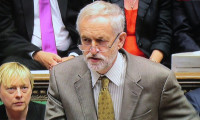
Jeremy Corbyn’s ‘Economy in 2020’ is admirable for the working class in its principles but ultimately has its flaws.
Battered and bruised, with knees rocking after a haymaker, Labour’s current predicament within British politics resembles that of a boxer that has been tactically outclassed for ten rounds, it’s close to a stoppage. Granted, politics has no definitive ending, there will always be another general election and policies to oppose, however Labour’s position as one of the dominant parties within the British political spectrum looks to be losing balance. In the blue corner we have the Conservative Party, which after several years of training, their game plan has been revealed to be a masterstroke; diminish public perception of their opponents by blaming the financial crisis of 2007 on them, use the threat of the invisible hand of the Scottish Nationalist Party moving Labour around as a puppet to not vote for their opposition and distinguish themselves from the radical right wing parties such as the United Kingdom Independence Party and the British National Party. By doing all of the aforementioned they have had their opponents on the ropes for much of the last round. In contrast, In the red corner, The Labour Party have admitted to making some mistakes in the early rounds this fight, their former elected leader never quite generated enough public support – many thought his demeanor and character would lead to Britain taking a back seat in world affairs. Whilst policies pitched within the general election campaign fell on deaf ears as the electorate fell out of touch with Labour. During their time of crisis everyone has a solution to Labour’s problems; go left, go right, take the opposite view to every policy the Conservative Party drafts in. However, what appears to be Labour’s solution to their chaotic situation is a traditionalist left wing leader in Jeremy Corbyn, advocating the increase in public spending through the reinforcement of progressive individual taxation and the increase of corporate taxation. Jeremy Corbyn has recently addressed his economic strategy with ‘Economy in 2020’ and whilst it is admirable in principle, Corbyn’s ‘Economy in 2020’ misses the mark in many aspects.
Increased Corporate Taxation and re-establishing Progressive Taxation
One of Corbyn’s main mechanisms of financing his proposed public spending would be to increase taxation, targeting both corporate tax levels and tax levels on higher earners (typically those earning more than £50,000 at a 50% tax rate). It is also worth noting that Corbyn hopes to raise finance by tackling what he estimates to be worth around £93bn in corporate tax reliefs, placing a greater emphasis on the HMRC tackling tax avoiders and companies allowed to trade within the United Kingdom who have been alleged to have dodged significant tax payments in the past. ‘He proposed a series of measures to reduce what he said was the £120bn that the government loses through uncollected tax. They included: a proper anti-avoidance rule; proper country-by-country reporting for multinationals; reformed small business taxation; tougher regulation of companies to ensure they pay their taxes; and a reversal of staff cuts at HMRC.’ However, what Corbyn has missed is that a globally competitive tax rate has attracted a lot of inward investment into the economy. Furthermore, with corporate tax lowered, receipts have risen by 93% more than economic growth, putting into perspective the balancing act Corbyn has to establish within his attack on the wealthy if he is to establish legitimate opposition to the Conservatives. To help the working class, he must use the middle and upper class, not pick fights with them.
Removal of Tuition Fees
After the recent budget and the announcement by George Osbourne that student grants will be replaced with loans, you could forgive commentators and political analysts for asking what went wrong in the Chancellor’s childhood. However, like all good opposition, Corbyn is seeking to target those who are potentially most disillusioned with the Conservative government. Providing opportunities for all is Corbyn’s aim of the game, and what Corbyn considered a public good would be provided for free for those who want to further educate themselves past the legal requirements. The only problem with this policy is feasibility, with Corbyn planning to finance university endowments and spending by increasing national insurance contributions on those earning above a certain salary, attempting to create a fairer payment system in which graduates are not saddled with debt. In principle once put into full effect it would see graduates pay for their time at university by increased taxation (in the form of national insurance contributions) once they’ve accumulated a significant amount after their degree. Whilst good in principle it surely would be more beneficial to just lower the tuition fee rates, to pre-coalition rates (capped at £3000 per academic term) rather than scrap it all together. Additionally, there is good to be had from making higher education a financial cost on people who wish to undertake it such as the signaling issue for employers and reducing the number of students taking a particular course at university to ensure quality of learning.
Increased Borrowing and Printing of Money
With a policy synonymous with the left of the political spectrum – Corbyn aims to increase prosperity, close the income inequality gap and provide opportunities for those less fortunate by increasing government spending, partly funded by the printing of more money. What Corbyn has to be wary of is that the government is already running at a significant budget deficit, increasing the deficit for public spending should be considered irrational if not targeted to sectors which offer the highest return. Spending and productivity are not directly correlated and guarantees of the positive effects of spending increases are not transparent, Corbyn needs to make sure that spending increases are concentrated with those areas which can induce the greatest returns. However, with unemployment levels at one of the lowest rates since the economic downturn it is unclear how this will become apparent. Furthermore, increasing the minimum wage places a greater strain on employers of the private sector, a knock on effect could see an increase in unemployment rates similar to 2008.