
Canada has had a tradition of foreign policy that supports multilateralism since the Second World War. From the United Nations to NATO, Canadian diplomats have used these multilateral platforms to conduct foreign policy initiatives aimed at legitimising and stabilising the world order as well as ending human rights abuses. Diplomats such Lester Pearson and Lloyd Axworthy made great strides for ensuring human security worldwide. However, in the past 10 years, the country that once championed organisations like the League of Nations and the UN as the solution to conflict in an anarchic international system has witnessed a shift towards more interest-driven diplomacy.
In many instances it seems that Canadian Prime Minister Stephen Harper has created a foreign policy that is a stage for his own personal views. While it is normal for any new prime minister to come into office with a unique foreign policy agenda, some might question whether Stephen Harper has steered too far away from Canadian tradition. Under Harper a large portion of Canadian aid has shifted from Africa to Latin America with a clear commercial interest in partnering with mining companies in countries like Peru. This change was controversial with many lamenting Canada’s new foreign policy based on promoting Canadian business rather than helping the neediest of the world.
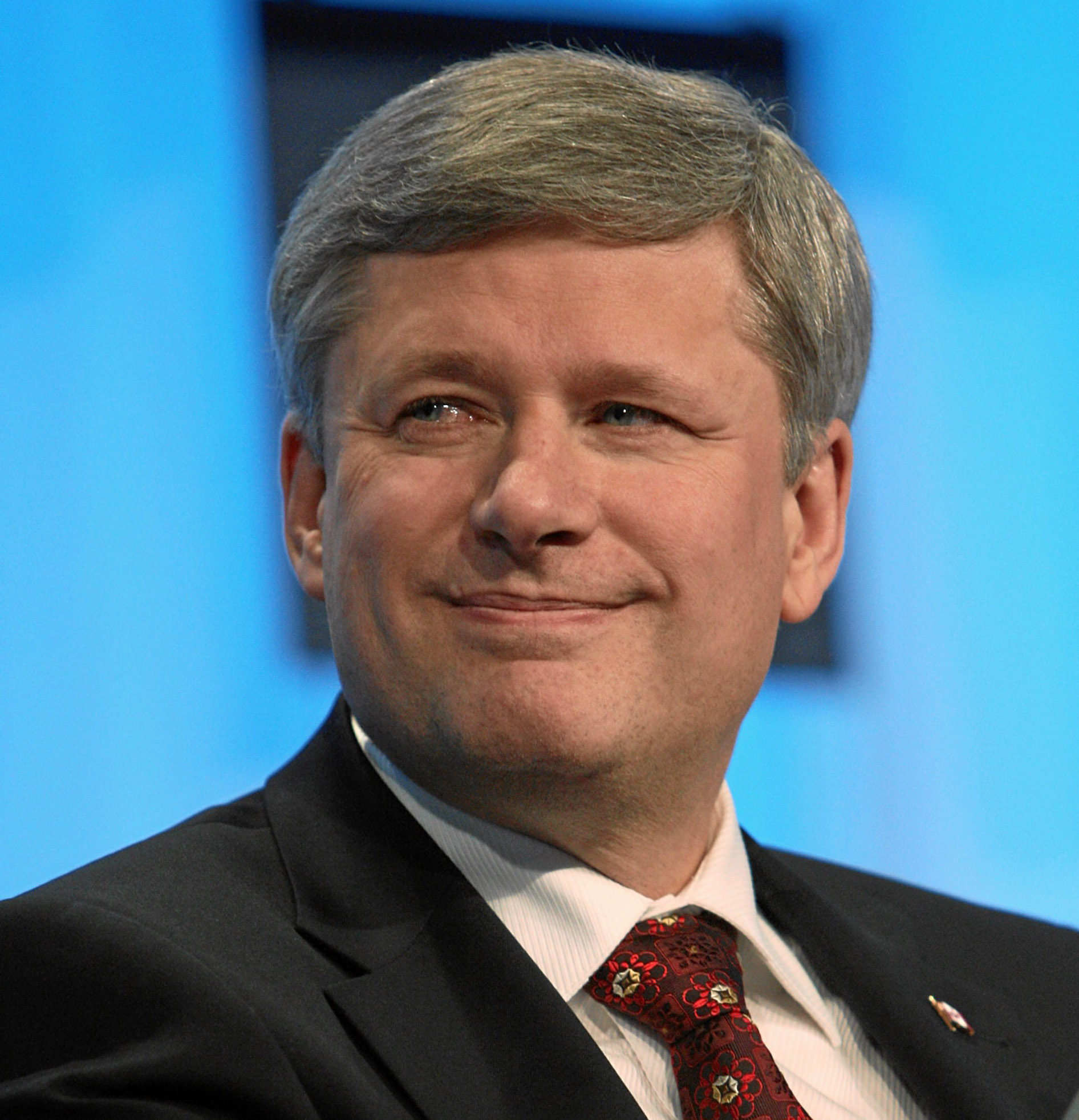
Stephen Harper, the current Prime Minister of Canada. Image credit: World Economic Forum – Remy Steinegger
Earlier this October, a Brazilian news organisation reported that documents leaked by Edward Snowden showed evidence of the Communications Security Establishment Canada (CSEC) monitoring communications within Brazil’s Mines and Energy Ministry. Relations between the two allied countries were immediately soured and Brazilian officials called upon the Canadian government to respond to the leaked information. Many are speculating over what exactly CSEC was looking for in the communications of the Brazilian ministry with some commentators suggesting that it was tasked with the job by one or more of Canada’s “Five Eyes” intelligence partners – the US, UK, Australia or New Zealand. The incident has led to some international embarrassment for Canada and further contributed to its image as a profit-seeking, economy-driven country. An analysis of specific reasons why CSEC may have infiltrated ministry communications proposed that the security establishment was essentially participating in industrial espionage suggesting that the current foreign policy of Canada is to value economic security above stable and amiable relations with long-time allies.
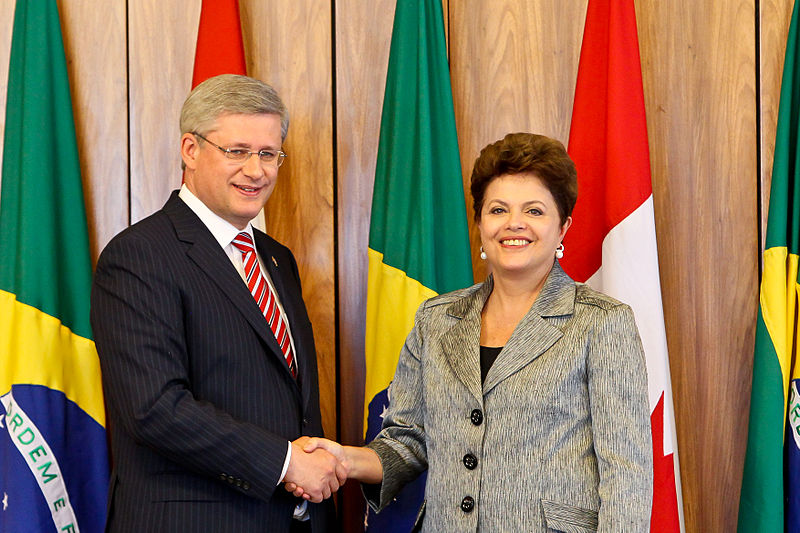
Canadian Prime Minister Stephen Harper and Brazilian President Dilma Rousseff at a signing ceremony in Brasilia, Brazil, 2011. Image credit: Dilma Rousseff
When it comes to Harper’s initiative for improving maternal and child health, Canada is putting forward an ambiguous message. The government, led by Harper’s Conservative Party of Canada, has declared it will fund projects tackling sexual violence and forced marriages but has simultaneously stated it will not be backing projects enabling rape victims to obtain safe abortions. Looking at this through the lens of domestic politics in Canada, it appears that the governing party is projecting its own ideological anti-abortion views onto countries and individuals in need of aid. In developing countries abortions would reduce the number of mothers who do not have the means to adequately care for children; often abortions can save the lives of child brides forced into marriages. Is it then right for the ideological views of this particular Canadian government to dictate where and how aid will be used?
Harper has shown that he favours giving attention to promoting Canadian economic interests and supporting initiatives aimed at improving maternal and child health worldwide but there is a concern that this is simply an example of the PM’s unwillingness to “play the game” of the United Nations. In 2010, Canada failed to win a seat at the UN Security Council, the first time the country had not won a seat for which it had made a bid, and now the government is suggesting that no bid will be made for a seat in the near future. The waning commitment to multilateral organisations is becoming evident.
The implications of this shift in Canadian foreign policy raise important questions. Canada has traditionally been a legitimising factor for these organizations; a kind of middle power ‘good cop’. Will multilateral institutions be weakened by the lack of faith shown by Canada, and possibly other countries? The United Nations’ weaknesses were already made clear earlier this year by the power exerted through the Chinese and Russian vetoes at the Security Council. More often than not bilateral agreements are made outside of the UN sphere of influence and only after they have been hammered out is a UN resolution passed to legitimise the agreement. Of concern for Canada, will this lessen its international clout? Canada may no longer be in a position to put itself forward as an international actor without reproach.
About the Author




A very thoughtful & well supported perspective on the evolution of Canadian foreign policy in the past decade.