
Since Wikileaks founder Julian Assange was given asylum by the Ecuadorian embassy in London in 2012, nothing has been done by the Swedish Prosecution Authority to further the investigation against Assange in the alleged cases of rape and sexual assault in 2010. Now politicians and judges in Sweden are urging the prosecutors to end the deadlock and take him in for questioning. In other words, he is urged to leave the embassy and fly to Sweden where he is wanted by the prosecutor, which he refuses to do.
Assange’s reason for locking himself up is, of course, not the Swedish case, but the prospect of being extradited to the US where he risks facing far more severe charges for his activities around Wikileaks. Despite ambiguities around the likability of Assange being sent to the US from Sweden, there is a bilateral agreement between the two states establishing cooperation on such matters. Since 2000, only two cases of extraditions to the US have been refused, both on the grounds that the accused could not be located. Assange’s defenders therefore argue that he is likely to eventually end up in the US if he goes to Sweden.
The current public debate in Sweden is focused around the prosecutor’s refusal to simply travel to London and question Assange there, at which point he has agreed to give a full statement of the events in 2010. But according to the Swedish Prosecution Authority, a full hearing would not be possible on foreign ground due to the special procedures required. The defence, on the other hand, claims that the very least they can do is try to question him in London since there might not even be a case left after the initial hearing.
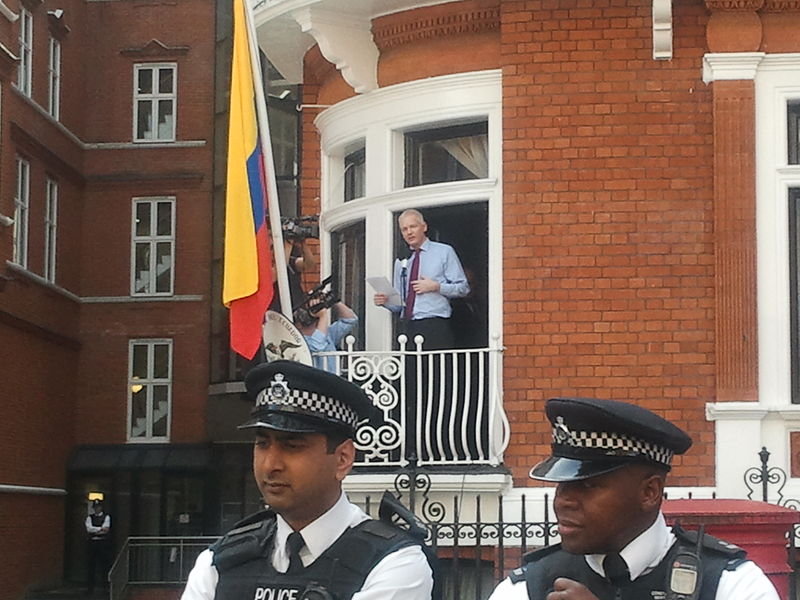
Julian Assange speaking on the balcony of the Ecuador embassy, 2012. Image credit: Poiesia
Leaving the question of guilt aside, one has to wonder where the sudden eagerness to get Assange back to Sweden is coming from. There have been all kinds of politically correct statements around fairly treating Assange like everyone else, regardless of his fame and political value. Justice needs to take its course, for the sake of the victims. But there is little evidence of this fairness, justice and least of all concern for the victims in real life.
Julian Assange may have committed rape and sexual assault crimes in Sweden, or he may not, but the question remains: Since when have politicians in any country kicked up heaven and earth to get a hearing with an alleged rapist? Perhaps since the suspected rapist in question is also wanted by the American authorities.
About the Author