
Cast your mind to any place in modern day Europe, east of the Czech Republic, and your imagination will inevitably be playing three degrees of separation with one major reference point in terms of culture, economics, history and of course politics. If Eastern Europe is the bargaining table, Russia is still very much an interested participant on the other end and though it may no longer don the guise of the soviet Alpha to the western Omega, it has only become a more ambiguous participant, but never quite an ally. It may be that the Cold War is not quite over, we have simply been sporting more layers of late.
Such is the issue occupying the minds of European delegates as they ponder the Ukrainian question. The situation, in brief, is not altogether unfamiliar to the region. Anti-government protests have seized the urban parts of the country. Violence has ensued, as protesters have clashed with law enforcement. The situation in Kiev is in dire need of decompressing as one of the judges who sentenced protesters to jail time has already been shot.
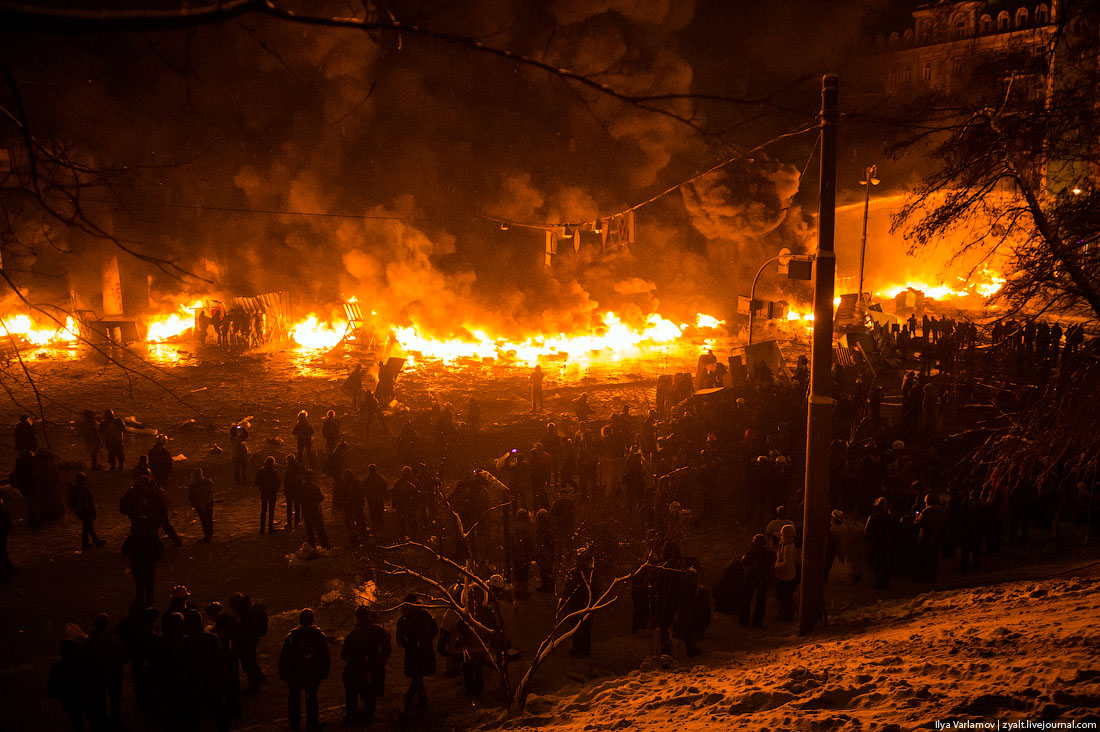
Protesters in Kiev
Every building of national authority is permanently under siege by at least two hundred balaclavas armed to their chattering teeth with makeshift weapons as the mercury drops well below freezing temperatures across the cobblestones of the Ukrainian capital’s main square.
Former Ukrainian president Leonid Kravchuk’s conclusion that the country was on the brink of ‘civil war’ was met with a standing ovation, branding the current stalemate as ‘a revolution’. The onlooker would be understandably moved by such images. How could one not be compelled to sympathize with the plight of a people, fighting for sovereignty? How can one not wish to bridge Kiev with the European capitals, west from its borders? If only their liberty could be pried from Russia’s grip!
Before we completely disregard the reality of the present for the ‘romantic’ world of the Cold War thriller, we must remember what triggered the protests to begin with.
When a wall falls, it is little more than a photo opportunity, if the infrastructure on either side does not change. Ukraine’s problems are by and large not ones that can be wavered away with an ideological milestone. They are economic. In 2012 the International Energy Agency was already stressing the importance of the country putting in place “deep regulatory reforms” to grow more energy independent from Russia. Ukrainian transport and industry were in a similar predicament. Development is needed and development needs investment.
While western Ukraine has found some industrious spark that could lend itself to EU standardization, the east is economically tied to Russia.
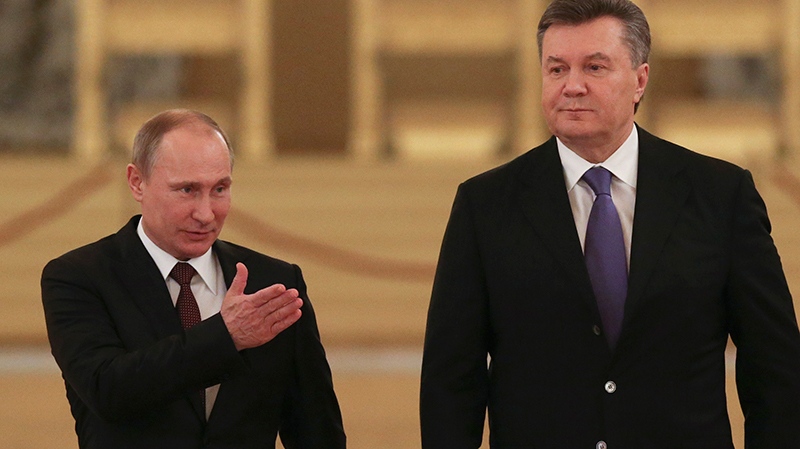
Russian President Vladimir Putin and his Ukrainian counterpart Viktor Yanukovych
When it comes to bargaining with Russia, Kiev cannot bluff. Moscow knows its valuation and knows its tells. When Ukrainian officials wanted to charge Russia between 744 million – 1.2 billion USD in total annual rent for running its gas pipeline through its territories, the Kremlin quickly talked the price down. World market rates were less than a third of Kiev’s larger estimate and Russia could afford to ask an even greater discount. Such is the privilege of being a senior partner in an insular marriage of mutual convenience.
Not to press the poker metaphor further than need be, but the Ukraine’s greatest bargaining chip is its proximity to Russia. It has few natural resources and its coastline is dominated by the Russian led Black Sea Fleet. It took close to two months for Kiev to be bribed by £9.2 billion to turn down joining the EU by the Kremlin.
“On the financial assistance, yes there are conditions, very transparent and I would call them reforms, reforms, reforms” said Stefan Fuele of the EU Enlargement Commission on 13 February.
The answer is wonderfully non-committal. The words of one who does not wish to lend to another in need, who will not pay him back, always are.
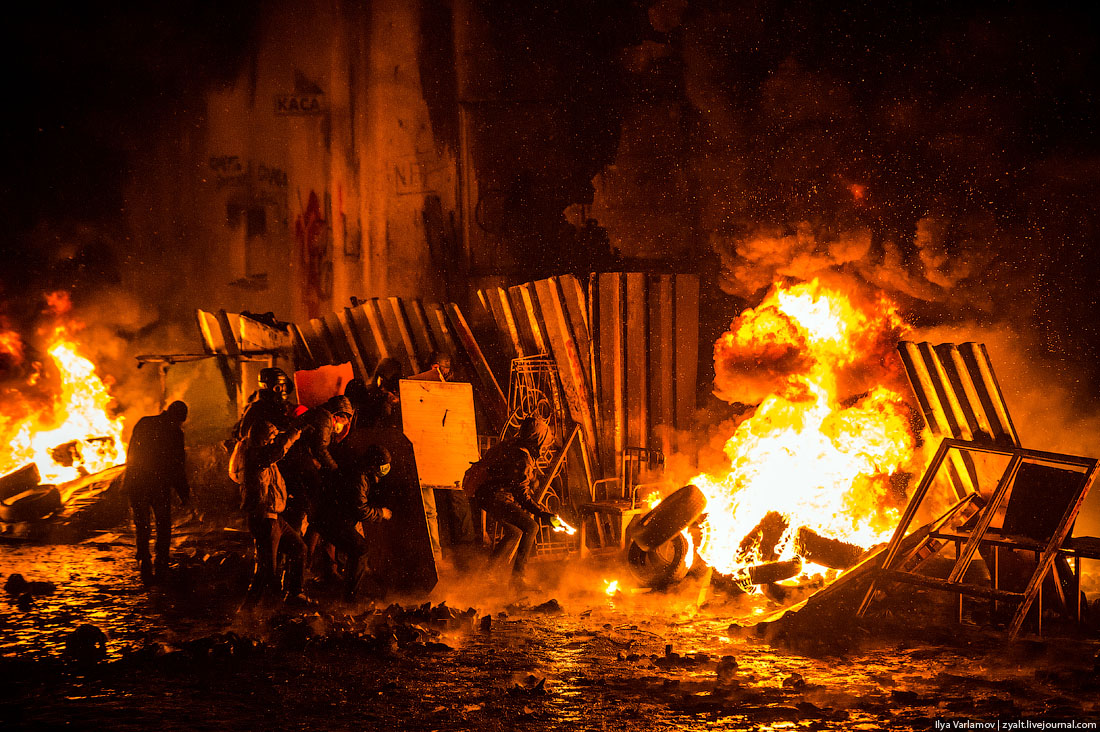
Revolution, proxy conflict or civil war?
Several English language publications have branded the protests a revolution, a few have called on to their readers to support the Ukrainians on the street… from a healthy distance of course.
Once again the Cold War nostalgic will point to Kiev and call the clash of east and west it is currently espousing to facilitate, a proxy conflict. But the fact is that, try as we might to salvage some ideological narrative out of the streets of Kiev right now, the issue boils down to hard cash.
The West’s groans of disapproval at Russia’s position and advocacy of Ukrainian anti-government and anti-Russian protests is self righteous at best, if not backed by the coin Kiev needs.
Russia’s patronage might come at the expense of quite a few political problems, but while protesters in Kiev look at a pro-Russian government and refuse to stand for it, the question that follows is what other government they can afford.
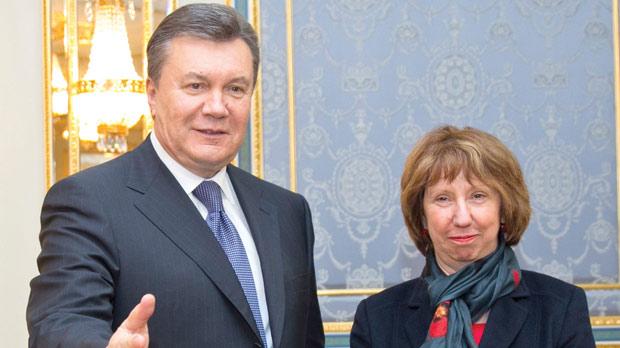
Viktor Yanukovych with EU foreign policy chief Catherine Ashton
Even worse, punters from the EU, either in the media or government must seriously ask themselves the question, does their encouragement of Ukraine’s out and out defiance of Russia not come at a disproportionate risk for the freezing protesters across Ukraine and their western ‘sympathisers’, watching from more than a sword’s length away.
Ukraine’s politicians are faced with a bill to pay and unless the EU can fork over at least some of the cash, it has little room to wax lyrical on the subject.
The skill the rookie gambler learns is knowing to cut your losses when you see you have been outplayed.
Brussels may like to think it lives by the kind dictum of teaching another how to fish, but if it cannot so much as provide the fishing rod, it may well be better to let Kiev teach itself how to gamble.
This post was originally published on Urban Times.





