
The West Wing used to be somewhat of a family tradition in my house. No matter what was going on in the world, we could always cuddle up to the heart-warming wisdom of President Jed Bartlet or one of Josh Lyman’s one-liners.
But for me, the moral honesty of the West Wing was always in the hands Deputy Communications Director Sam Seaborn. In my eyes, he was the one most willing to fight for what he believed in.
Possibly more than anything else, he believed in educational equality. But he also believed in quality. In one of my favourite episodes Sam argues that:
“Education is the silver bullet. Education is everything. We don’t need little changes. We need gigantic monumental changes… Schools should be incredibly expensive for government and absolutely free of charge to its citizens, just like national defence. I just haven’t figured out how to do it yet.”
When I first heard that, I began to wonder. Is anyone doing it right. I have heard amazing things about Finland’s education system, but what about in the developing world?
What about in the Maldives, the Philippines, Malaysia and Brazil? What can these countries tell us all about going to school around the world?
What about The Maldives?
I spoke with Aisha Niyaz, Sustainable development consultant in the Maldives & Former founding of the Maldivian Youth Climate Network.
On paper, every child in the Maldives has the same rights and access to school “at least until year 10” and there is great progress being made in higher education. “But girls are not encouraged as much in some island communities”.
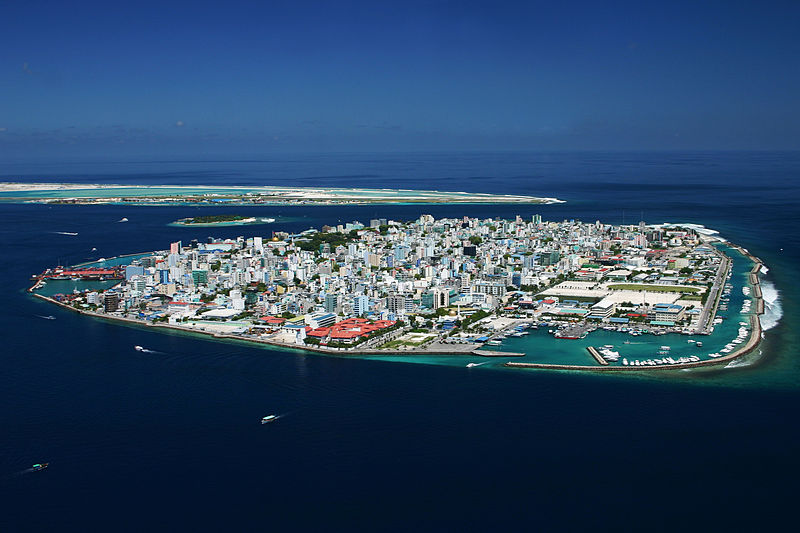
Malé, capital of Maldives. Image credit: Shahee Ilyas
But geography isn’t the only factor inhibiting education in the Maldives.
As she spoke with me, Aisha expressed her greatest concern for the young women all across the Maldives who don’t have access to the same opportunities she has had in life.
While the legal age for marriage is 18, Sharia law may also allow young girls to get married with parental consent.
Aisha is one of these very exceptions. Thanks to her family’s support, and her own self-belief, Aisha will complete a Masters Degree from Australia. However she also openly admits that she “only started to question the Maldivian education system once in Australia”.
“In the Maldives, everyone is so used to doing what you are told to do. Only a handful are proactive and I guess this is why our civil society is so weak.”
“When I came to Australia, I realized how flawed our education system is and how suppressed we’ve been. At the moment too many are trapped in this bubble…and with the education system which limits critical thinking and suppresses questioning.”
This includes questions about gender equality.
“If we are going to improve equitable access to education, we need some gender equality at the same time. Because its the societal norm for girls to do household chores I think girls needs to believe in the fact that they are not born to do those just by themselves and they have equal rights to venture into jobs they wish to and equal share in household chores. Girls need to believe that they can do it. They need to grow up knowing that nothing is impossible if we work hard to achieve something and truly believe in it.”
What about The Philippines?
I spoke with Mima Mendoza, Youth activist and student at Ateneo University.
While the Philippines is home to more than 1000 islands, Mima Mendoza, a student at one of the nation’s most prestigious private universities believes that the biggest limitation to realizing education equality is “mostly economic”.

“If you’re poor, you are less likely to even finish high school”.
In one of the world’s most unequal developing nations, where the combined wealth of 50 of the richest Filipinos is equivalent to 26% of the country’s Gross Domestic Product, “the best schools have tuition fees that 60% of the population just can’t afford”.
However “public education is not completely free either.” Given this reality, people from lower economic classes may not even have the choice of whether or not they finish school.
But college is even worse.The best colleges in the Philippines cost a lot of money, and a lot of students who were unable to get quality education from public schools are not able to pass the entrance test…If you’re relatively wealthy or live a comfortable life, you have a better chance of finishing a relatively good college and getting a well-paying job”.
But if you’re poor, you don’t. And if you’re a poor girl, “it’s the males that are usually sent to school.
“But for the middle and upper class, there are more women in school than men in my university alone, around 53% of the population are women”.
And Malaysia?
I spoke with Stephie Benedict, youth worker and fashion designer.
However, Stephie Benedict, a youth worker Malaysia believes that rather than economic or gender divisions within Malaysia’s education system – inequality has more to do with geography. According to her, “distance from the city” is the number one factor affecting the quality of education in Malaysia.
In Stephie’s home state of Sabah, which has the highest poverty rate in the country, this distance is most felt in the lack of facilities made available in its rural areas.
While students from schools in the urban capital Kota Kinabalu compete for prestige with the best schools in Kuala Lumpur, the systemic inequalities start to be felt as soon as you venture out along the unpaved trails and into the rural heart of the state.
This has also been my experience. In a small village called Kampung Gana, I remember waking up before the sunrise to walk through the wet mud, slippery slide, rise and fall of the only road in and out of the village.
We walked for more than an hour before changing our clothes, washing shoes, and getting in the back of a truck for the 1.5 hour journey into town. On the way to the closest school.
However, Stephie notes that compared to many areas in Sabah, the students from Kampung Gana are lucky they are not further away from the local town.
“For example, the organisation I work for has set up this this hostel in Pukak, Tamparuli. It is located beside the school because the kids actually need to walk more than 2 hours to go to school. So they just stay in the hostel.”
Is it the same in Brazil?
I spoke with Diego Lobo, blogger and social activist.
In Brazil, Diego Lobo believes the economic inequality that plagues the Philippines has an equal if not greater impact on educational equality in Brazil.
Diego is one of the nation’s most successful environmental bloggers, but also works with an NGO that directly supports remote schools across Brazil. He argues that while public education is free, unlike the Philippines, “the lack of investment in basic public education in brazil is a very serious problem”.
One real impact of this lack of funding has been a decline in the number of students going to school. In a recent national study, more than 2 million young people between 15 and 17 are not going to school.
As a result of funding restraints, many community-funded schools are supporting their own costs.
“This lack of funding has become a big issue now in brazil. Many teachers and other professionals are now lobbying for 10% of the GDP to be used for education, because there is so much needed to be done to improve the system …”
http://www.youtube.com/watch?v=ori4Ry1KR6g
Each of these 4 nations has its own unique struggles in meeting the needs of its young population. Whether they are facing gender issues, geographical bias or economic inequality, it is no doubt that my old fictional friend Sam Seaborn would not be happy.
To be fair, each of these nations have their own unique set of social and economic factors that they are struggling with day-in and day-out.
But I still have to wonder, could they not be doing more? Could the Maldivian government support young women in the way that Aisha dreams? Could class divisions be better dealt with in the Philippines and Brazil? Could geographical inequalities be overcome in Malaysia?
If you have the answers, we all would love to hear them, Sam Seaborn included.
About the Author





