
What comes to mind when one hears of heritage, is museums. Unfortunately most heritages that have survived are displayed or documented in these museums. This kind of preservation is a tangible one, which people can see and touch. Intangible heritage has not been so closely safeguarded, which is the focus here.
The kind of heritage that is traced through recreation and word of mouth has been slowly dying. Cultural heritage, if preserved, can be passed on to the future generations, but it can also contribute to the economy. Intangible heritage includes traditional food, eco-museums (i.e. making of local crafts) and local/community festivals. It is vital that these are sustained.
However the kind of heritage that is passed on through knowledge can only qualify as a tourism product through the following criteria, given by Dr. Valeria Klitsounova, the chair of board of Belarusian tourism. The product must be original, it should also be developed to an extent where the tourist can participate or learn. The product must also be exclusive, and have a maximum capacity that is strictly followed. There finances drawn from it should benefit the community. The local community must be involved.
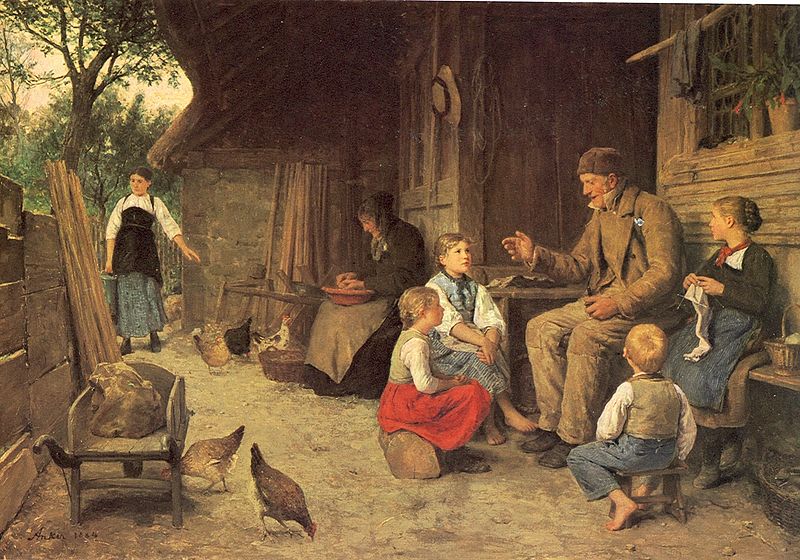
The Grandfather Tells A Story, by Albert Anker, ca. 1884. Elements of intangible culture depicted here include storytelling (oral culture), foodways, tool-use and crafts, in addition to material culture such as architecture. Image credit: Albert Anker, Sandor Kuthy und andere, Orell Füssli Verlag, Zürich 1980
There should be training in hospitality skills to the locals and workshops should be held for capacity building. There should be an outlined way of transmitting it to the younger generation for succession. The preservation should be done by a professional curator. Intangible heritage adds pride to local heritage, because communities will always be keen on their own culture. It also gives the opportunity for the cultural knowledge to be passed on from one generation to the other, thus becoming a learning place for locals and tourists. This strengthens social ties. The local economy also grows from the revenue generated.
Folklores maybe forgotten, songs may have faded, but hope is not dead, they can all be revived, preserved and reconstituted back to our way of life.
About the Author






America’s culture sure seems to be dying. We’re quite busy rewriting our history, allowing other cultures erode our own, and setting poltiical correctness so high that only a few can get away with having an opinion.