
March 15 marked the tragic third anniversary of the Syrian civil war, one which has already claimed the lives of approximately 130,000 Syrians and displaced millions, both internally and in neighboring countries.
What has come to be dubbed as ‘the worst humanitarian crisis for decades’ by the United Nations, which ceased counting deaths once the toll topped 100,000, is rapidly spreading across the Middle East. Official figures reveal that there are 2.5 million Syrian refugees, with that number vastly surpassed by the amount of unregistered fleeing from the war.
Lebanon has bore the brunt of the conflict, with its borders subjected to the spillover from the conflict and varying influxes of refugees. A stark statistic was brought to light when it was revealed that Lebanon has now reached the population size expected to be achieved in 2050, due to the refugee crisis. As Tripoli’s (the second-largest city) aptly-named Syria Street, separating the Bab Al-Tabbaneh and Jabal Mohsen neighborhoods, becomes the stage upon which warring sects play out proxy battles, the hapless Lebanese state security apparatus can do little to interject.
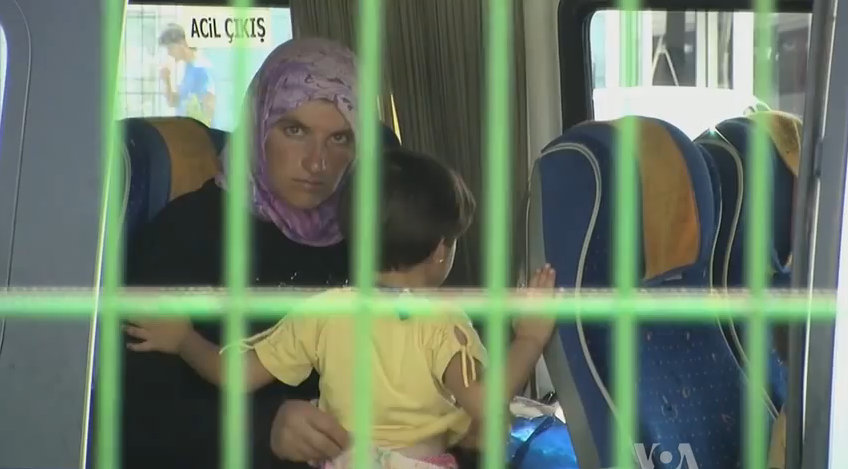
Syrian refugee on bus in Turkey. Image credit: Voice of America News: Henry Ridgwell from the Turkish border by Aleppo
Another Lebanese battleground is the Bekaa valley, a vastly lawless fertile region which faces regular barrages of rockets from rebel groups and the Syrian army alike, both targeting opposing loyalists. Even the southern border with Israel has witnessed heightened levels of infractions, with a mine-planting incident eliciting an immediate response in the form of an IDF airstrike.
The weekend also offered a resumption of a string of terror blasts and car bombs, with Al Nabi Othman in the Bekaa being the latest village targeted. The frail situation is threatened as major combat operations in Syria have reignited rage amongst those on both sides.
Such pressing matters were waved off as unimportant, as the infamous Lebanese Parliament divided the house on the inclusion of specific terminologies in the drafting of the newly-minted Cabinet’s policy statement. This highlights a vast gap in priorities between concerned citizens and elected officials, ones who extended their own terms in the hope of offering stability.
Alternatively, the flickering flames of democracy in Syria seem to have died out as current president Bashar al-Assad’s parliament voted for a move that would necessitate potential presidential candidates to have lived in the country for the past ten years. Touted by many as a firm move to eliminate any opposition, the decision further highlights the long-term effect of a struggle now entering its fourth year.
The world watches on as one of the earliest cradles of human civilization tears itself apart, diplomatic nonsensicals take precedence over humanitarian assistance, and the Syrian people are left to fend for themselves. Infectious diseases previously deemed to be eradicated have returned with a venom only propelled by the chaos of war. Malnutrition and limited access to safe drinking water has severely debilitated the youngest generation of Syrians with little hope of abatement any time soon.
Moves to assist the thousands of fleeing refugees are necessary, but only serve to treat the symptoms of a paralyzing ailment that needs resolution. One only hopes the fourth year can bear it.
About the Author





