
The road to stability, for Greece, has been difficult.
After Greece joined the European Union in 1981, it experienced an unprecedented period of stability. For the next thirty years, Greece had secure political systems in place, outstanding economic growth and a dramatic increase in the standard of living of its citizens. During this period, Greece experienced a growth rate of approximately five percent per year and it quickly became one of the top tourist attractions in the world. For the first time in decades, Greek citizens were prosperous and successful.
However, in 2010 the situation dramatically changed. It became evident that this period of increased economic growth was rather artificial – it was, for the most part, based on loans that Greece had borrowed. The government had created an illusion of Greece’s prosperity, when in truth, the country was not as economically stable as both its citizens and the European community believed it was. After realizing its enormous gap in its budget, Greece was forced to seek help from the IMF, the European Central Bank and the European Union.
These changing economic circumstances lead to a change in political circumstances, and in 2010, the socialist government of George Papandreou was thrown out of parliament, and Greece elected a new Prime Minister, Antonis Samaras, to lead the country out of its economic crisis.
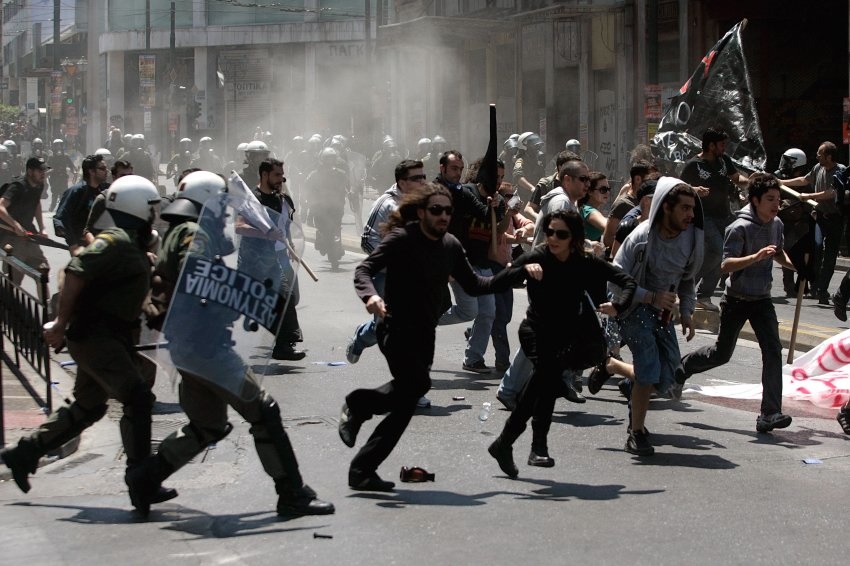
Greeks protest austerity cuts. Image credit: Milos Bicanski /Getty Images
After elected to office, Samaras understood that he needed to take rather drastic measures to ameliorate Greece’s economy. In return for the international rescue loans that have been granted to Greece, Samaras agreed to employ an array of policies. If applied consistently, these policies aim to, over time, bring the country out of its dire economic situation to one of economic stability. These policies mainly include reducing the public sector, bringing the legal and tax framework closer to the standards of the European Union and privatizing many public operations. Ultimately, he aims at increased cooperation between Greece and the European Union, as he believes that the way out of the economic state Greece is currently in is remaining in both the European Union and with the Euro currency.
While in theory, these austerity measures, over time, could potentially lead Greece out of its recession, the major spending cuts and tax hikes have put a strain on the economy and deepened the recession, eventually resulting in an increase in poverty and a dramatic decrease in the standard of living for Greece’s citizens. Salaries have been cut dramatically, pensions have been dramatically reduced and unemployment strikes a new high at 27.8 percent. About a quarter of Greece’s small population, only approximately 11 million, is currently at risk of sinking into poverty by the end of this year, which can be defined as a personal income of less than 7,200 Euro’s a year.
This dramatic decrease in the standard of living for Greek citizens has resulted in the questioning of Samaras’s leadership of the nation. It has been difficult for the Greek people to believe that these austerity measures will eventually result in economic growth, while poverty and unemployment only continue to rise.
This sentiment has lead many citizens to support candidate Alexis Tsipras in the 2014 European Parliamentary Elections, which are to be held between the 22nd and the 25th of May. Tsipras is a candidate from the Left wing political party in Greece and is currently Samara’s main political opponent.
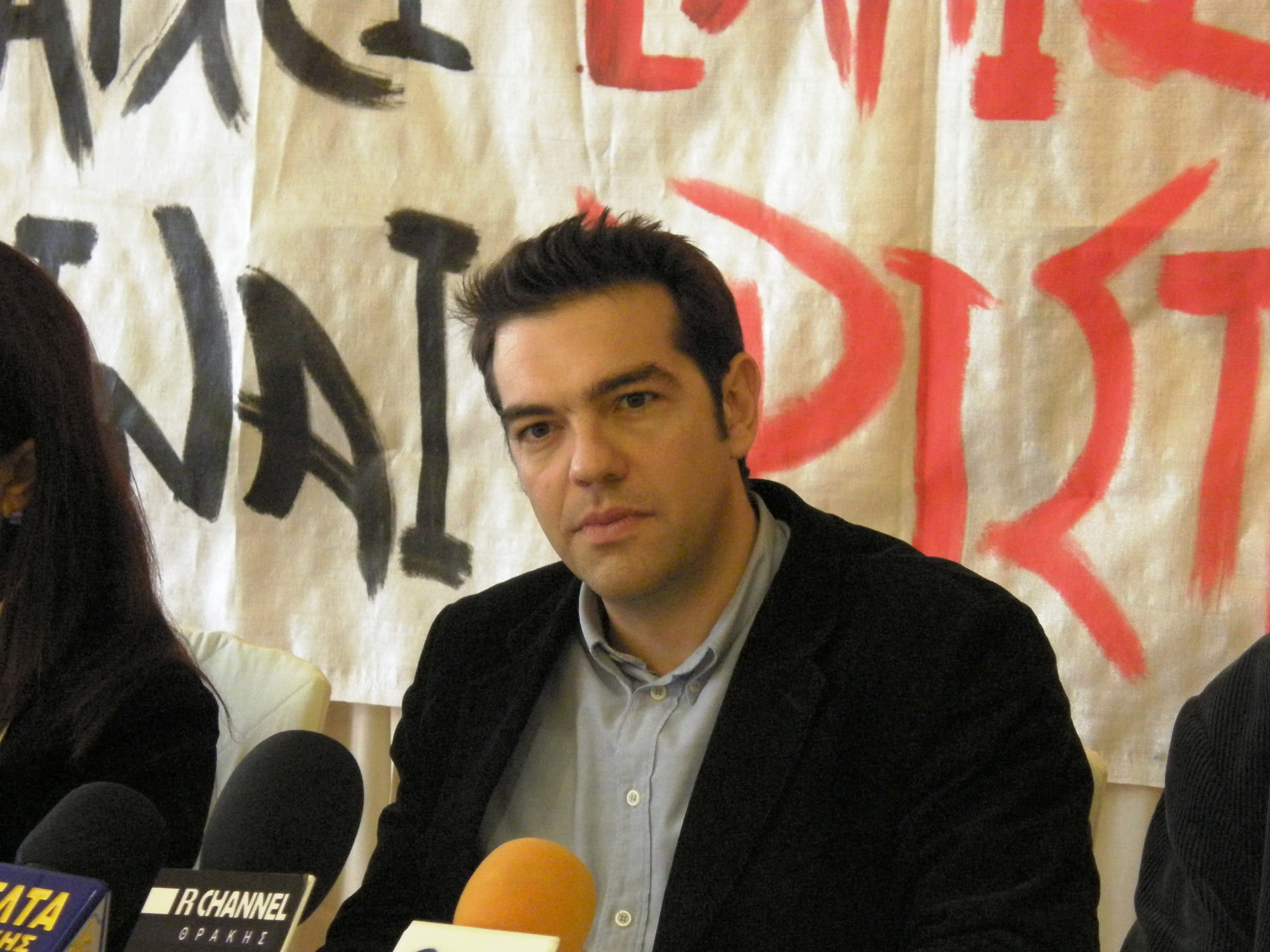
Alexis Tsipras in a press conference in Komotini. Image credit: Joanna / Lapost
Tsipras holds a very different vision for Greece and its future than Samaras currently does. In comparison with Saramas’s austerity measures, Tsipras advocates a vision where Greece unilaterally declares that it will not repay its debt and default. He follows a more populist platform and states that he will reverse many of the policy changes and measures that Samaras has employed during the past few years. For the Greek citizens, this means an increase in salaries, a higher rate of employment, and heightened pension rates. Ultimately, he argues that he will bring back the quality of life that Greece used to enjoy before 2010 – one of wealth, prosperity and comfort. With this rhetoric, he has gained a significant amount of followers in Athens.
The European Parliamentary Elections are crucial elections for the whole of Europe, but this year, particularly for Greece. While their purpose is to elect officials for the European Parliament, the winner of the Greek elections will have a strong impact on the country’s National Elections. In the circumstance that Tsipras wins the European Parliamentary Elections, he will obtain a certain degree of moral authority, leaving Samaras in a weak spot as Prime Minister. With his new public following, Tsipras is beginning to pose a great threat to Samaras, especially for the position of Prime Minister in future elections.
At the moment, for the first time since 2010, Greece is not in need of any international loans. The country has a trade surplus, which implies that the goods and services that Greece imported this year were less than they exported, something that hasn’t occurred in Greece since 1947. The economy is certainly heading towards a more sustainable path with more business opportunities. While slow, Greece is slowly moving towards progress.
Unfortunately, this road to progress has been painful for the citizens and has resulted in a lot of suffering for the Greek people, leading them to question the leadership of Samaras. The European Parliamentary Elections in May will be pivotal for the future of the country and will determine whether more drastic measures will take place in the country. There is a potential for Greece to exit the European Union, or will Greece continue down the road it is currently on, with Samaras leading the nation, leaving millions in poverty.
This article was originally published on St Andrews Foreign Affairs Review.





