
Although it has been a year since I moved from my hometown Amsterdam to London, I’m far from integrated in terms of the British food culture. Keeping a ‘normal’ healthy diet, I find it hard to find decent, affordable non-processed foods in the UK. Unhealthy foods are all over the place. My workplace for example; it’s a battlefield of candy stashes. The penetrating smell of a terrible microwaved Indian curry invades our office space, regular as clockwork, every day at 13.00pm. Even though I’m far from tempted to indulge in any of these ‘treats’, I can’t escape having to politely decline these well-intentioned offers. Strangely enough, in terms of food choices, I seem to be the odd one out. And when my colleague calls me a health freak for the simple act of eating an apple, I can’t help feeling both frustrated and completely misunderstood. Enough is enough.
To me, non-processed real foods should be considered normal, and not the processed foods you find in the supermarket. The consumers’ perception of food seems to have changed drastically in the last decade. We, as consumers, condone the food industry to stuff our faces with rubbish foods for the sole purpose of them making a profit. The majority of products in today’s supermarkets are modified in one way or another. Even the fruits and veggies can’t escape hidden nasties. The food industry can’t possibly make millions from selling plain apples, hence why fake, processed foods are created. Make popcorn out of corn, add some – presumably – natural flavoring and you have a marketable product. Selling the plain corn is barely as profitable. Moreover, preservatives are a cheap way to increase shelf-life. The gradual introduction of processed foods in our groceries got out of hand, to the point where people think that processed foods are normal, and apples are for health freaks.
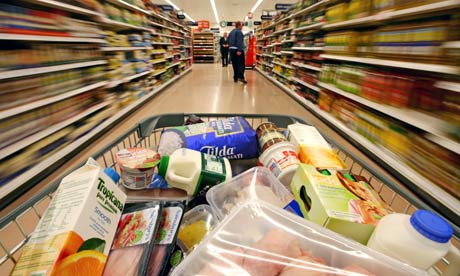
Sainsbury’s supermarket London. Source: The Guardian
In defense of bad eating habits, ‘eating healthy is too expensive’ is the popular excuse to blatantly swallow whatever the supermarket enthusiastically throws at us. To me, this is a misconception. Real food is not necessarily overpriced. It’s because processed foods are under-priced that real food seems more expensive. Selling guacamole with 4% avocado makes processed food cheap. “Products are completely stripped, then stuffed with additives to get a little bit of credit from it”, says Quirijn Bolle, owner of the Dutch real-food store Marqt. In his ‘ supermarket’, the quality of food is written in stone and a blacklist of additives keeps processed foods behind store limits.
Yet today, products with these additives became an everyday fare. And additives are just one of the worries that come with processed foods.

The Dutch Real-food supermarket Marqt. Source: adch.nl
At the Dutch real-food supermarket, no products are ever sold below cost price. In fact, Marqt is even planning to share its profits with the customer by returning store credits in exchange for purchases.
Marqt is different from organic stores like Wholefoods and Planet organic, which are supermarkets that sell real food along the lines of the old retail model. The innovative Dutch real-food store is in between a supermarket and an original market place. Fresh fish, cheese and bread are brought in on a daily basis. Suppliers are not pressured into increasing production; they deliver according to their capacity. By respecting the limitations of the supply chain, the detrimental consequences of mass production are avoided. “The last thing we want is to turn our supplier into a cheese-factory”, says Quirijn Bolle.
I wonder if the success of the new real-food supermarket is driven by the health-conscience apple-eating Dutchies like myself or if it could do equally well in the United Kingdom. Are food habits culturally defined or are they driven by marketing efforts? Either way, in both countries, the supermarket-world seems to be stuck in a money-driven vicious circle, with all the consequences that that entails. The food industry is poisoned and needs urgent reinvention. In the food industry’s drive to reduce costs they forgot how to make non-processed foods. Food is so important in our everyday life, and for our well-being and health. It might sounds a little utopian, but in something as essential as the food industry, I think that money should be used a means, not an end goal.
About the Author






Dear Friend thanks a lot for your articles are helping me so much. Todo lo mejor desde México.
[…] Originally published on the International Political Forum […]