
The impacts were devastating: pictures of otters, fish, and birds coated in crude oil flooded the media and newspapers. The cleanup effort took months of work, recovering any animals that survived, then the difficult task of cleaning them began. According to John Wiens of the New Scientist:
While many aquatic species have had sound recoveries, such as the salmon, many other species like the pacific herring and pigeon guillemot have not.
Other species have taken decades to return to pre-spill levels, such as the sea otter populations and harlequin ducks. The Prince William Sound is now only a shadow of what it was before the spill.
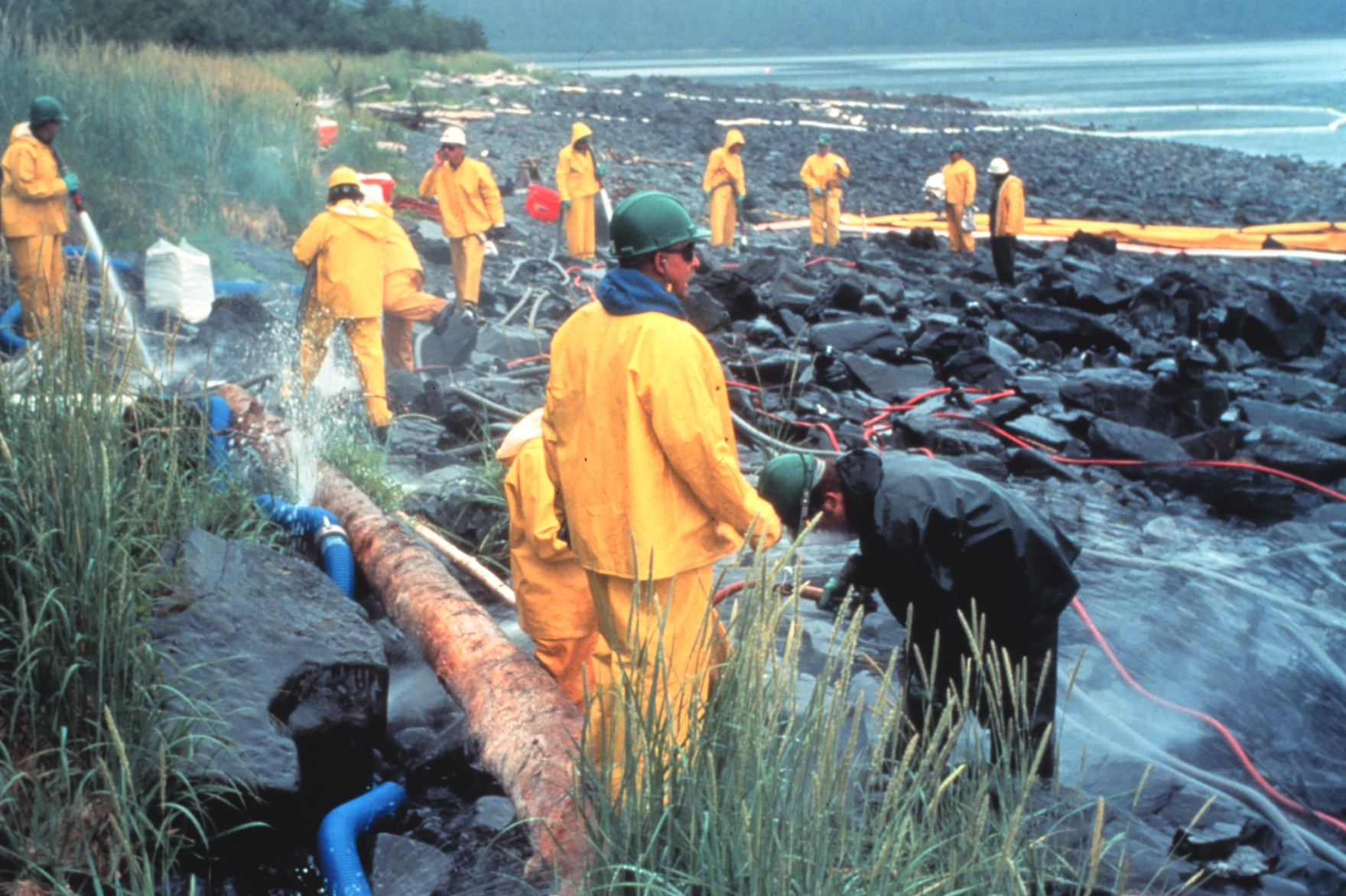
EXXON VALDEZ Oil Spill Trustee Council
In a recent interview with NPR, two animal rescue workers recounted their experiences taking care of the animals and the horrors they saw. “I had nightmares for years, because they screamed. I’d never heard a sound like that,” remembered LJ Evans, a local resident and volunteer animal rescuer.
The local economy was also devastated, with the prices for Alaskan salmon, cod, herring, shrimp, and crabs plummeting as consumers opted for tuna and fish from other areas or farmed. Many fishermen, unable to catch fish in the sound or unable to sell what they did catch, could not pay loans, rent, or their bills. For them, the compensation checks from Exxon could not come fast enough. Even today, their lives and industry are still suffering from the spill. In the words of one local fisherman, “The shrimp are slowly, slowly coming back. The crab aren’t back. The herring aren’t back. The salmon are back in abundance.”
25 years on, and most visible traces of the Exxon-Valdez spill have vanished from the Prince William Sound, but the oil is still there, buried under the rocks and boulders of the waters as well as the memories of those who live there. Exxon was looking at $5 billion in damages claims from local residents and fisheries that were impacted. Exxon also drastically increased investment in emergency response personnel, infrastructure, and training in case something like this ever happened again. At the time, the Exxon Valdez oil spill was the worst in American history. But that was then.
And this is now.
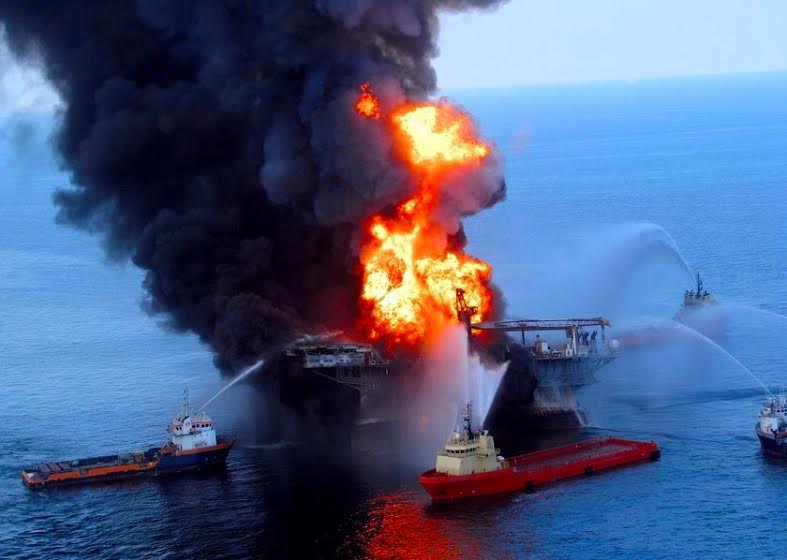
Source: Associated Press
The Deepwater Horizon explosion shook the United States, with President Obama calling it “the worst environmental disaster America has ever faced.” 210 million gallons of oil were spilled into the Gulf, 11 workers were killed, the fishing industries of cities and towns along the Gulf were wrecked, and the ecological damage is unparalleled. Scientists are still uncovering consequences from the Deep-water Horizon incident on the species that inhabit the Gulf’s waters, such as grouper, shrimp, bottlenose dolphins, and Bluefin tuna.
In other news, earlier this month the U.S. Environmental Protection Agency and BP settled their dispute over the consequences of the Deepwater Horizon oil rig catastrophe four years ago, namely by ending the EPA’s 16 month ban on BP from bidding on offshore drilling tracts in the Gulf of Mexico. In exchange, BP dropped its own lawsuit against the EPA and adopted “a set of safety, ethical and corporate governance requirements.” BP was awarded 24 of these tracts only a week later for a total price of $41.6 million; however, BP’s bids were one of the smaller bids, with the highest winning bid belonging to Freeport McMoRan Copper & Gold Inca at $68.79 million. The total from all winning bids topped out at $872 million.
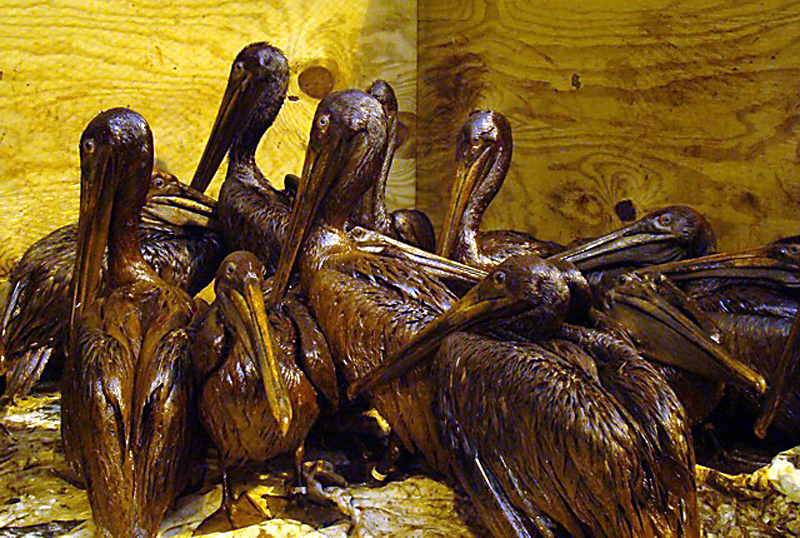
Heavily oiled Brown Pelicans captured at Grand Isle, Louisiana on Thursday, June 3, 2010 wait to be cleaned of Gulf spill crude at The Fort Jackson Wildlife Care Center in Buras, LA. Image credit: International Bird Rescue Research Center
Though the Exxon Valdez and the Deepwater Horizon spills are the two largest spills in U.S. history, they are certainly not the only two. Including spills from land-based resources, they are only two among hundreds.
In the first few months of 2014 alone, there were spills from trains and pipelines. Just a few days ago, a pipeline burst in Ohio, flooding a nature preserve with over 10,000 gallons of crude oil; on Friday a pipeline near Alexander, North Dakota burst,
spilling approximately 34,000 gallons of oil; and on Saturday a ship collided with a barge possibly spilling over 168,000 barrels of “thick, tarry, oil.”
Seriously, this is occurring literally every week — It’s almost impossible to keep up with it all. However, the spills from land-based sources are (typically) much easier to clean up and control, and are also on a much smaller scale than their aquatic counterparts; on the other hand, they occur much more frequently.
For now, our society and civilization are still entirely dependent on oil, despite the enormous growth in renewable energy development; this leaves only two real questions then.
First, what (if anything) can we do to shorten our dependency and decrease the likelihood of more major spills?
We can work to establish policy to enforce more strict and increasingly demanding fuel efficiency standards, and to encourage automakers to convert their products from fossil-fuels to hybrid and electric vehicles.
We need to incentivize public transit more through increased promotion and renewed investment, even though already more Americans are riding transit now than they have since 1956. Continuing to improve services will only increase ridership and demand for public transit. Additionally, car-sharing services like Uber and Lyft need to be fostered and included in city transport planning.
We need to incentivize more dense development in our cities and enact policies to curb sprawling suburban regions. Many American cities, such as Portland, OR, Lexington, Kentucky have urban growth boundaries that limit the developable area of their cities. By promoting more densely developed communities and neighborhoods, and properly implementing the other two strategies, reliance on driving (and oil) can be dramatically reduced considering “Over half of all vehicle trips are between 1 and 10 miles,” according to the Federal Highway Administration.
In the meantime, where do we want to get our oil from?
The only other major resources for future development are tar sands, which is an extremely carbon-intensive fuel to extract, refine, and distribute. This would require drilling in the Arctic, which has so far proved an extremely daunting task and according to Rick Steiner, Professor at Oasis Earth, “oil drilling in the Arctic Ocean cannot be done safely — there will be chronic degradation, there will be spills.”
Despite all of these disasters, risks, and negative consequences, the U.S. Government is expanding oil exploration to new, undisturbed parts of the nation. As part of President Obama’s “all of the above” energy strategy, formerly protected lands in the Arctic are being opened up for Oil exploration by Shell. The final question then is, are the risks of continuing offshore drilling in increasing difficult working environments, to our health, aquatic species, ecosystems, and the economies dependent on them, truly worth it?
If you think that drilling in the Arctic is a terrible idea, you can sign Greenpeace’s petition to tell President Obama here.
This article was originally published on Urban Times.





