
When Mitt Romney labelled Russia as “America’s No.1 geopolitical foe” in his 2012 presidential campaign, the President said “the 1980s are now calling to ask for their foreign policy back because, you know, the Cold War’s been over for 20 years.” But Russia under Putin has become the paramount counter-force to U.S. influence around the world, and Washington’s inability to deter Putin’s belligerence will certainly have repercussions beyond Russia.
The swiftness of Russia’s annexation of Crimea only restated Putin’s geopolitical challenge to U.S. power. The pure fact that the United States and its partners share major interests with Russia reveal dangers of straining cooperation between the two countries.
Syria
Stabilizing Syria and preventing the spread of extremism are central to international attention on Syria, and Russia and the United States share invested interest in both of these issues. Secretary of State, John Kerry, held his first meetings with President Vladimir Putin and Foreign Minister Sergei Lavrov on Tuesday, with the hope of gaining support for a U.N. Security Council resolution against Bashar al-Assad. However, Putin’s criticized seat on the fence regarding Syria is carefully calibrated. It is for Putin, not only a way to maintain one of its few allies in the region, but also a statement of political power: one that counter-vials American preference. Some have associated the Russian leader with a tsarist edge, his fence-sitting according to Peter Eltsov, a reflection of his political preference: “The Russian President is trying to convey his conviction that monarchies and dictatorships are not necessarily worse than democratic forms of government”.
North Korea, Iran and Nuclear Weapons
On the same day Kerry met with Putin and Eltsov, South Korea’s “Iron Lady,” visited the White House. The exuberance of the visit and the mock elections aside, Washington and Russia’s vested interest in ensuring North Korea remains nuclear-less is testament enough of the importance of this relationship. Russia has been key to the U.S.’s non-proliferation agenda, extending to keep Iran from developing nuclear weapons as well.
Both countries are jointly negotiating limitations on Iran’s nuclear program, and they have joined in the effort to destroy Syria’s chemical weapons arsenal. But whether the two leaders will continue to work together has some analysts doubtful. Pomeranze said Obama’s reliance on Putin in Iran and North Korea will most likely have to dissipate:
When national security adviser Susan Rice was asked on March 14 whether cooperation will continue, with reference to Moscow’s intentions she said, “We haven’t seen any evidence to the contrary.”
In the latest round of talks in Vienna over Iran’s nuclear program, Russian Deputy Foreign Minister Ryabkov warned that Moscow might revise its stance in the Iranian nuclear talks due to tensions with the West over Ukraine.
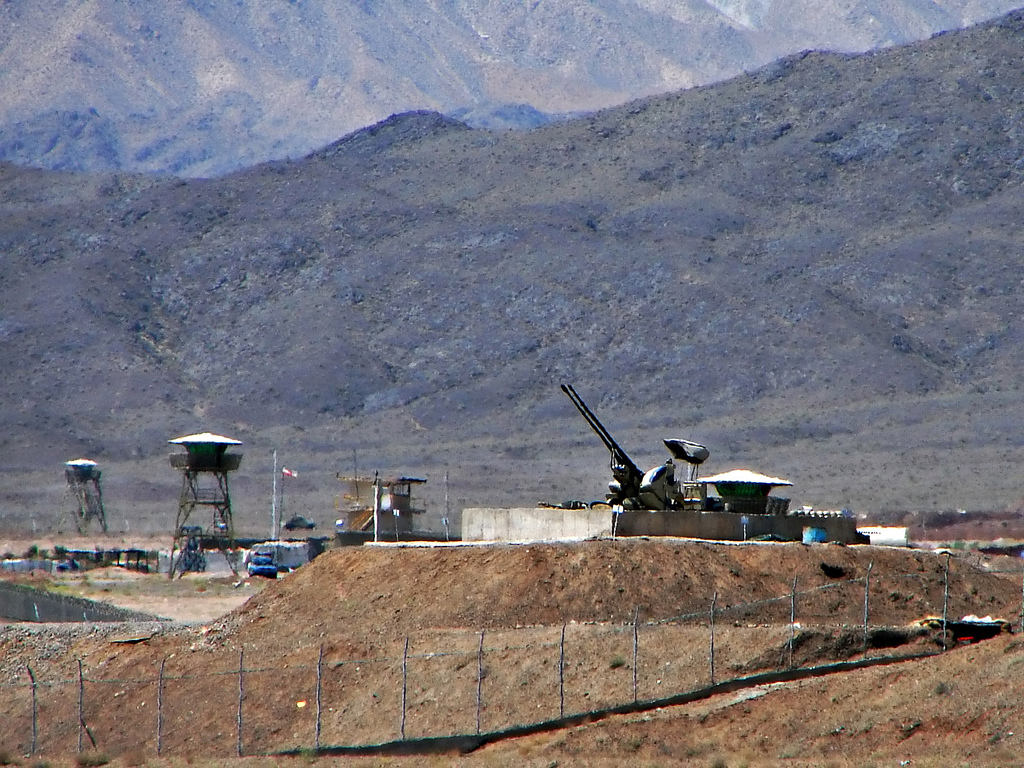
Anti-aircraft guns guarding Natanz Nuclear Facility, Iran. Image credit: Hamed Saber
Post-NATO Afghanistan
When Russia invaded Afghanistan in 1979, President Carter responded with a grain embargo, ended the SALT negotiations, boycotted the Moscow Olympics of 1980 and indefinitely weakened Russia as a global imperial power through (albeit wrongfully) providing massive military aid to the mujahedeen. The counter-insurgency still plays into the Taliban’s stronghold in Afghanistan, and the country remains tied up in any discussion of the U.S. and Russia.
Almost ironically, over the weekend, Hamid Karzai entangled Afghanistan into the mix evermore, by joining Syria and Venezuela in expressing his support for Russia’s annexation of Crimea. One New York Times writer notes the historical resonance that the Crimea annexation may have with Afghanistan, which remains fairly sour about Britain’s partitioning of territory between Afghanistan and Pakistan. Pakistan aside- (Afghanistan wouldn’t be able to annex the Northwest Frontier Province of Pakistan: another nuclear-armed military powerhouse), faced with division between Russia and the United States, Afghanistan is (apparently) more inclined to partner with the power they know rather than the power from the far West. Could Afghans have transferred their historical antipathies from Russia to the US? If they have, that’s a repercussion of concern.
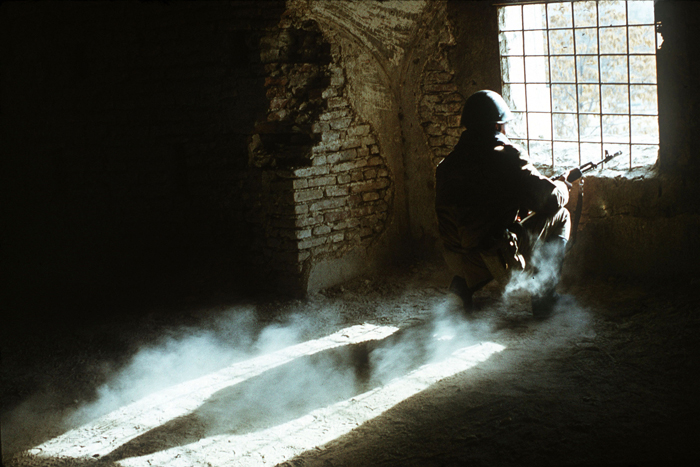
A Soviet soldier waits in the shadows, during the Soviet war in Afghanistan. Image credit: Mikhail Evstafiev
Russia’s Neighbours
Russia has proven its capacity to challenge U.S. influence and protection globally, Crimea being the latest shameless example. Russia’s neighbours in the Eastern part of Europe require reassurance of protection and Obama has dispatched Joe Biden to reassure its NATO allies in this region. In a Washington Post article, Krauthammer suggests the US pursue three objectives to reverse its ‘weak’ appearance in the face of the Ukraine crisis: “Reassure NATO. Deter further Russian incursion into Ukraine. Reverse the annexation of Crimea”. A CNN editorial says that Putin’s actions require that the US “acts much tougher than the rather feeble travel and visa bans now being discussed will allow”.
Stronger and more blatant reactions are also supported by Senator John McCain, who prefers direct U.S. and military assistance to Kiev over Obama’s preference for diplomatic solutions to the problem in Ukraine. However, diplomacy and not severing ties are central to forging a solution because of the sheer danger destructed relations between Washington and Moscow will bring forth. Putin is certainly not demonstrating any intention of pulling back, and if the US does not continue to engage with Russia, Russia will continue on in its bully way. Obama must react strategically, and diplomacy is the only way to ensure that Russia becomes willing to separate Ukraine from these issues of major interest to the US and its partners.
About the Author





