
It was not long ago that a crippled man became the most powerful person on the planet. Franklin Delano Roosevelt was the longest-serving President of the United States, a man who helped take the country out of an economic depression and defeated the German and Japanese armies in the second World War. And yet, no matter how hard he tried to present himself as a strong and determined leader, he was unable to walk. In the summer of 1921, during his summer holidays in Canada, Roosevelt fell ill with polio. Within just days, his legs became paralysed, and the muscles in his back and arms also lost strength. Like millions of sufferers at the time, Roosevelt fell prey to the incurability of his disease, and was confined to life in a wheelchair.
Poliomyelitis – more commonly know as ‘polio’ – is a disease that comes in many forms, and spreads viciously from person to person. It causes no symptoms in the vast majority of sufferers and attacks their motor neurons, permanently paralysing limbs and weakening muscles. Being an incurable but rarely lethal disease, polio leaves behind a trail of crippled people who will be dependent for the remainder of their lives. The USA saw an average of 50,000 cases a year during the 1950s, with a bit under half of them causing severe paralysis. While statistics for other countries are hard to find, it seems obvious that poorer, less hygienic societies had epidemics that dwarfed those of the United States.
The global eradication campaign begins
In 1955, history changed forever as the discovery of Jonas Salk’s polio vaccine was announced in the United States. Further vaccines were quickly developed and soon became cheap and simple, as they could be delivered orally inside a sugar cube. From that moment on, humanity embarked on a global initiative to eradicate polio, with fantastic results. In less than ten years, the annual rate of infection in the United States went from tens of thousands to fewer than 200. Dozens of countries were declared polio-free throughout the 1960s and 1970s; and although progress was slower in developing countries, there were tangible improvements there too.

The decline of polio in the last two decades has been phenomenal.
By the start of the 21st century, the goal was in sight. There were just 385 wild cases of polio worldwide in 2013, and the disease was endemic in only three countries: Pakistan, Nigeria and Afghanistan. However, things have taken a turn for the worse in recent months, and the official goal of 2018 as the year of complete eradication is now under threat. New cases worldwide have more than doubled, three new countries are affected by the disease, and the World Health Organisation has been forced to declare a global emergency. Just what has gone wrong? Why are we moving backwards after decades of solid advances?
The causes of recent setbacks
The first major reason is conflict. Durable conflict. The war in Syria has been going on for years now, and the situation in Afghanistan, Pakistan or Nigeria is not much better. Armed conflict makes it hard for vaccination workers to reach local populations, and may even turn them into targets of violence. This is particularly a problem in long-term cases of unrest, as vaccination efforts are halted for months or years on end. This means that, in scenarios of violence, new generations of children may be born and grow up with no access to polio vaccines, therefore being extremely vulnerable to the disease.
Furthermore, one of the side effects of wars is that they force populations to move. This is happening in Syria, in Nigeria, in Sudan, and will happen wherever there is a violent conflict. This may end up introducing unvaccinated, or even infected people, into countries where polio was not previously an issue. Just think of polio cases in recent years: the disease is endemic to Nigeria, but it was exported to the neighbouring countries of Kenya, Cameroon, and more recently Equatorial Guinea. Simply put, if today’s violent conflicts continue, more people will be forced to move, and polio will be harder to detect and stop than before.
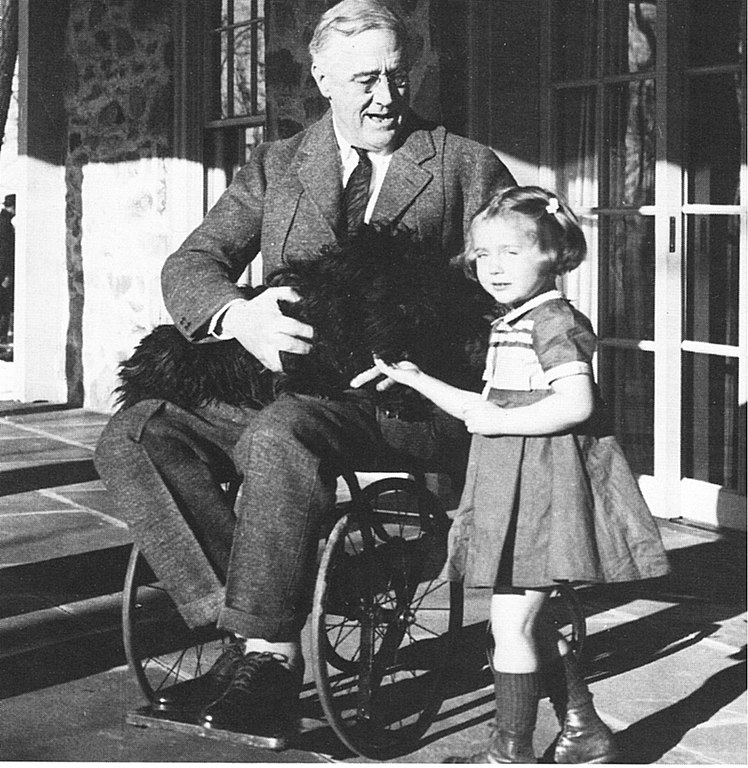
Franklin D. Roosevelt, probably the most famous victim of polio, just 70 years ago
Finally, there is the controversial politicisation of vaccines (some more on that next week). Some years ago, the United States organised a fake vaccination drive in Pakistan. The official goal of this drive was to give out free vaccinations for hepatitis B, but it turns out that the actual intention was to collect DNA samples in the area where Osama Bin Laden was thought to live. And just like that, the act of making children immune to a crippling disease became politicised. As a direct consequence of that past sham, vaccination workers in Pakistan are now targeted by armed groups. They are no longer seen as benevolent forces, but rather as undercover agents of the enemy camp. The number of people linked to the vaccination drive that have been killed in Pakistan is now upwards of 40, and the chances of eradicating polio in one of the just three remaining sources of the disease are getting slimmer every day.
If we look at the global effort to eradicate polio as a whole, it is hard to be pessimistic. The disease has gone from being an enormous international issue that crippled even the most powerful man in the wealthiest country on earth, to affecting jut a few hundred people in around a dozen countries. We can almost guarantee that the disease will be eradicated in the next decade or so. However, the setbacks that have affected this global drive in the past months should remind us that public health and politics go hand in hand. No matter how much effort we put into vaccination projects, it is hard to move forward when some use these tools to pursue selfish goals, or when violence provides disease with a safe house.
About the Author






[…] week we saw how the global drive to eradicate polio has suffered a serious setback due to the politicisation of […]