
On July 9th 2011, over two decades of civil war climaxed in the creation of South Sudan. Celebrations of independence broke out in Juba, capital of the world’s newest nation state, after a referendum to secede had been passed by an overwhelming majority. The new President, Salva Kiir, hailed the occasion as, “An expression of our common hope to build a new, shared future for all the people of South Sudan”. Sadly, these celebrations were short lived as now, not three years later, one million people have been displaced and thousands killed as the region once more finds itself ravaged by internal conflict as a manifestation of rivalries between the Dinka and Nuer tribes.
Prior to Independence, Sudan was Africa’s largest country, a betrothal of Muslim Arabs in the North and African Christians in the South, the United Kingdom playing its customary role of imperial matchmaker. The British left in 1956 after delineating the country’s borders according to their own interests with little thought for the 400 different ethnic groups that called Sudan home. Colonial boundaries splitting kin and fusing enemy was an approach adopted throughout Africa, culminating in the root cause of countless civil wars in the latter half of the 20th Century.
Indeed, the limited airtime afforded to the South Sudanese conflict when compared to, say, that of Ukraine, is indicative of Western media’s attitude to intra-state African warfare. Nonetheless, there is a unique angle to this story. The fact that South Sudan was allowed to secede at all is unprecedented. Secession totally undermines Article 2 of the 1945 United Nations Charter, which outlined the global leaders’ commitment to safeguarding, “the territorial integrity…of any state”. That this commitment was eschewed in order to split Sudan renders the current violence all the more noteworthy. And all the more disappointing.
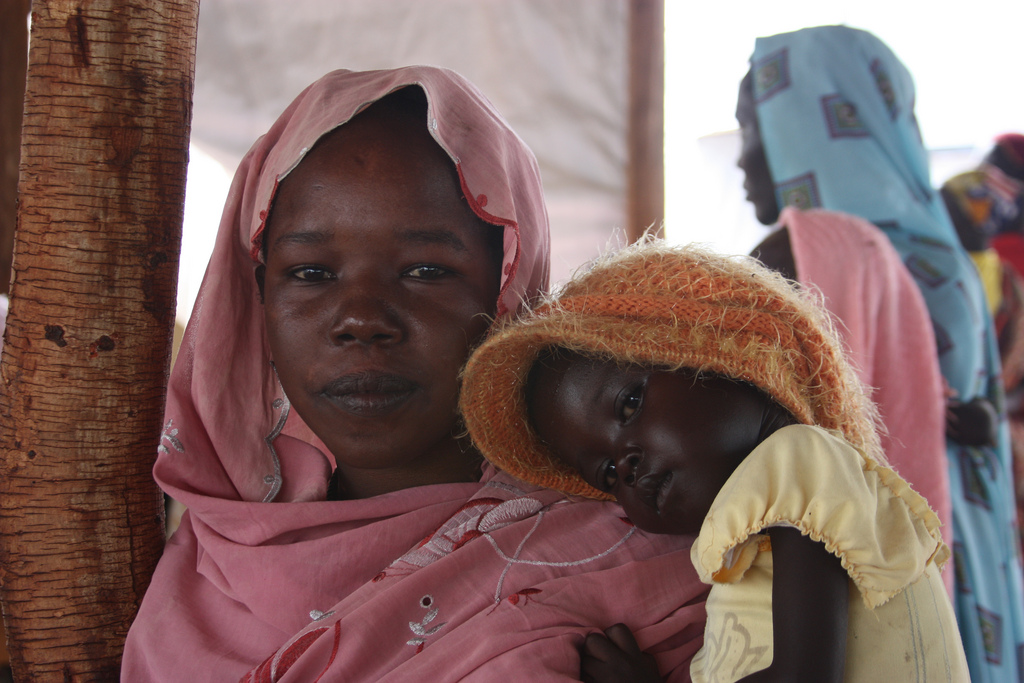
Sudanese refugee mother waits with her sick child at the MSF field hospital in South Sudan. Image credit: European Commission DG ECHO
The 22-year civil war between the African South and Arab North is relatively easily explained by historical issues such as Arab subjugation of Africans, the denial of their civil rights, and cultural repression. Not to mention the Northern Muslims’ attempts to enforce Sharia Law upon, and enslave, the Southern Christians. These are typically thorny subjects and indicate how poorly informed the imperial powers’ decision was to leave the country under the North’s administration. The current conflict, however, is not so black and white.
After President Kiir’s cabinet purge in July 2013, during which he sacked Vice President Riek Machar, discontent grew amid accusations of ‘dictatorial tendencies’. In December that year, fighting broke out amongst the Presidential Guard and quickly spread. The dispute ignited tensions between the nation’s two largest tribes, the Dinka, to which the President belongs, and the Nuer, Mr Machar’s tribe. The ensuing factionalism suggests that the polarising debates prior to Independence were centred myopically on north-south animosity, paying scant attention to intra-region dynamics and thus inadequately preparing the South for self-determination.
After several decades of war during the last century, a considerable arsenal of weapons accrued in the South and is now being used to carry out appalling atrocities, leading the UN to decry government and rebel forces’ activities as crimes against humanity. It claims that it is sheltering some 80,000 people from the warring factions that have brutally raped and ethnically cleansed entire villages.
Since fighting began, oil output, the blood that keeps the otherwise sickly economy beating, has dropped to 160,000 barrels per day, down a third. For this reason oil-rich areas like Bentiu, which was recaptured by the rebels in April, have provided the backdrop to the most intense fighting. 30,000 Dinkas are sheltering at the UN compound there; many, both male and female, have experienced sexual violence at the hands of the Nuer, a similar fate to Nuer civilians in Dinka strongholds such as Juba.
U.S. Secretary of State, John Kerry, has suggested that we may be facing another genocide if action is not taken immediately to stem the slaughter. Both Mr Machar and President Kiir arrived in Addis Ababa this week for their first face-to-face talks since violence broke out. With 3.7 million people facing famine and oil output dropping by the day, it is imperative that they reach a ceasefire agreement, lest self-determination becomes self-destruction.
About the Author






Very interesting read, can you go into a bit more detail about how the British leaving caused such detriment to the country? Apologies if it’s an ignorant question but I have got great background knowledge on the subject
Very informative!
It was news to me that there were so many different tribal groupings within the original borders of the country. I have the feeling that bringing back together such a disparate group when there is serious economic uncertainty and widespread ownership of the important oil resource, is going to require serious levels of external engagement.
This is a really nice and concise introduction to the current conflict with a good grasp of its historical background. Your style of writing is clear and well structured, maybe they could give you some more space for some more analysis. Keep going.
There are fundamental assumptions left unaddressed. The pre-supposition that the average Sudanese shares the hopes an aspirations of the average proponent o liberal democracy being the main one. Let’s leave aside contentitous issues like child slavers in Nigeria (Africa’s largest and fastest growing economy). Consider that the ANC just won a landslide victory in a relatively free and fair election in South Africa even when state institutions have shown corruption at the highest levels of government and living standards for the poor majority are in free fall. There is a conundrum at the core of African politics and explaining it in terms of a colonial experience which ended nearly 55 years ago is sounding increasingly thin.
Great article, depicting some of the harsh realities of life. Looking forward to a follow up article
An interesting read Marc, and as is generally the case, politics seems to be at the heart of the problems. Great writing and keep us updated with how matters progress.
This article has really got me Engadged in something I haven’t thought about before. I am feeling lucky and priveledged to be a resident of the UK and am less likely to complain about the state of the uk in the future. Our problems are minor compared. Really enjoyed the back ground story embedded in the facts of what is happening today gives a full picture and doesn’t feel biased which is hard to do these days.
Brilliant piece. A complex situation explained very well. Thank you.
Well written! It’s sad to see the lasting effects colonialism has on Sudan over 60 years on. Hopefully the talks with Mr Machar and president Kiir will be the start of a positive move for the future of Sudan
Great article. Thought provoking stuff!
Thank you for informing me of this, had no idea such violence was going on in such a large country – akin to your point on lack of media coverage in the western world, that is of course until it gets bad. I think you summarise importantly, I really hope an agreement can be made before we see another Rwanda situation. When you say cite imperial powers, who’s decision was it to leave the county under the North’s rule?
Applauding the writer for shedding light on a complex topic which is widely ignored or given only cursory attention by publications and media alike, written with clarity and aplomb, and actually explaining the origins of the situation currently happening. Eager to read more about it as developments continue to unfold.
Great read and has shed a lot of light on an awful situation that as you have said has been kept on the dark by our media. It’s a sad indictment of our media but they serve to report news that is of social and economic importance to us and sadly unless you are an African country with a wealth of resources that can affect out way of life (think Libya) then we will continue to need articles like this to understand these situations so thanks.
Excellent article that that serves up the hors d’oeuvre and even the main course very well indeed but, with respect, frustratingly leaves the palate wanting more.
Marc, this is good stuff, but you do need a follow up article that will put many unanswered questions to bed.
At least you succeed in posting a very serious and necessary warning.