
Texas is the only state in America without zoning laws. Once oil was discovered in East Texas in the late 1800′s, the city of Houston became a prized location for entrepreneurs and corporations. The oil boom can be directly linked to lax zoning laws in Texas because the onset of state prioritized economic gain over environmental quality occurred very early on from a development standpoint.
It doesn’t help matters that Houston has been acclaimed by the federal government and economists as an advanced and booming technological city. The major reason for Houston’s continued success through the Great Depression is the abundant support of the federal government in approving and funding various company energy initiatives.
Present day Manchester, a neighborhood in East Houston, is home to mostly low-income, Spanish-speaking families. Many of these community members are employees at Exxon or Valero. This situation is most certainly an example of environmental racism – one that has historical roots in colonization.
According to literature put out by activists in the area, a plethora of chemicals exist in the area which cause serious health problems ranging from cancer and infertility to chronic headaches. The Houston Valero Refinery is responsible for emitting Benzene, Propylene, Ethylene, Nitrate Compounds, Sulfur Dioxide, and Carbon Monoxide – all carcinogenic and detrimental to health. While the EPA (Environmental Protection Agency) has set in place standards for air and water quality that limit the amount of waste an industry can emit, these standards are fairly lax, considering that legislation favors economic succession over environmental risks.
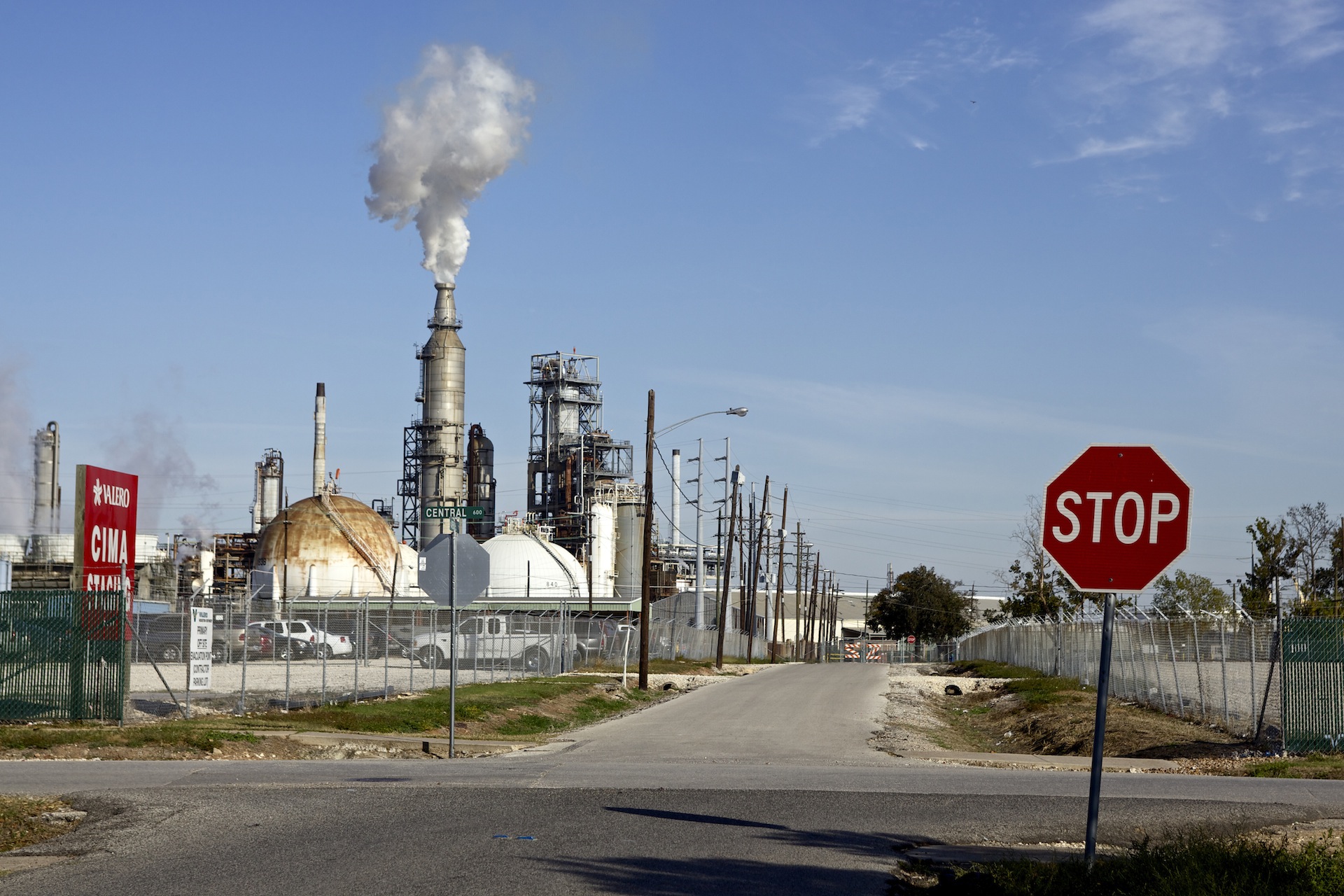
Thanks to Houston’s lack of zoning laws, neighborhoods are quite literally placed within feet of private industrial property. Behind playgrounds are smoke stacks. This is a raw example of resource disparity; communities in Manchester are some of the poorest and disadvantaged in the nation, yet they are facing the greatest health risks, not to mention bleak aesthetic surroundings. Kat Stevens, an organizer for a group called Texas Environmental Justice Advocacy Services, or T.E.J.A.S, says that in addition to the vast establishments by the oil industry, citizens of Manchester are also surrounded by a car crushing facility, 17 railway crossings, and a major highway (that leads to the Houston Ship Channel).
Luckily, activists are committed to giving community members of fence-line neighborhoods a voice. T.E.J.A.S, along with Tar Sands Blockade, are trying to alleviate the injustice through a number of programs. According to literature put out by T.E.J.A.S, the two organizations are “actively working to create solutions to realistically address the needs of [Manchester], including building grassroots resistance to environmental racism and putting corporations like Valero on display for the egregious violations of human rights they are recklessly and ceaselessly committing in communities like Manchester.”
Organizers strive to educate residents about the chemicals and methods utilized by the industry so that they feel empowered to fight back. Many residents of Manchester do not speak English as their first language, so it’s helpful to have others to spread narratives and stories for the public and companies to hear.
Projects are only becoming wider and more invasive as the Keystone XL Pipeline reaches stages of completion. Grassroots organizations are currently committed to encouraging residents to resist the pipeline; however, the federal government still favors interests of large corporations as it has historically. Until the nation begins to prioritize socially and environmentally responsible energy, many communities will continue to face horrible health consequences and the wealthiest will benefit the most.
This article was originally published on Urban Times.





