
In recognition of World Refugee Day, it is appropriate to acknowledge the trials and tribulations that internally and externally displaced people are forced to endure. Many humanitarian crises seem to stem from economic, resource, or political instability within countries and regions. When this uncertainty boils over it can sometimes culminate in protest, revolutions, civil war or even international conflict. No region of the world is indefinitely immune to this instability that has led to so many conflicts and ultimately refugees.
If we look at Myanmar, located in South East Asia, we see just how politics can affect the lives of the population. UNHCR (United Nations High Commissioner for Refugees) in January 2012 estimated that around 500,000 people are displaced by conflict in eastern Myanmar, and another 800,000 Rohingya Muslims in western Myanmar are stateless and lack basic human rights. Approximately three million Burmese have been forced to flee to neighboring countries. Around 150,000 refugees from Myanmar live in camps on the Thailand-Myanmar border, which has been a source of tension between the two countries. Though most refugees have fled to Thailand, large amounts have spread throughout the region and as for east as the United States of America who have received 70,000 Burmese refugees.
Gross amounts of human rights violation have had a consistent presence since Myanmar (formerly named Burma) gained its independence in 1948. The exclusion of the minority population from representation in government and the isolationist policies by the government initially catalyzed and has continued to exacerbate the problem.
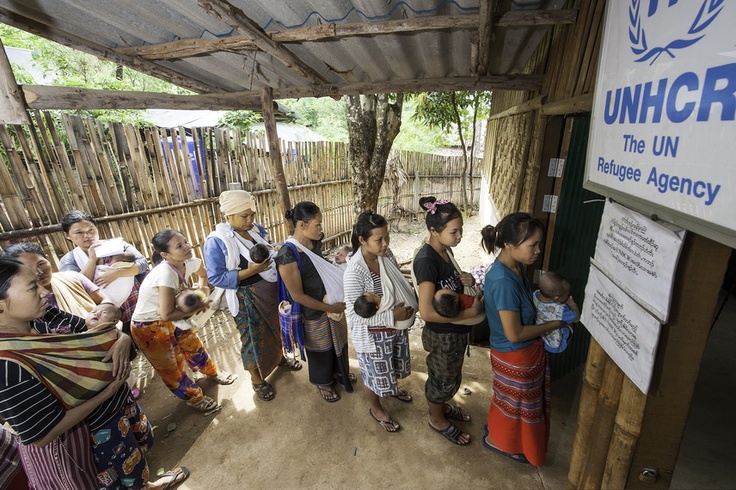
May 24, 2012 – Mae Sot, Tak Province, Thailand – Moms stand with their new born babies to register them at the Birth Registration Office of UNHCR inside the Mae La refugee camp in Mae Sot near the Thai-Myanmar border on May 24, 2012. More than 140,000 refugees have been living in nine refugee camps scattered along the border in Thailand after the minority ethnic group fled their country in 1995 following a major offensive by the Myanmar government army against the Karen National Union. Photo Credit: UN Photo/Kibae Park
If we readjust our gaze to the African continent we see a similar situation. The lack of government in some states threatens to spill over their boarders and plunge other countries into turmoil. The Central African Republic, Somalia and Sudan are examples of these failed states. The fight over natural resources – such as water, oil, precious metals and diamonds – have allowed warlords to disseminate through these countries, terrorizing these populations. Being forced to face starvation, forfeiting their children to militias and living on less then $1 per day leaves civilians few other choices then to flee to neighboring countries as a refugee.
Much of today’s international news coverage is dedicated to the refugees of the Middle East region, most notable those from Syria and Iraq. Political instability, which has exponentially increased after the proliferation of the 2011 Arab spring, has allowed for the deterioration of culture, health, the economy, education and more. Both these Middle Eastern countries are said to be experiencing a ‘lost-generation’ as more and more youth experience lack of education and employment opportunities. Human Rights Watch estimates that there are over 2 million internally and externally displaced Syrians due to this civil war.
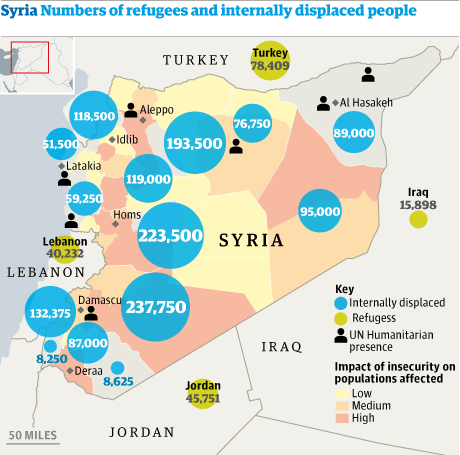
In Iraq, the rise of ISIS and their systematic attacks on the establishment has started a chain reaction that has already seen millions flee there home in fear. UNICEF (United Nation International Children Emergency Fund) on Wednesday upgraded Iraq’s latest crisis to a level 3 humanitarian disaster — its most severe designation — as U.N. officials said they were scrambling to provide basic services while preparing to cope with the aforementioned 1.5 million displaced people. These attacks from the Islamist Sunni group pose a very real danger, as they continue to gain more and more support through viral videos and recruitment. The government In Iraq has called on the United States of America for military strikes to halt the dissemination of ISIS within Iraq and other parts of the Middle East and North Africa region.
Though the book is not shut on these refugee crises, the similarities in the atrocities they face are staggering. Thousands of miles separate these regions, yet almost all of the refugee camps have the same symptoms. The lack of the consistent supply of basic amenities, such as food, water, and medicine, increases the fight for survival even within the “safety” of the camp.
We have seen the refusal by the Syrian government to allow NGOs unfettered access into camps that are located within fighting areas and opposition strongholds. Though Islam normally considers cat and dog meat unfit for humans, in October 2013 Muslim leaders in war-torn Syria issued a fatwa allowing the citizens in the embattled suburbs of the capital Damascus to eat this meat to satiate their hunger, according to multiple reports. Once considered free of polio, Syria has seen a recent outbreak of the disease in its camps and elsewhere, which is proof of further deterioration.
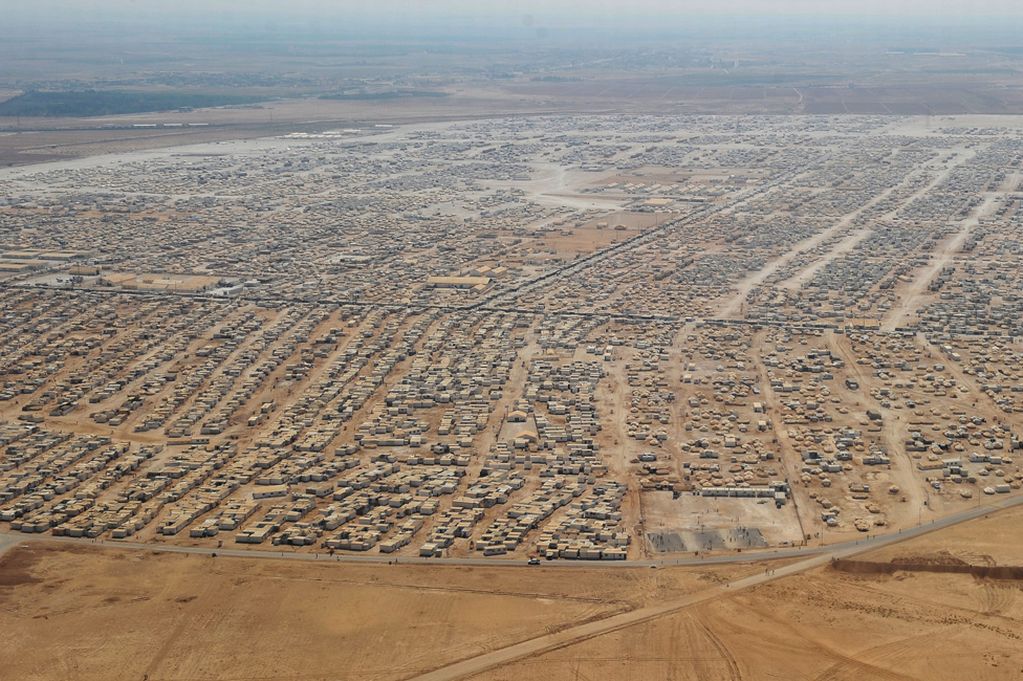
In Myanmar the ongoing blockade on critical aid to more than 100,000 displaced Rohingya around Sittwe has amounted to crime against humanities several rights agencies have said. Refugee camps have the appearance of concentration camps, as armed guards do not protect the population, but instead ensure they do not escape. Malnutrition and sickness such as diarrhea and dehydration claim thousands of lives, as camp officials refuse food and water.
Sectarian violence in the Central African Republic has seen the recruitment of child soldiers from refugee camps. The young prey on the old and weak, as crime rates are astronomical high due to the lack of no real police force. Slave labor, human trafficking and rape of the women and children are a common occurrence within refugee camps.
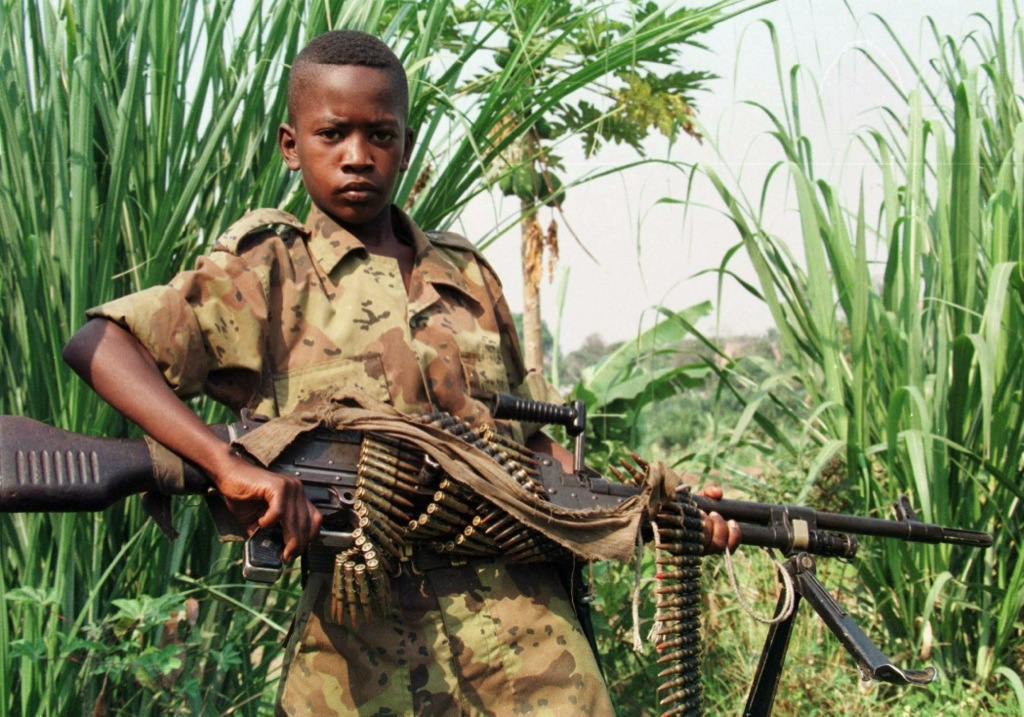
A young rebel soldier poses with his machine-gun on September 2, 1998 in Kalemie, southeast of DRC. PHOTO: ABDELHAK SENNA/AFP/Getty Images)
The lucky few that are able to avoid refugee camps and are allowed entrants into neighboring countries are still not fully free from ridicule and strife. Domestic populations of the receiving countries never truly accept these displaced people. There are often times they aren’t provided employment opportunities, shelter or public assistance by the host countries. Refugees receive a social stigma attached to their presence. Fleeing for safety and the preservation of their lives, most are half-heartedly accepted into communities, but left to without any real support.
Unfortunately, the countries highlighted in this article are not the only countries that suffer from the these humanitarian crisis as Cambodia, Afghanistan, Egypt, Nigeria, India, Haiti, Ukraine and many others all have their own versions. Their languages, heritage, religion and culture may vary, but the experiences within a refugee camp is uniform. The life of a displaces person is not one of health, safety or stability. In fact, the only thing that they can be certain of is that heartache that is sure to come. They are consistently under risk from their own governments, fellow citizens and neighboring countries. They lack the basic necessities of life. Most of the civilian populations are not involved in the fighting but often times bare the brunt of the conflict. They are separated across sectarian and ethnic lines, forced to choose sides in a fight most want nothing to do with. On this World Refugee Day, we need to raise awareness of the devastation and dismay these people endure in the hope of
About the Author





