World nations are gearing up for a new set of goals as the clock ticks towards the 2015 deadline for the Millennium Development Goals. Among the discussion for what the world’s new aims and objectives should be is the issue of good governance – something that many believe needs to be incorporated into the new development goals. The UN High Level Panel’s report ‘A New Global Partnership: Eradicate poverty and transform economies through sustainable development’ backed up the need for good governance in the post-2015 framework, stressing that in order to achieve this people must have access to independent media and information, as well as a right to access government data.
These suggestions by the panel were quickly supported and advocated for by campaigners across the globe, suddenly putting media freedom at the heart of the post-2015 agenda. In February 2014, 220 organisations submitted a joint statement that echoed these views, citing access to information and media freedom as “vital elements for a future development plan”. The statement went on to stress that “systems that allow people to hold governments accountable are fundamental to achieving economic growth, social equality and environmental stability.”
In fact, people around the world are slowly beginning to open their eyes to the need for a more independent press.
With over one million participants from 194 countries represented within the survey, the global demand for access to transparent information could not have been stressed further.
The results of the survey show that the top four issues the global community is most concerned about are: education, health, jobs and honest and accountable governments. Being able to have an accountable government topped issues such as food security, water, and climate change. An important step towards meeting this goal is indeed through a press that can report on government activities without having to fear for their lives during the process.
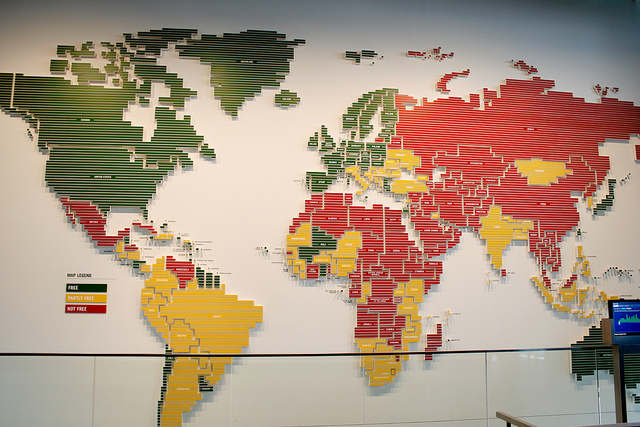
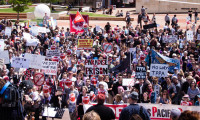
Media/Press Freedom around the world, Newseum, Washington DC. © 2011, Some rights reserved.
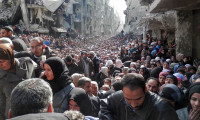
When searching for a recent example of how freedom of the press can directly impact the goals set out by the UN, we only have to look as far as the South Sudan conflict that has already taken the lives of many. Media organisations in South Sudan are often used by the country’s leaders to preach words of hate and further drive the country into anarchy. The state-owned South Sudan TV has no real competition and journalists that criticise the government are often arrested for doing so, making it difficult for transparent and accurate reporting to reach the people of the country. Unless the people of South Sudan are given the full picture, they are unable to challenge those in power and unable to demand change to prevent conflicts such as this one from spanning over the course of years or decades.
Being given access to the full story enables men and women alike to make their minds up for themselves and make decisions as to how they can use the opportunities available to them to better their own lives. Furthermore, it enables them to actively participate in issues concerning their community and their country. The power of civil society has put on a magnificent display in recent years, proving just how much of a changing force the people of the world can be when they come together to demand change. However, without access to transparent information, there is little room for people to hold their governments to account.
In the 21st century, if we want development to take place, we cannot afford to ignore the link between development and a transparent media. Access to information and the right of individuals to hold their governments to account enables countries to progress towards true democracy and enables the people of that country to progress with the tools they need to actively participate in society. If the global community is to make any progress in the development arena, civil society should have all the information they need to ensure that world leaders are living up to their promises on issues that impact their lives, and that world leaders are being held accountable when they fail to do so.
About the Author