
Back when the post-Soviet states of Central Asia gained independence, there was much talk of Pan-Turkism, a word that had been largely forgotten during seven decades of communism and Russian linguistic influence. The idea that Turkey would become closer to the Turkic peoples of Kazakhstan, Kyrgyzstan, Turkmenistan and Uzbekistan quickly gained traction among the peoples of a region turning back towards its pre-Soviet cultural and religious practices.
Over two decades later and Turkish-Central Asian ties are not as tight as some had hoped, although connections via trade, education and culture are still strong. Most recently, what has been acclaimed worldwide as Turkish Soap Power has also taken root in some of the region’s countries. The Belgian newspaper Le Soir, even called Turkey the Hollywood of Central Asia. Yet the last couple of years have seen Turkish serials banned in Kazakstan, Tajikistan and Uzbekistan.
Kicked out of Kazakhstan
Last year Kazakhstan enforced a ban on serials from Turkey on state television. The justification in the run up to the ban was based on cultural protectionism and the promotion of national content:
Zayir, a Kazakh student protested the ban:
Kazakhstan was the 42nd biggest consumer of Turkish serials worldwide that year, when Kazakhs voted “Muhtesem Yuzyil”, or “Magnificent Century” the best serial of 2012.
On Zakon.kz, one commenter mourned the disappearance of Suleiman the Magnificent and his harem of beautiful girls from Kazakh TV channels:
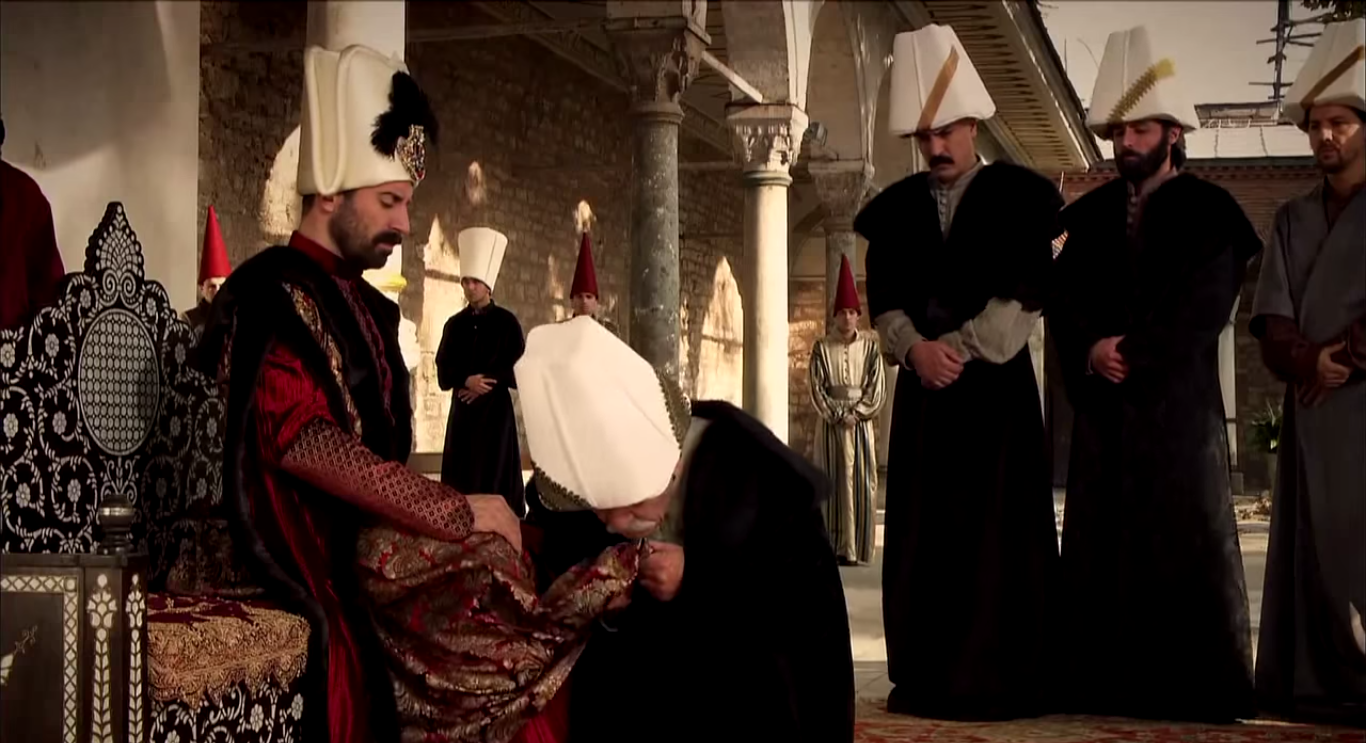
Turkish serials like Magnificent Century have proven a hit in Central Asian countries. Until they get banned. Screenshot taken from a YouTube video uploaded by Muhteşem Yüzyıl.
Unwanted in Uzbekistan
Since 2012, Uzbekistanis have been without Turkish serials on their television sets. A series of Turkish soaps were removed from air shortly after a documentary aired on Turkish television about Turkish businessmen that had been forced out of Uzbekistan in dubious circumstances. Officials at the time said the serials did not fit in with local mentality.
In fact, Turkish-Uzbek relations have been strained since 1993 when Ankara refused to comply with Uzbek demands to extradite Mukhamed Salih, an opponent of Uzbek dictator Islam Karimov. Yet while Karimov has little time for Pan-Turkism and soap operas, his troubled socialite daughter, Gulnara Karimova, harnessed Turkish “soap power” to advertize her Guli brand of perfume: Halit Ergenc, aka Suleiman the Magnificent from Magnificent Century, was the face for her “Victorious” range of male scent.
Whether that has made Ergenc any friends in Uzbekistan is another matter. Gulnara has her share of haters in the country, and on independent media outlet Uznews.net (run from outside Uzbekistan) commenters lined up to mock the pairing.
Sunbul, wrote:
But Gulnara Karimova is no longer the force she was in Uzbek society, after a very public fall from grace, so there is now even less wiggle-room for Turkish-Uzbek cultural exchanges.
On trial in Tajikistan
Tajikistan has recently lifted a ban on the Turkish serial Homien (Defenders) after it was forbidden along with Yusuf Misli (How Yusuf) and Mehvari haqiqati (The essence of truth) in May 2012 for “promoting violence and extremism”. The ban was ineffective as most of the serials were available on pirate disc for less than a dollar.
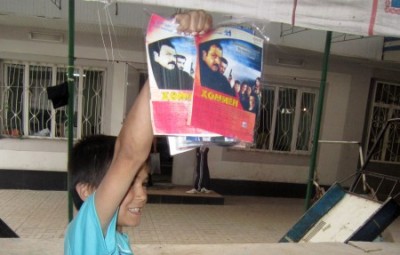
A small boy sells pirated Turkish serials in Dushanbe,Tajikistan. Photo from Kloop.info.html
Tajikistan is the only one of the four countries in the region that is non-Turkic – Tajiks speak a version of Farsi – although the north of the country has a large Uzbek-speaking minority.
Kosher in Kyrgyzstan (for the moment)
With one of its major cultural exports meeting opposition in those three countries, and with totalitarianism protecting Turkmenistan’s television-watchers from almost all foreign influence, Turkish “soap power” probably has its safest regional base in Kyrgyzstan. While other neighbors are banning Turkish serials, Kyrgyzstan is advertising broadcasts of Kuzey Guney, an extremely popular soap that has been translated into 23 languages, winning 20 awards. Moreover, Kyrgyzstan, which has perhaps the warmest political relations with Turkey of all countries in the region, gets it’s Turkish serials for free.
Still, even here, politicians are cheerleading to ditch Turkish drama in favour of a low-budget national product. Patriotic MP Mirlan Bakirov recently expressed his annoyance at regular broadcasts of Turkish soaps in Kyrgyzstan:
Still, even here, politicians are cheerleading to ditch Turkish drama in favour of a low-budget national product. Patriotic MP Mirlan Bakirov recently expressed his annoyance at regular broadcasts of Turkish soaps in Kyrgyzstan:
Nevertheless, these obvious political obstacles haven’t stopped Turkish intellectuals such as Seyit Aydın dreaming of a cultural empire in brotherly Central Asia:
This post was originally published on Global Voices.





