
As the world witnesses an Ebola outbreak that has been hyped by the media as the next Black Plague, we are left to wonder why the problem of climate change doesn’t attract as much attention. Unarguably, climate change is real and the threat it poses to the current generation and its successors is understated in the media. Climate change has become a running debate instead of becoming established scientific fact, as if science is comprised of opinions that one can choose to agree with. It isn’t strange to read headlines claiming that some scientist disputes climate change, forgetting that 97% of climate scientists agree that climate change is real and is affected by human emissions – which is well within the 95% confidence rate that most statisticians and scientists adhere to.
Also unarguable is the fact that it is our responsibility to our children and future generations to ensure that the earth is liveable for them. The same way that our generation suffers from rising oil prices, rising temperatures, and wilder climate occurrences due to the carelessness of our parents and their parents, future generations might blame us – if they live in a world where they aren’t endangered by scarier hurricanes and sickened by dirty air.
As John Oliver reveals in HBO’s Last Week Tonight, news channels are willing to grant any climate skeptic an audience, forgetting that 97% of scientists disagree with such frivolous claims. The quixotic solution to this would be to change the viewership-based-success of news shows; but on a less dogmatic scale, it is to ignore these dubious claims and give them no attention whatsoever, rather than wasting money, time, and energy on trying to convince people whose minds aren’t opened enough to be convinced. The old adage of smiling and nodding at such crazies is the only way to change our attitude towards climate sceptics, in the same way that internet users who ignore crazy YouTube commenters normally make their point.
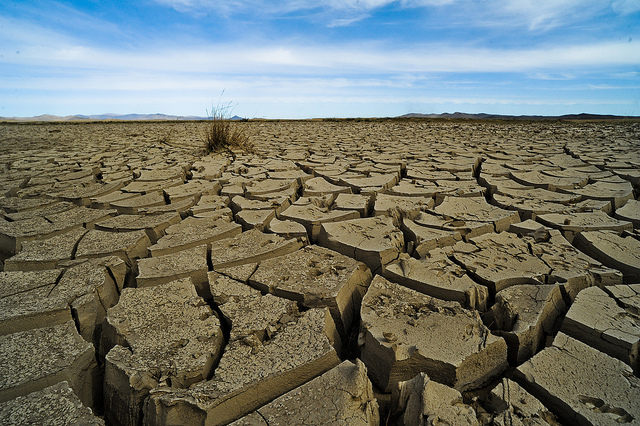
Image courtesy of Asian Development Bank © 2012, some rights reserved.
The idea that we need to eradicate opposition to the idea of climate change is not new to scientists, educators, and publicists. However, most fail to realize that establishing climate change as scientific fact isn’t one that can be done through an overarching solution (like change the way the media runs on viewership or punditry, or change the education system to make mandatory the teaching of evolution, planetary science, and climate science). It is more a question of education and awareness on the micro scale, rather than teaching facts as debatable.
The second reason that climate change doesn’t have an appreciative audience is because it forces people to make big changes to their lifestyles, and thus forgo their conventions. Rather than using oil, we must use wind, nuclear, or solar. Rather than taking the car, we must bike; rather than driving SUVs, we must now use hybrids. Too many people are stuck with the inertia of their ways, and industries are stuck in traditions and conventions that have been around for decades. People are afraid of losing their livelihoods and misunderstand that there are economically viable solutions to climate change that require small changes to our habits that can make our lives better. In the same vein, many climate scientists and environmental activists propose “solutions” that are hardly achievable because they do not incentivize people to help the environment on a microeconomic level (shower for only 3 minutes in cold water everyday; don’t flush when you pee) – which in turn gives climate change the image of being something that requires major change by every individual, thus inviting skeptics who would rather not believe in something so revolutionary.
For example, using fly-ash bricks which mix the ash by-product of coal, which would normally be buried in a landfill, instead of regular coal-fired clay bricks is environmentally friendly. When presented in the idea that fly-ash bricks can be produced for less than clay-fired bricks, and can thus earn higher profit margins, climate change seems like an inviting economic task, rather than an arduous social responsibility.
While it would be optimistic and narrow minded to claim that the problem of climate change and the creation of an environmentally sustainable economic model simply have publicity problems, changing the way we view climate change must be the first step. Most scientific magazines, journals, and articles regarding climate science acknowledge the existence of climate change and its dangers to human civilization, and propose innovative solutions – from the creation of wave-based electricity, to geoengineering, to cars that run on hydrogen. The real winners are those people and companies who are able to use such ideas in a manner that turn a large profit, like Elon Musk’s Tesla or Whole Foods. The question shouldn’t be whether there are solutions, but how to convince people to create them.
About the Author





