
This is a rather significant departure from my normal writings. Usually, I tap out a piece on US politics or international affairs, or terrorism. This is different. This is something that I have been deliberating a lot on recently. What I am going to argue for, is the legalisation, or at the very least, a more moderate government policy for certain drugs that are currently forbidden. This is not a rallying cry for the use of heroin or methamphetamine. I know full well of the damage both of these substances can wreak on the individuals using them, and the friends and relatives of those people. Instead, I am arguing for the legalisation or at the very least, decriminalisation of a certain selection of drugs that in my view, have been unfairly demonised over the years and decades; LSD, Magic Mushrooms, and Cannabis, despite the Prime Minister’s preposterously antiquated views on the matter.
To reiterate, this does not mean that I am arguing for people to be able to buy them like one buys a packet of crisps and a can of coke from a local corner shop. The current systems implemented in Colorado and Washington for the sale of small amounts of cannabis seems to me the most appropriate course of action. That however is another matter altogether, why they should be afforded the status of legality is the issue in question.
The most prescient justification that comes to mind first is regards to health. Now as someone who identifies as libertarian in many respects, I personally believe that people should be able to do what they want so long as no one else comes to harm through their actions. However, that is not the state of affairs we find ourselves in in 21st century Britain. In spite of what they like to expound, the government is most certainly more pervasive in our lives than they care to admit – the wiretapping of British citizens by GCHQ is a case in point, as is their stance on drugs. To be fair, this is not all down to the present government. It is thanks to Labour that cannabis was reclassified as a class B drug, and Magic Mushrooms were classified as class A and completely banned. Nonetheless, Cameron’s steadfast intransigence merely continues the prohibition.
One has to only open a newspaper or turn on the television to see adverts advising people on the risks of drinking and smoking in excess. Moreover, the harm these substances cause is demonstrated by the body count they leave in their wake. In 2012, the number of alcohol related deaths in the UK was 8, 367. The death toll for smoking related deaths in 2011 in England alone, in people over 35 was 79,100. Yes, that’s right, seventy-nine thousand, one hundred, yet in spite of the harm they cause, and the government warnings, these are legal substances.
Of course, I am not arguing for a ban on either substance, but when one looks at the damage they cause, one does wonder why certain other drugs are illegal. It doesn’t help the situation that alcohol is glamourised in the media either. Cigarette advertising is banned, yet alcohol in excess kills people, breaks families apart, causes indirect deaths (via drink driving or violent outbursts) and its presence is ubiquitous in the public consciousness. In films, TV, magazines, books, radio and so on, we cannot escape it.
So clearly alcohol and cigarettes can cause a lot of harm. But what about the drugs that I mentioned earlier, what harm do they cause or can they in fact be of benefit to people’s health? There have been claims of cannabis causing death. However, the Time article cited, quoted a statement from the leader of that particular study who stated:
“Cannabis does not paralyze the breathing or the heart,” said Jost Leune, who heads the group. He said the dangers of marijuana are “exaggerated” and that “deaths due to cannabis use are usually accidents that are not caused by the substance, but to the circumstances of use.”
Moreover, the article acknowledges that numerous other studies appear to demonstrate that cannabis does not in fact have adverse affects, a position supported by considerable evidence suggesting the complete opposite; that it can have considerable health benefits. A recent article by Policymic, listed several of them, which included: slowing the progression of cancer cells, Alzheimers, and HIV. Furthermore, it provided pain relief, helped with opiate addiction and many others. Admittedly, this is in a medical context, not recreational use. However, the fact of the matter is, people are benefitting from it, and yet it is an illegal substance in many jurisdictions. This seems to be immensely illogical, why prohibit something completely that seems to help rather than hurt people, and in addition, why not let people take it recreationally for the same reason?
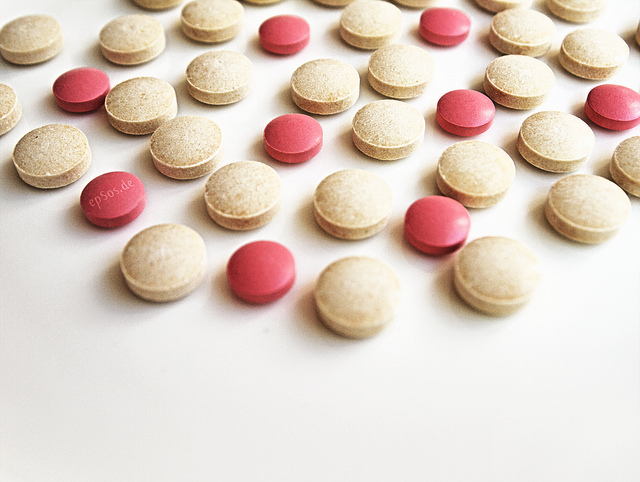
Image courtesy of epSOS.de © 2012, some rights reserved.
Stepping away from cannabis, the next drug on the list is magic mushrooms, which have been used by human beings for thousands of years, often in religious rituals. The effects of magic mushrooms however are much different. Containing the chemical substance psilocybin, consuming these fungi induce hallucinations that can often be profound, and in some people, disturbing. Skirting away from the hallucinations themselves, the health benefits that are being discovered from the trickle of studies, must be laid out in the open. There is evidence from them that suggests that psilocybin could be used the treat severe depression.
Finally, I swing my argument to LSD, a drug first synthesised by Swiss Chemist Albert Hoffman. Much like psilocybin, it too can cause intense hallucinations and profound experiences. Indeed, the aforementioned Hoffman accidentally dosed himself with some, and when cycling home. And much like psilocybin, it appears to have positive effects on mental health. A recent study where terminally ill patients were administered with the drug was given to terminally ill patients; their anxiety was significantly alleviated. Moreover, it has the potential to treat alcoholism; a study published in 2012 suggested that LSD could help reduce alcohol misuse.
Yet they are illegal, whilst alcohol, and tobacco remain acceptable to the government. Despite the hundreds of thousands of deaths they contribute to worldwide. This needs to change. It does not imply that alcohol should be outlawed, the experience that America went through in the 1920s and early 1930s is an effective testimony to the adverse affects of prohibition.
However, the substances that have been discussed need to given more objective consideration by the powers that be. Treating them like a forbidden fruit that could lead to the downfall of society is not only counter productive, but dangerous. We have a treatment that could aid people in their darkest hours. Casting them aside would be like refusing water in the Sahara desert; insane.
About the Author





