
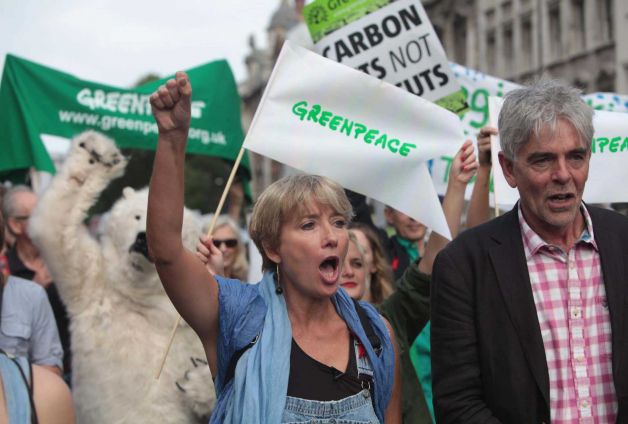
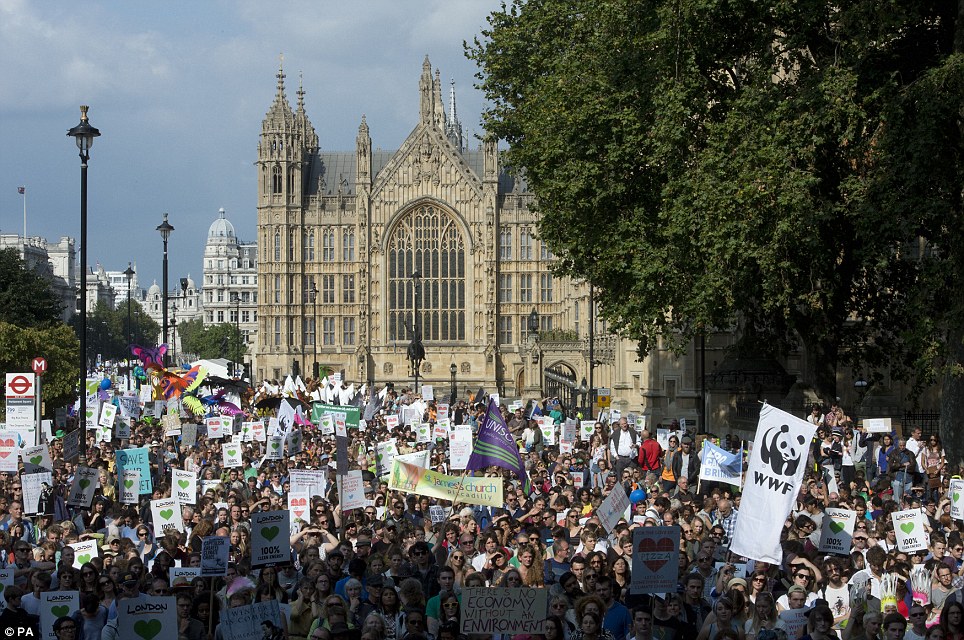
Almost 40,000 people marched the streets of London yesterday as one of the largest events of People’s Climate March took place in the capital. Aiming to protest political divestment from the fossil fuel industry and stop human caused climate change, the march was only one of 2,700 others held around the globe.
The People’s Climate March strategically took place two days before a historic United Nations Climate Summit called by Secretary General of the United Nations, Ban Ki-Moon. Demonstrators at the People’s Climate March called for real action on climate change from the heads of states in attendance at the Summit.
As Ban himself put it:
“The climate summit that I am convening one week from today has two goals: to mobilise political will for a universal and meaningful climate agreement next year in Paris; and second to generate ambitious steps to reduce greenhouse gas emissions and strengthen resilience. We are anticipating an impressive turnout of leaders from government, business, finance and civil society. Most important, we are expecting significant commitments and progress.”
“Action on climate change is urgent. The more we delay, the more we will pay in lives and in money.” – UN Secretary General, Ban Ki-Moon
Despite Ban’s positivity on the turnout of the conference, signs indicate an unwillingness on the part of some crucial invitees. India and China’s decision of not sending high-ranking officials may be a warning sign in itself, but in the current political climate dominated by the Syrian war and ISIS, will politicians commit to immediate climate action?
With the overwhelming majority of the scientific community claiming climate change is man-made and in our control to stop, it is crucial that we act until we can and political action is key.
Will yesterday’s protests deliver real pressure on politicians?
It is unlikely, but not all is lost: raising public awareness is the first step towards long term change. Historical examples such as Apartheid and Women’s suffrage prove the enormous power demonstrations have. However, in the case of climate change we are running out of time to act.
One of the demonstrators Ben, 28, said:
“Raising awareness of climate change and political involvement in fossil fuel giants is the only thing the public can do here. We are hoping for the start of actual conversations.”
Will the Summit itself deliver real results?
Our economic model is in favour of big fossil fuel companies such as Gazprom and BP and politicians and their governments are acting as shareholders in many. Could we realistically hope for immediate voluntary divestment? Doubtful, but talks must begin.
Xavier, 22, another demonstrator explained:
“I don’t believe that the Summit will bring direct changes but it may pressurise politicians to divest little by little. Until then, I refuse to buy any products or services that are linked to fossil fuel.”
One can only wonder how long it will take world leaders to understand the severity of climate change and its dire impact on the Earth and humanity. To stop the devastating effects, some of which have already begun, immediate and practical political action is needed. Events such as the People’s Climate March exist to demonstrate growing concerns and awareness surrounding climate change. Little by little public pressure will press world leaders to act.
About the Author





