
Those who have the best credentials to guide us through the labyrinth of perplexing constellations of events are being moved away from the frontlines of the public debate. Foreign reporting is facing extinction.
“I used to be someone else, but then I traded myself in” says Jack Nicholson, gallantly answering the question about his true personality in between throwing looks of suspicion, perspicacity and self-confidence.
Although David Locke, the character he plays in the monumental classic of Michelangelo Antonioni’s The Passenger, is not exactly the best example of an honest answer to such a question, he impeccably captures the meaning of his profession. A foreign correspondent, sent to a war-stricken country in Africa, quickly forgets about his basic daily routines in order to go as close to zones and people most of us would prefer to stay away from.
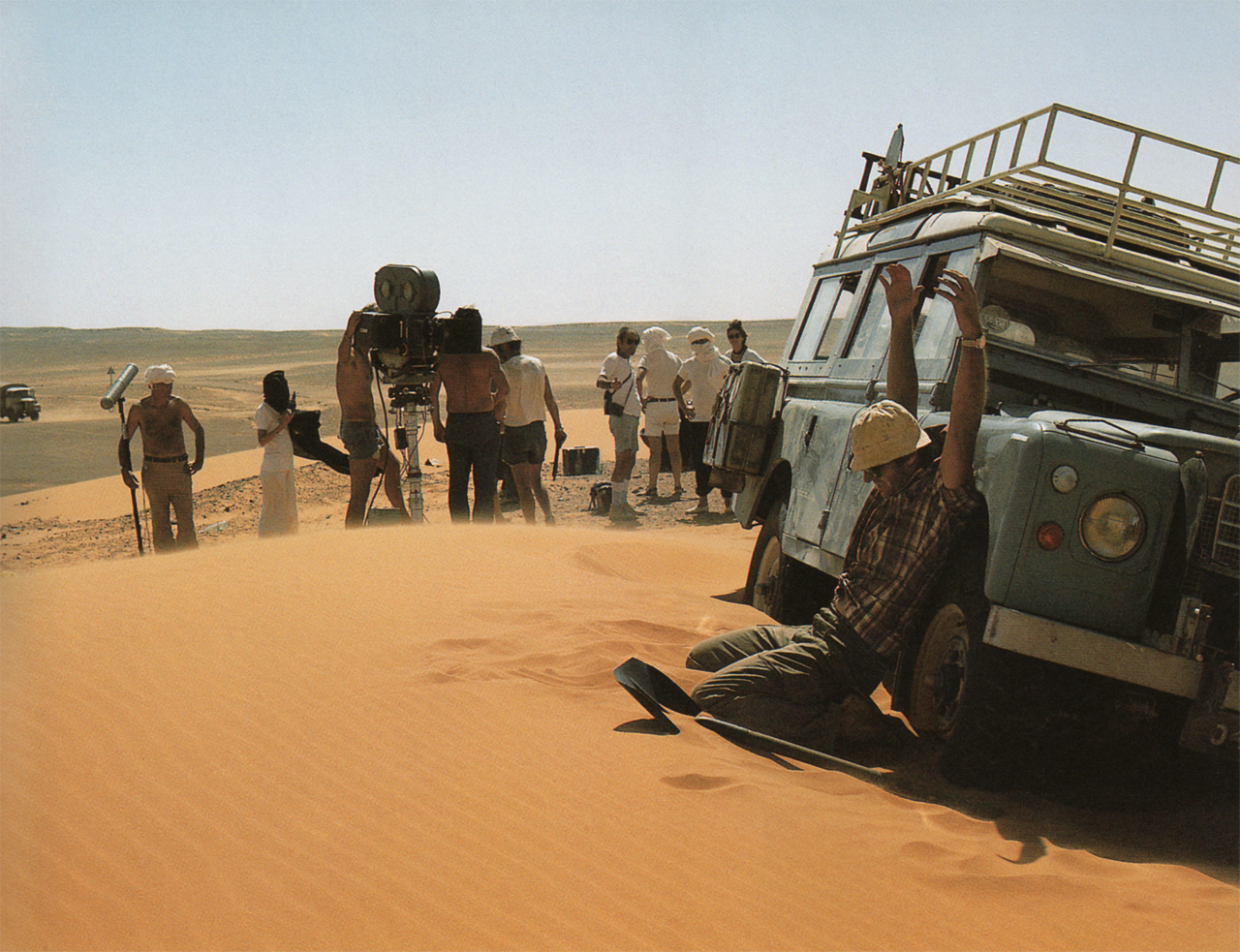
Jack Nicholson in ‘The Passenger’. Image Credit: Strangewood (Tumblr)
We all know this character – a little bit slovenly, sun-burned man in mid-30s, with bushy hair, scruffy clothes and ray-bans, drinking himself into oblivion and writing about the poor, the wounded and the oppressed. All these Nicholsons, Redfords, Noltes. Been there, done that, time to move on – voices from the audience seem to plead. But to a surprise for many of us, we actually still need those guys. Not in cinemas, not as protagonists of posh advertising. We need them back on the frontlines lines but, most of all, we need their signatures underneath cover page stories and their hesitant smiles in TV news services.
Dying profession
Foreign reporting is, slowly yet steadily, dying off. Media agents across the board are reducing the size of their international newsrooms, independent of the space in which they operate and their targeted audience. Whether we look at staff reductions of the well-established giants, such as the BBC News service, or much smaller, often less profitable papers or radio stations, the results do not vary a great deal. As put accurately by Anjan Sundaram in his piece for New York Times, “the Western news media are in crisis and are turning their back on the world. We hardly ever notice”.
We are losing interest in world affairs, allowing ourselves to be awash with third class domestic news, sensationalised and far-fetched opinions and celebrity scandals, which at best bring about another billion-dollar divorce. An average American citizen knows more about college lacrosse standings than about the story behind the ISIS expansion in the Middle East, even though it is the latter that poses a threat to the world as they know it. This is just one example, others which can be used to show that other countries are not much better in terms of their coverage and interest in important global affairs.
Globalisation
The world has these days a little bit more than a dozen of countries and the constellation of geopolitics, economy, migration and numerous other issues become excessively more and more complex. Whether we like it or not, the world keeps wheeling within and so do our personal life stories. Whatever the actual reason – a desire to travel the world, a shopaholic approach to buy exotic products from most remote countries or an expansion of the company we own or work for – we develop direct or indirect affiliations with nearly all corners of the planet. As a consequence, we demand these places to be explained to us in short, yet comprehensively. With the sense of insider’s knowledge, but through simple, approachable terms. Some numbers, but not too many. And a map, because geography not only bored to death in college, but also who would bother to keep up with all those new states emerging and collapsing?
Damage of ill-information
However, doing foreign reporting on the cheap brings about nothing but catastrophic results and is, more than anything, at odds with the very principles of the profession. Ryszard Kapuściński, a master of reporting and a devotee of African independence, claimed he used to work according to a rule of 100 pages of background reading per page of his own writing. Nowadays, requiring foreign reporters to have such an in-depth knowledge of the areas they cover seems absurd. Due to the low-cost approach to their jobs, they oftentimes need to provide coverage from three, five or even over 10 countries at once, turning their murky hostel rooms and sultry apartments into regional headquarters of their media patrons. With most of their schedule busy with international flights and daunting attempts to find the fastest and cheapest connection from one place to another, foreign reporters of today do not have the time and space to dig into the real lives of those whose stories they tell. And, even if they do, subsequently producing not a “news bite”, but an exhausting elaboration, their efforts are very likely to go to waste, as there is no longer enough time in news services for a comprehensive coverage coming directly from the field.
As Craig Fehrman wrote in Boston Globe, the average length of a soundbite in American TV news programs had shrunk from an average of 43 seconds in 1968 presidential elections to a mere nine seconds 20 years later and this tendency persists up to now. Moreover, if the news editors actually allow for a longer shot on the topic, the bonus time is taken over by opinions, voiced from a suited expert on the phone from the Hill or sat comfortably in the studio. Already in 2012 CNN was the only major US news channel where the broadcasting time of actual foreign field reporting oversized the studio-based commentary. Now, please, go and try to explain a civil war in less time than it takes to make oneself a cup of tea.
As said before, we are forgetting about the world outside our comfort zone and we do so without noticing. But even more so we tend to forget how much we actually need those storytellers. We need them, each and every one of us, not just because they know some enigmatic countries inside out and can occasionally brief high-profile politicians or join the foreign service. Not every one of them, after all, needs to be a new Robert Kaplan, whose set of reportage pieces from the Balkans entitled Balkan Ghosts served Bill Clinton as an exclusive source of understanding the regional geopolitics in the wake of the War in Yugoslavia. We need them, because the way we tell and listen to the stories of others says a lot about ourselves. The ability to approach the other through the lenses of their own verity allows us to develop a new perspective on our own realm.
In times of a global heterogeneity, when, contrary to some people’s haughty forecasts, history did not end but continues to chaotically gallop in all possible directions at once, no truth is ultimate truth and no solution is an all-encompassing remedy. Besides, as much as it is difficult to admit for some of us, life outside the pathways of New York and London is much sharper: it gravitates around people, their emotions and decisions, rather than objects of minimal durability and maximum price. We need storytellers, because what they tell us about the situations of others might soon become the situations we find ourselves in.
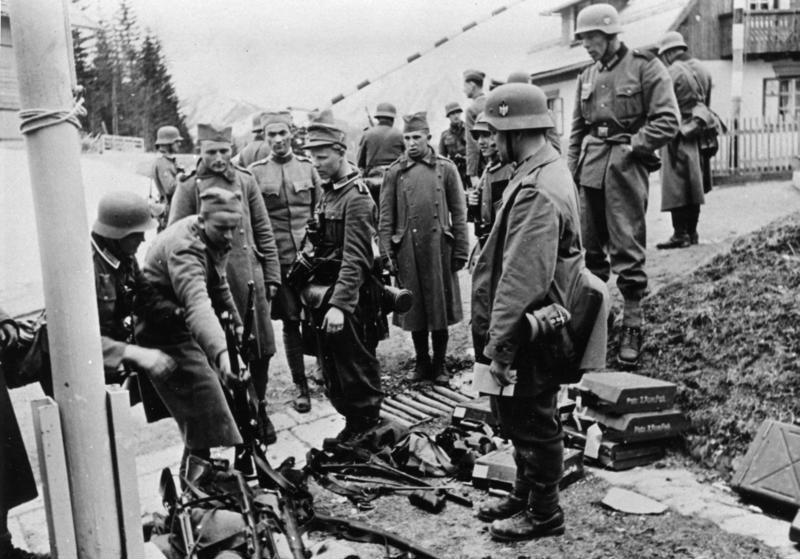
Infantry surrendering in the Yugoslavia War. Image Credit: HistoryofWar.co.uk
It isn’t easy to cover far-off places. It is, as voiced by Kapuściński and echoed by Paul Theroux – a difficult profession, for which one must decide to become an inbetweener for life. Because a foreign reporter is forever stuck in between – those whose stories he tells and who would most probably never get to hear their own message and those who have little to no interest in ‘far away countries of which we know little’. That position in between – no matter how risky and loud from wheezy bullets – gives, however, a unique and revealing perspective on both other sides.
Your questions are much more revealing about yourself than my answer would be about me” tells David Locke a Witch Doctor he tries to interview. Therefore, I say, we should keep asking. If not to know more of the others, then just for the sake of knowing more about ourselves. We should keep searching, asking and telling. As a storyteller does.
About the Author





