
Arab Spring
Over the three years, the world has witnessed the rapid deterioration of society in the Middle East and North African region. Revolutions, international interventions and military coups d’états have a sense of normality. This instability has had corrosive effects on civilization and was most recently catalyzed by the suppression of the 2011 Arab Spring.
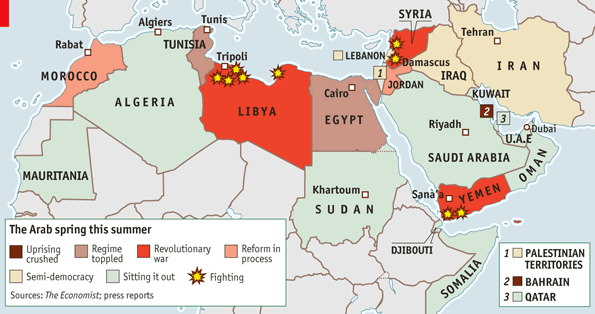
Countries Effected by Arab Spring
The Arab Spring was itself an attempt at peaceful protest in the hope of moving the region towards a more inclusive form of government. Many involved envisaged democracy as the key to political accountability, proliferation of human rights and economic sustainability. In many of the countries, it has instead had the inverse effect of the aforementioned goals, subsequently propelling the region into a perpetual instability.
The Collapse of Syrian Culture
This unpredictability is epitomized by current events in the Syrian Arab Republic that propagates anarchy and dismay. This has resulted in nearly 200,000 dead, millions more displaced, and centuries of historical content and culture wiped away.
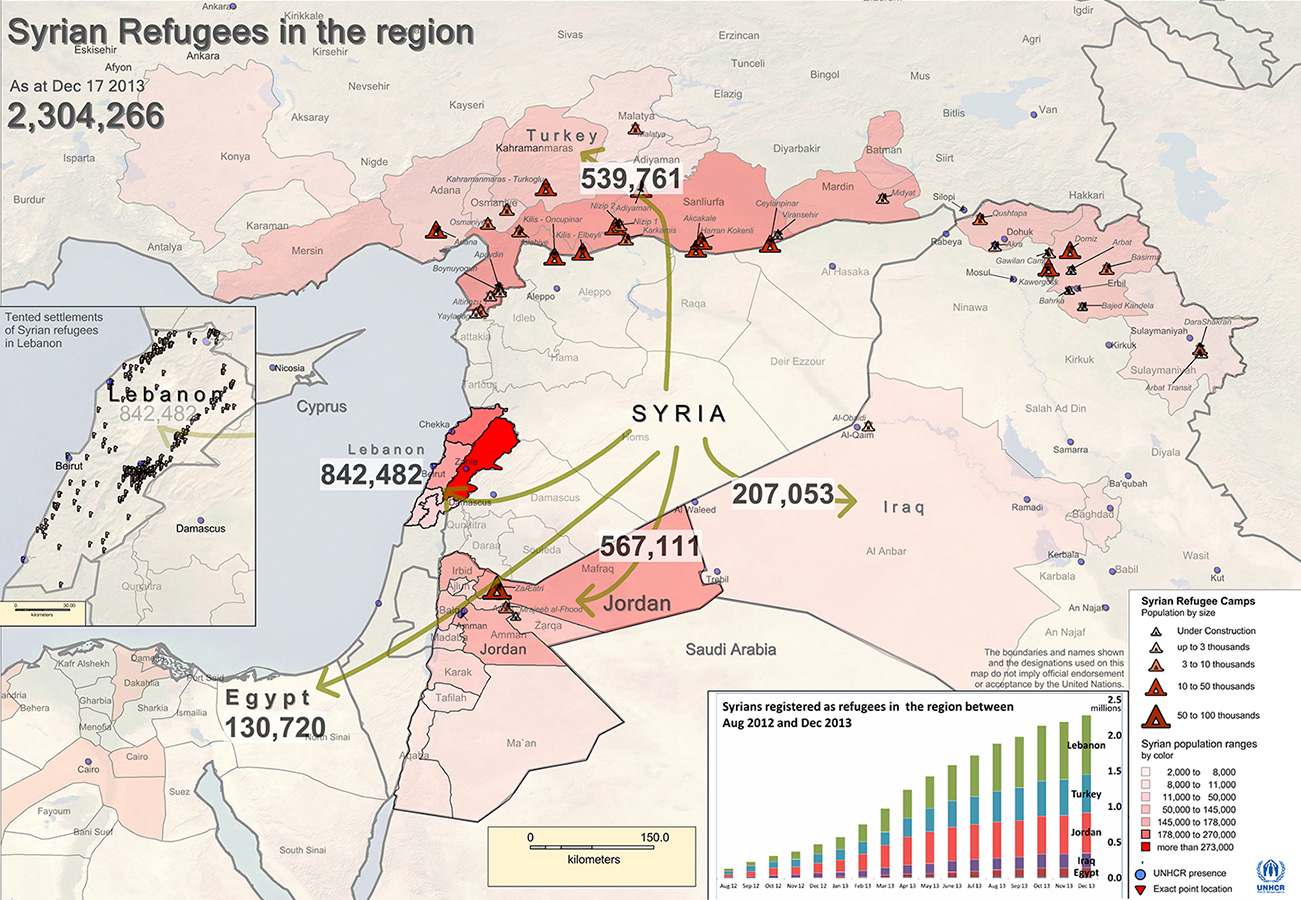
This dire situation can be seen in the outbreak of polio, which according to the World Health Organization, was completely eradicated from Syria in 1999. Since the eruption of the Syrian Civil War however, polio has begun to spread throughout the war-torn country, disseminating from refugee camp into the general population. The continuous onslaught of fighting coupled with restricted access to areas in need of humanitarian aid has unfortunately allowed for spread of this crippling disease.
Equally unnerving is the prospect of a lost generation in Syria. The devastation of war has resulted in the demolition of infrastructure. Schools have been turned into refugee camps and over 10,000 children have been killed in the fighting. With no end to the fighting in sight, thousands of children and young adults will go uneducated and be plunged into unemployment and poverty.
The Atrocities of ISIS
Most recently, reports of the barbaric actions of Islamic State of Iraq and al-Sham or ISIS (also known as Islamic State or IS as well as Islamic State of Iraq and the Levant or ISIL) plaster headlines of all international newspapers. This instability in Syria has allowed Iraq to relapse into the depths of war.
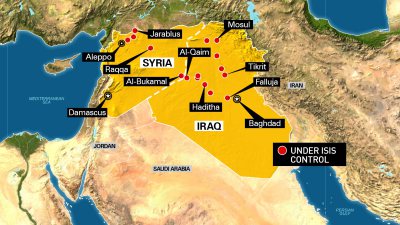
ISIS originated during the Iraq War and was first made up of ex-Iraqi army officers and jihadist from the time of Saddam. Capitalizing on volatility caused by Syria Civil War, ISIS has been able to advance the goal of a creating a Caliphate (Islamic State) by capturing territories stretching from Eastern Syria into parts of Central Iraq.
But ISIS is no longer a regional jihadist group effecting areas within Iraq and Syria. It has attracted people from all over the world including 3,000 Europeans, this according to the EU’s anti-terrorism chief. The UN Security Council last week adopted a binding resolution encouraging states to prevent all nationals joining ISIS. The group’s brutal tactics and aggressive recruiting has forced this multilateral response.
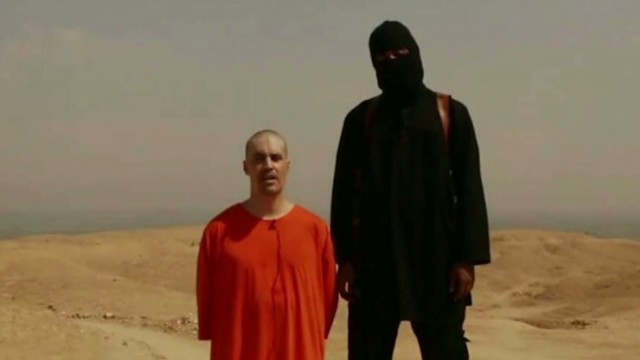
Journalist James Foley
According to Human Rights Watch, ISIS is now responsible for the public beheading of four western civilians, the mass-executions of the opposition and religious minorities such as the Kurds, Christians and Alawite (Shia), and the expansion of the human trafficking network in the region.
In a September 24th, 2014, the BBC reported, “more than 3,000 Yazidi women and children have been captured by ISIS militants and are being trafficked for sex.” ISIS classifies the Yazidi religious group, who is predominantly of Kurdish ethnicity, as devil-worshippers. Due to religious persecution, roughly 130,000 residents of the Yazidi stronghold of Sinjar have fled to Iraqi Kurdistan area. This is representative of around 20% of the roughly 700,000 Yazidi people.
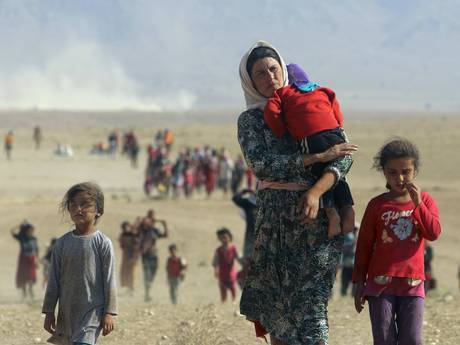
The UN has said a “staggering array” of human rights violation has been committed by ISIS militants and linked armed groups over a nine-week period in Iraq.
ISIS: the Exception, NOT the Rule!
Although the views of ISIS are based on the Sunni sect of Islam, it should not be assumed that Muslims as a whole support the extremist actions of ISIS. The CIA has reported that around 31,000 ISIS fighters exist, with thousands more in assistance. Though ISIS recruitment has been on the rise globally, this is but a minute fraction of the estimated 1.5 billion Muslims worldwide.
In disclosing the identities of the five Sunni Arab nations that joined or supported the attacks in Syria – Bahrain, Jordan, Qatar, Saudi Arabia, and the United Arab Emirates – the United States sought to paint a picture of a global alliance unwavering in its decision to take on the Sunni militant group.This Sunni support against ISIS is reinforced by some Sunni tribes throughout Iraq pledging their military allegiance.
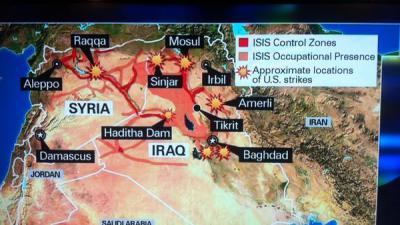
Bombings by US led Coalition
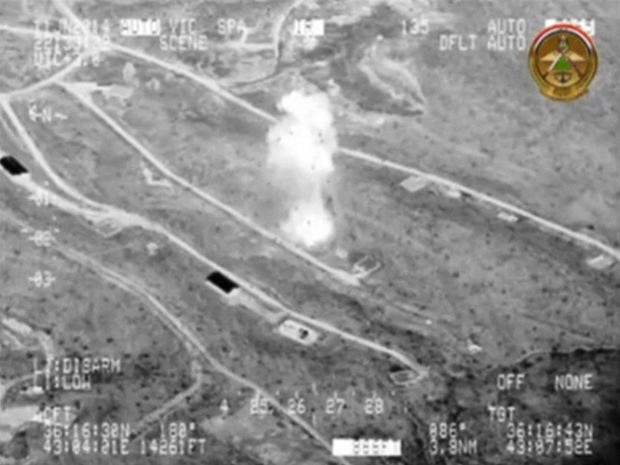
Recent Airstrikes in Iraq
While some Muslims may be in support of the creation of a Caliphatewithin the Middle East, the vast majority of Muslims around the world condemn the actions undertaken by ISIS. Muslim leaders and scholars around the world have gone as far as to label them asan un-Islamic terrorist organization whose principles are not within the doctrine of the Koran.
An 18-page report produced or endorsed by more than 120 Sunni imams and academics outlines 24 separate grounds on which the terror group violates the tenets of Islam.
The document highlights the murders of American journalists James Foley and Steven Sotloff, and British aid worker David Haines, by saying the men were “emissaries” and their killings as “unquestionably forbidden”.
With all the devastation currently present, it becomes difficult to remember that only three years ago the world was applauding the fight for democracy undertaken. What’s more, most would not have predicted at that outbreak of the Arab Spring the causalities stemming from its enactment. Few saw the utter destruction and despair floating in its wake. With the recent airstrikes systematically crippling ISIS strongholds and source of income from dirty oil, it is hard to predict the future of this region of the world.
Many questions have yet to be answered on the topic at hand. Can stability and democracy coexist within MENA? Will ISIS succeed in creating a Caliphate in the heart of the Middle East? When, if ever, will the over two million refugees have a home to return to? At this particular point in time, the only thing people can be certain of is the rampant uncertainty will persist into the foreseeable future.
About the Author




