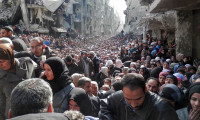
Overcrowded hospitals, over-tired and decimated doctors working in absolutely terrible sanitary conditions, narrow-minded, impossible to control mob, volunteers’ appeals for help unheard – it sounds like a petrifying horror movie. But it is not – this is the current image of the deplorable situation in the three countries (Guinea, Sierra Leone and Liberia) which have been most affected by the Ebola disease. Speaking bluntly, West Africa has turned into a theatre of tragedy and the steps which have been taken by the international community so far are too slow and ineffective to prevent the spread of this deadly disease.
Even in the darkest nightmare no-one would expect that the seemingly minor case of a 2-year old boy who died of Ebola on the 6th of December 2013, in a small village called Meliandou in Guinea; was going to spread across West Africa with such speed. On the 8th of August, the epidemic was formally recognised by the United Nations Security Council as a “threat to international peace and security”. It has been estimated that the disease has already killed more than 4,000 people and in accordance with the World Health Organisation’s forecasts, at least another 20,000 people will be infected before the outbreak comes to an end. In the words of Dr. Margaret Chan, the WHO Director-General: “This is likely the greatest peacetime challenge that the United Nations and its agencies have ever faced… This is not just an outbreak. This is not just a public health crisis. This is a social crisis, a humanitarian crisis, an economic crisis, and a threat to national security well beyond the outbreak zones.”
Ebola-stricken West Africa is seriously struggling to stop the spread of the disease but regrettably, there are no people and no facilities to accommodate those who need treatment. Today in the whole of Liberia; there is not a single bed available for the Ebola-infected and as stated in the WHO reports from the 19th of September – previously mentioned Liberia and Guinea do not come even nearly close enough to meeting the need for patient beds. Sierra Leone is doing little better. What the governments of those three countries are able to provide is a drop in the ocean of needs. The largest NGO operating in that region – Medicos sin Fronteras described the situation as an “emergency within the emergency”. What makes the plight even worse is that fact that unlike any other Ebola outbreak (the biggest was reported in 1976), this time the virus has spread in the urban areas where the transmission of EDV is almost impossible to break. Historically, in West Africa there have been no more than one or two doctors available to treat 100,000, and so far, mainly due to the lack of medical equipment, a significant proportion of health personnel has fallen prey to this disease, inter alia many worldly renowned figures such as Samuel Brisbane or Modupe Cole.
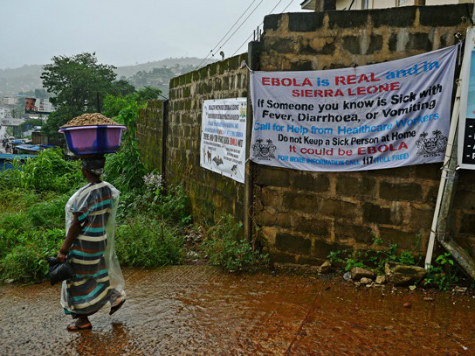
Ebola awareness campaigns in Sierra Leone. Image source: Breitbart http://www.breitbart.com/Big-Peace/2014/09/25/Sierra-Leone-quarantines-one-million-ahead-of-UN-Ebola-talks
Nonetheless, the biggest challenge which the volunteers face is not the disease itself, but the local population which, by all means, is determined not to cooperate with the ones who want to help them. On the 18th of September, eight bodies of workers who were trying to educate locals, were found in the Guinean village latrine near Nzerekore. As Albert Damantang Camara, the official for the national government, said: “the bodies showed signs of being attacked with machetes and clubs (…) three of them had their throats slit.” In the south-east part of the country, as a result of various threats, the Red Cross had to suspend their operation there; the three-day lockdown in Sierra Leone turned out to be a huge failure. In August, in West End (the poorest area of Monrovia), a mob attacked the local hospital, demolished its equipment and allegedly “freed” the Ebola-diseased patients shouting: “There’s no Ebola”; many people simply do not want to believe that the virus exists. They “don’t seem to believe anything the government now says” claims Liberian former health minister, Peter Coleman. Many of them live in areas of extreme poverty where there is not enough drinking water, so how can the volunteers convince them to use it to keep the hygiene which would help to stop the spread of Ebola? Furthermore, burial practises in West Africa can include washing the deceased before they are buried; it has been estimated that many of the Ebola cases in Guinea are a consequence of this tradition. West Africa, with its crippled economy, seems to be begging for help.
The international responses to the problem have been perfectly summed up by the “bitterly disappointed” former UN Secretary General Kofi Annan: “What is a bit surprising here is that many people have died and are dying … and yet we have not acted and responded in a manner that will have a real impact on the ground.”
The money which we send there is not enough. The equipment which we deploy there is not enough. The effort we put is not enough.
The first Ebola case in the West has been noted in Madrid. If we do not start to act quickly, there will be only one question left: is your country going to be next?
About the Author