
Having written about the dangers of short term volunteering, I found myself in Brazil this summer hoping to do precisely that. The proviso was that I made sure to follow my own advice and thoroughly investigate any volunteer organisation I chose to use. In this case, the organisation I went through I had already come across during my academic research on the topic and it was commended for its good work and stringent checks that occur both at the sending and receiving branches. Furthermore, since first starting to investigate the phenomenon of volunteer tourism in early 2013, I was interested to see what developments had arisen, particularly due to increased awareness of the topic.
The experience confirmed some thoughts that I’d had before, challenged others and raised some new and important issues that I had not previously considered. Here I discuss what I learned, relating it to some of the issues I raised in my previous articles on whether volunteer tourism harms rather than helps and the dangers of voluntourism.
Firstly, it makes no difference how much you want to help, if you don’t have skills then you don’t have a chance. I was working with a number of young people who had only just completed their first year of university having never left their country of origin (there were volunteers from other South American countries, North America, Europe and Asia). Many saw the volunteering as an opportunity to do something good for other people in another country while many went into the programme thinking far more about what the opportunity could do for their future job opportunities. Many of those volunteers who were ‘helping’ with marketing had absolutely no experience or even a relevant skill set to assist the NGO. When I asked one volunteer why they chose to volunteer in Brazil, he replied:
“There is no way I could get the same level of responsibility at home in Colombia because I have never worked with marketing. If I volunteer here then I can write it on my CV.”
This openly cynical attitude towards volunteering was surprising. It also confirmed to me that one of the reasons that volunteer tourism organisations promote the boosting of one’s CV as a main benefit of volunteering is because that’s what young people increasingly want. The rise in competitiveness in the job market is perhaps one reason for this move toward more visibly un-altruistic sentiments.
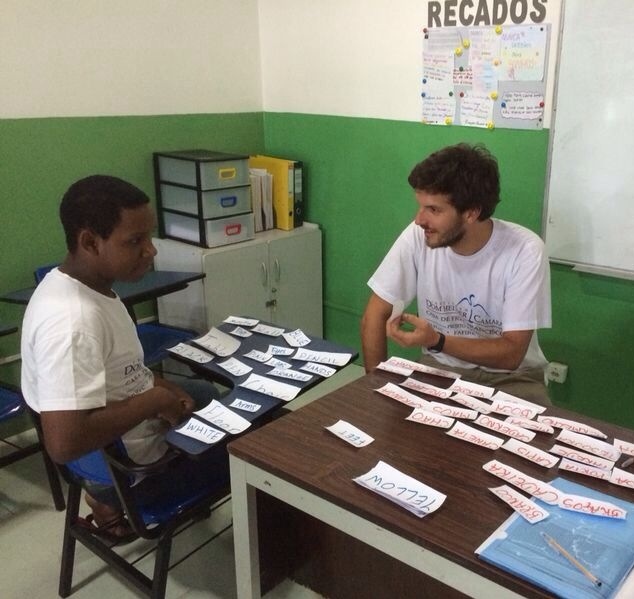
Image credit: Joe Corry-Roake
However, while intention is not necessarily a hindrance to positive outcomes, in Brazil, there was (from my observations) a clear distinction in terms of output between those volunteers who actively sought to assist the NGO and those who were there with a primary focus on boosting their future career prospects. It must however be remembered that it is better that those individuals got up and volunteered rather than just sitting around doing nothing.
I had signed up to teach children and young adults about global citizenship, in an attempt to help them broaden their horizons and consider their role and position in the wider world. While concerned about my lack of Portuguese language skills, I was informed that it was not really necessary. I assumed that this meant that I would be working with individuals who spoke at least basic English and began preparing lessons accordingly. Imagine my surprise when, on my first day at the NGO it quickly became apparent that the level of English amongst the teenagers at Casa da Frei Francisco was extremely limited. This, coupled with the limited Portuguese of three of the four other volunteers I was with, constrained the impact we could achieve. I presumed that the desire of the volunteer organisation to increase the number of individuals using their service was the primary reason for placing individuals in positions they were unqualified or unsuitable for. This fear was confirmed by a number of the individuals who worked for the volunteer organisation.
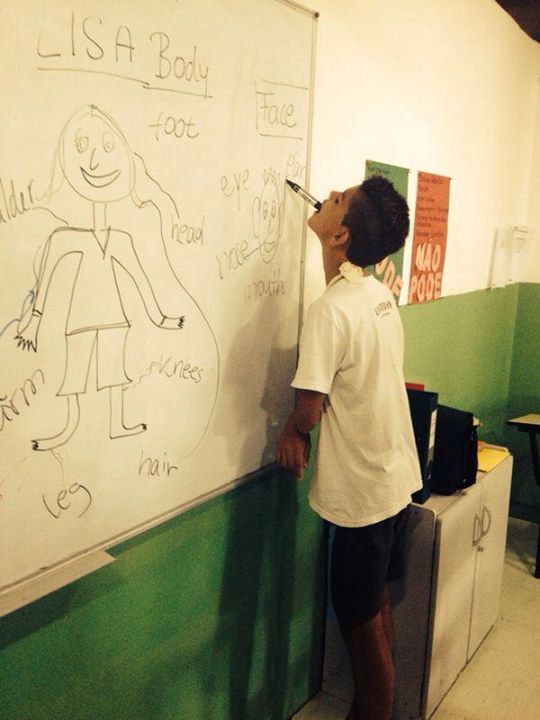
Image credit: Casa De Frei Francisco
One of the major problems put forward as a critique of short term volunteer tourism is the lack of sustainability of the projects, and there were certainly times when I felt that this was true. The problem with the volunteer organisation I went through, is that it focuses on sending students to volunteer. This meant that while there was a wealth of people to teach the young Brazilians during the summer and winter holidays, there was a dearth of personnel in the intervening months . Furthermore, there is the potential for psychological damage for ‘beneficiaries’ from the short term nature of volunteer tourism, since a bond is created with students only to be broken up as the volunteers leave them after a short spell. Of course the growing rise of internet access around the world, and certainly in Brazil, means that it is far easier to remain in some sort of contact once you leave so that the connection does not just abruptly and immediately end – as long as the volunteer takes the time and effort to maintain contact. But it is not quite the same as a long term, physical connection.
The teachers at the NGO I worked at were inspiring, pouring their heart and soul into the organisation in many respects. Not only this, but they were willing to listen to ideas from overseas volunteers based on different experiences, appreciating that while they lacked local knowledge, , volunteers could come up with fresh and new approaches. This was not something that I had previously thought of and was an interesting nuance which should be considered in future research into volunteer tourism. Just because someone from the West is spreading their ideas does not mean this should necessarily be considered as ‘neo-imperialistic’. The impact one has as a teacher relies on the children; those I found myself working with from the local favelas had a great eagerness to learn, not only academic subjects but about the different worlds that we volunteers occupied. This curiosity showed that, despite the basic conditions they live in, they dreamed of where their lives could lead. Furthermore, an organisation such as this, which is not self-sufficient, runs on an extremely tight budget and therefore volunteers (from anywhere) were both needed and appreciated.
For those people at Casa da Frei Francisco as well as many other NGOs across the world, volunteers both locally and internationally provide a vital service. We must continue to strive to ensure that these volunteers have the best possible impact on the community they seek to help.
About the Author






Uma bela crítica, Joe estou orgulhosadorgulhosa de você .
Read more about the potential dangers of volunteer tourism: http://archive.the-ipf.com/volunteer-tourism-harming-rather-than-helping/