
To better understand the concept of gangsterism we started with a short interview with high ranked gangsters. After several conversations with different members of the community we were able to elaborate on the three spheres that lead young people to join gangsterism. We also grasped the difficulties faced by young people wanting to refuse gangsterism as a way of living.
Junky Funky Kids are one of the gangs operating in Parkwood. The following interview was conducted with one of the gang members in his mid-thirties, a “coloured” male known as “the man with no mercy”.
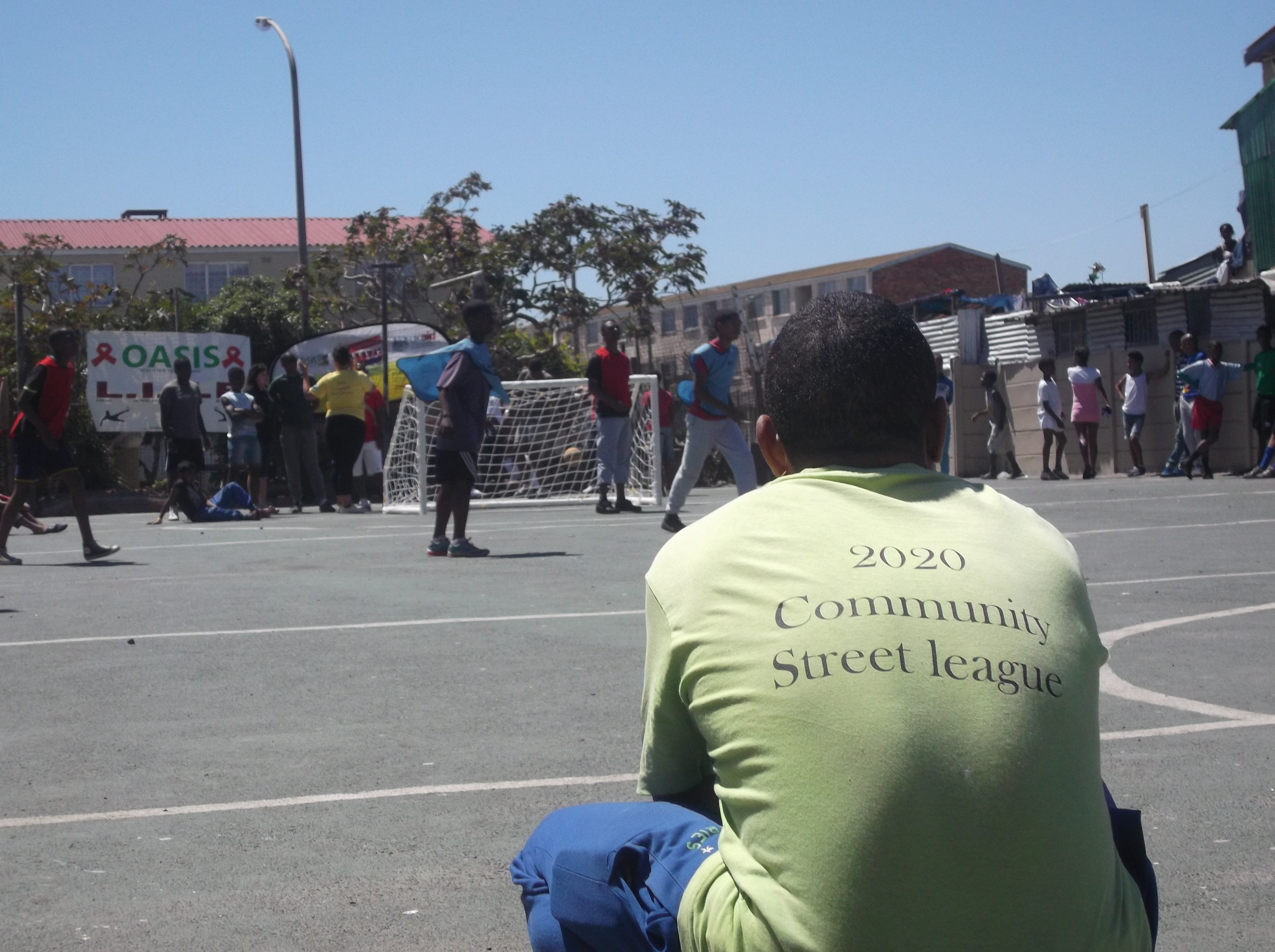
Image Source: Catarina Santos
*
Do you regret having joined the Junky Funky Kids (JFK)?
“They are my family: we live together, we spend everyday together”. The work mentioned is the illicit traffic of drugs and ‘surveilling’ the community.
How does the rivalry between gangs start?
“It starts when they wanna use our territory for their business. When they come and rob the houses in our community.”
What do you think about Oasis coming to your community and organising street soccer activities?
” We appreciate it. We want our kids to be busy so they don’t end up like us. Keeping them busy stops them from doing drugs and using violence.”
*
So if gang members try to stop young people from following in their footsteps, what factors may account for the high number of young gang members? At home, at school and on the streets, these three factors account for the fact that gangsterism has become a norm.
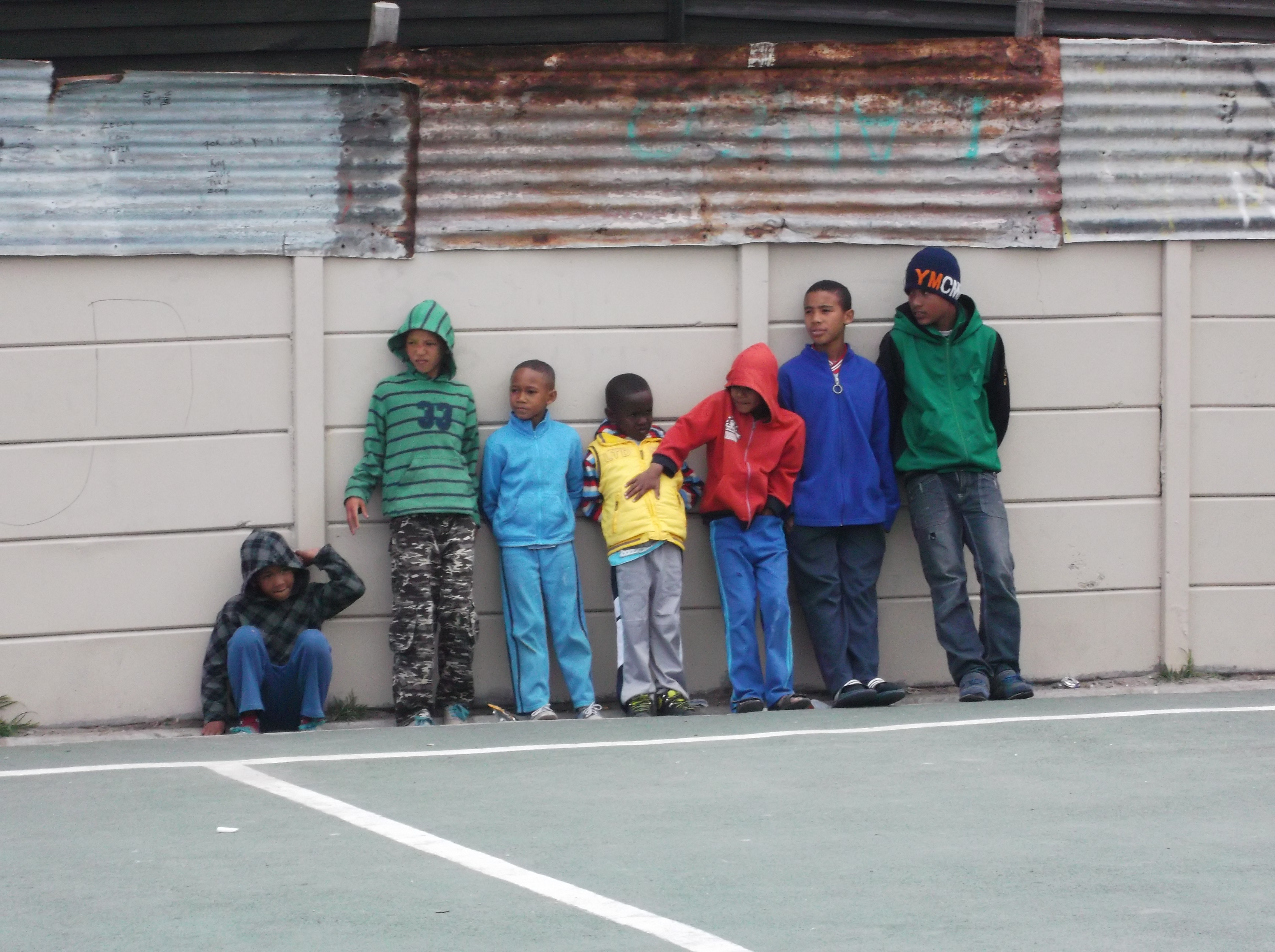
Image Source: Catarina Santos
Gangsterism starts …
# At Home:
According to young mothers and teenagers, neglecting parents drive kids into the streets. Parents do not have rules at home and let their children wander around. On top of this, many kids from the community come from broken families, where they see their mothers consuming and in most cases they have absent fathers.
# At School:
Once young teens reach high school, the rate of drop-outs increases drastically. However when we ask most teens in-between the ages of 15-17, they affirmed they wanted to finish grade 12 (the highest qualification before college or university). However for the youth in Parkwood, going to High School means going to another community – Grassy Park. In this community the operating gang is called “Ruff”, which sees people from Parkwood as enemies. As a consequence, when these kids say which community they are from they are instantly associated with the gangsters in Parkwood. They are then unsafe at Fairmont High School. Violence becomes part of the high school experience and in fact several teenagers have lost their life while in school. (Confirmed by a group of 15 years old youngsters in Parkwood.)
#On The Streets:
Once these young teenagers drop out of school, there is little hope for them. The next logical step would be to find a job, but finding a job in South Africa is not easy. With a 25.5% rate of unemployment, 1 in every 4 people do not have a job (in 2014). The welfare state concept as we know it, is yet to be seen in South Africa. The unemployed do not receive benefits or social insurance unless they have children in
their custody or they are considered invalid to work. As a result these teenagers hang out on the streets where consumption is a daily reality. Most of them eventually fall into the trap of gangsterism despite their initial reluctance to follow this path.
Reflections
- They have a dependent minor under their custody
- They are deficient or suffer from a disease that makes them unavailable to work.
About the Author





