
A fair share of Kenyan roads, especially in the urban areas, were built during the colonial era; at a time when urban areas had few dwellers and even fewer motor vehicles. In recent years, the Kenyan government has taken up the task of improving the road infrastructure.
In the year 2012, the Nairobi – Thika superhighway was unveiled, in a plan to de-congest traffic in Nairobi. The eight-lane superhighway was praised for having the state-of-the-art lanes, with interchanges at roundabouts and flyovers.
“Road construction in the past was targeted at motor vehicles. Now it is changing, more experts are looking at how the safe the road is for all users.” Said Mr. Martin Eshiwali from Kenya’s Ministry of Transport.
However, the road design made very little effort to cater for road users beyond those in motorised vehicles. Pedestrians and cyclists were not properly catered for.
According to the World Health Organisation (WHO), seven out of ten people involved in a road crash are pedestrians and cyclists.
“We build roads and nobody considers the people who walk in sidewalks, you find our roads are wide and our sidewalks are thin, forcing people to walk on the road,” said Stephanie Aketch, Road Safety Project Manager at Handicap International for Kenya and Somalia.
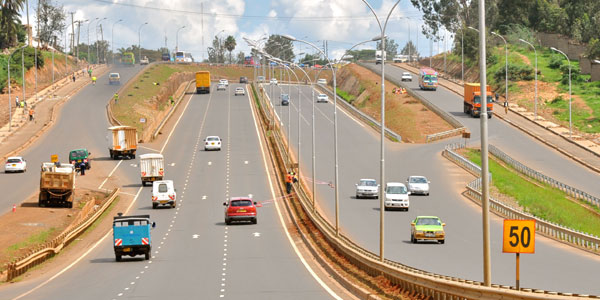
Kenya’s 8-lane superhighway to reduce congestion in the capital. Image Credit: Kenya Car Bazaar http://bit.ly/16vZdOR
Roads in Kenya should be designed in a way that pedestrians are separated from all the other traffic. This is by use of sidewalks, raised crossings, overpasses or underpasses, refugee islands and raised medians.
Accidents claiming more young people
As reports of road crashes continue to be published in the media, the country continues to lose its most important resources, its labour force.
Statistics show that one in three road fatalities victims are under the age of 29; this number is expected to rise by more than a half by the year 2030. Even with the rising cases of HIV/AIDS, Malaria and tuberculosis, more people of this age group are more likely to die from road crashes.
Worldwide, most traffic injuries occur among individuals aged between 15 and 55 years. Young people in developing countries such as Kenya, who use the roads as pedestrians, cyclists, motorcyclists and public transport passengers are more likely to die of road accidents compared to those in the developed countries. This is simply because of poor roads, with very little road safety measures and human error.
“Most road accidents are caused by human error such as fatigue, sickness, over speeding, driving under influence of drinks, drugs and miscalculations by pedestrians. Obstructions on the road are also a major contributor alongside animals, weather, vehicles and road defects.” Said Ayub Ali SSP, of Kenya’s Traffic Police Department.
A majority of new drivers on the road are youths. According to the Youth for Road Safety Organization, young people are less able to perceive hazards, control the vehicle or make driver decisions with confidence. This all leads to a higher risk of crash injury both on and off the road.
Statistics show that 73 percent of those injured are males. This implies that, it is three times more likely to have young males drivers killed compared to their female counterparts. Young males are more disposed to risk-taking behavior compared to girls of the same age.
With road traffic injuries causing 1.3 million deaths and 20-50 million injuries a year worldwide, with most of these injuries leading to lifelong disability including brain and spinal cord injury, the government needs to do more on road safety to protect the youth.
Rising disability rates linked with traffic accidents
The growth in numbers of motor vehicles is a major contributing factor in the rising toll of fatalities and injuries from road traffic crashes in poor countries. The sporadic increase of motorcycles on Kenyan roads and poor roads has added to these numbers.
Most people are mishandled when they are pulled out of wreckages by by-standers or during transportation to the hospital by good Samaritans; a post-crash aspect that is increasing the numbers of people with disabilities. Due to lack of medical training or first aid training, the first responders to road crashes who are mainly from the surrounding area end up causing more damage to injured people.
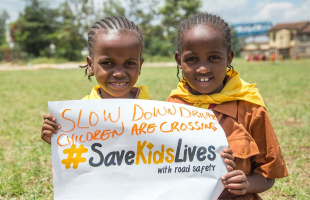
Image Credit: World Health Organisation
Road mishaps can cause blindness or deafness. Some people suffer paralysis due to damaged spinal cords while others endure having their limbs amputated to save their lives. There are those who encounter psychological trauma. Then there are those victims whose limited physical or intellectual disabilities were caused by neurotrauma (The road collision injures the nervous system).
New traffic bill improves safety for children
- The amendments of the Traffic Bill are more concerned with a neglected generation, Children. In Kenya, roads are designed for adults. The bill is making the government, schools and drivers responsible for the care of the children, especially when they are traveling from and to school.
- The current traffic law stipulates that drivers should lower their speed to 50km/h around schools, play grounds and health facilities. The new bill aims to lower that to 30 km/h.
- Measures to ensure a calming speed such as traffic signs near schools, ensuring there are no road obstructions near schools and the speed limit is adhered to, will be put into place.
- The bill also looks to regulate in house matters such as the school transport. There will be standards set for all school vehicles to adhere to. The cars should be fitted with child safety equipment and features; this is expected to be executed by the Kenya Bureau of Statistics.
- “It should be made illegal for school vehicles to travel at night. And the fines seem too low for the offenders.” Said Ms. Anne Thiongo, of the Ministry Of Labour department of Children
- With the increases of vehicle purchases in Kenya, the bill makes it mandatory for the government to ensure no unworthy vehicles will be found on our roads.
About the Author





