
Today marks World Human Rights Day.
Unfortunately, the term “human rights” is often associated with the violation of human rights, rather than the advancement of it. Although 2014 has seen many successes in various areas of human rights application around the world, there have been far more setbacks and disappointments than there should be in our 21st century world.
Reports of wars and conflicts from various corners of the globe have dominated the news. People continue to die in Syria every day as they fight for freedom. Women in North Africa continue to face the horrors of female genital mutilation. Gambia continues to issue life sentences for those who are gay. The list goes on and on.
Which is why it’s so important to have a day dedicated to human rights. Although these ongoing atrocities are disappointing in more than a few ways, World Human Rights Day gives people across the world the chance to engage with human rights and work together to come up with ways to ensure that the human rights record in 2015 isn’t as horrific as 2014’s.
Although it has been difficult to narrow it down to only five, we have put together a list of what we think are defining moments in distinct humanitarian crises of 2014. These are the events that we believe signal to the world that we still have a long way to go until we see the universal application of human rights.
The Spread Of ISIS
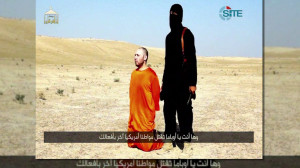
Whether you choose to identify them as the Islamic State of Iraq and the Levant (ISIL), the Islamic State of Iraq and al-Sham (ISIS), or the Islamic State (IS), the fact is that very few in the world knew the capabilities of this brutal terrorist group in 2013.
Taking advantage of the ongoing Syrian civil war, the refugee crisis, and the lack of central government control, ISIS rapidly began annexing parts of both Syria and Iraq. It was not, however, until the filmed beheadings of western hostages that ISIS become an international public talking point.
The beheadings involved those who were committed to helping Muslims throughout the Middle East. James Foley, an American journalist, was the first victim. His beheading was subsequently followed by the beheading of British journalist Steven Sotloff, British aid worker David Haines, British minicab driver Alan Henning, and American aid worker Peter Kassig. In all five cases, hostages were forced by their captors to blame their respective country’s leader as the cause of their death.
ISIS’ systematic targeting of non-Muslims and Shia Muslims is appalling due to the sheer numbers of murders that have been carried. They are remembered by people around the world for their targeted and brutal beheadings that have been condemned even by terrorist group Al Qaeda.
Police Brutality Against Minority Communities
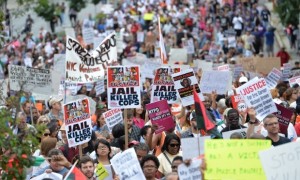
Protests have sprung up across the United States over the killings of two unarmed black men by police officers. Catalysed by the grand jury decisions not to pursue criminal charges for either officer responsible for the killings, these protests are founded in a culture of distrust and fear that exist between the country’s police force and communities of colour.
Conflicting witness testimony and forensic evidence made a legitimate case as to why officer Darren Wilson was not indicted. Questions were raised as to why within a predominantly black community (2010 Census showing 67.4% black), proportional racial representation in the police force does not exist. Of the 53 police officers in the City of Ferguson, only three of them are black. That’s 94.4% of the police force that is white.
Facts like this show the racial disparity in their community and epitomise community suspicion of police force. With all the uncertainty surrounding the case, one may logically come to the conclusion that an indictment would be unsubstantiated.
These two killings have sparked national outrage and protests and could ultimately cause mass changes to increasingly militarised police forces throughout the United States.
Boko Haram Abduction Of Schoolgirls
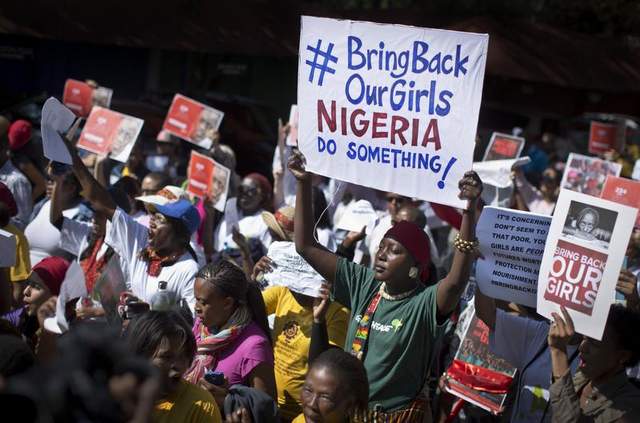
On the night of 14th April, 276 girls were abducted from a school in the town of Chikbok in northeastern Nigeria. The group responsible for the abductions was terrorist group Boko Haram.
Aged 16-18, a video statement by Boko Haram claimed that many of the girls were forcibly married to Boko Haram members or sold to other men. Amnesty International said that the country’s military had advance warning of the attack, but that they failed to act on the warning. This was later confirmed by the Nigerian armed forces.
International outrage followed as the Nigerian government consistently failed to bring the safe release of the girls. A social media campaign called “#BringBackOurGirls” gained global support and saw celebrities and politicians demanding the girls’ freedom.
A professor from King’s College London, Jonathan N.C. Hill, stated that Boko Haram aimed to use the abductions to further their goal to use young women as sexual objects and as a means of intimidating the civilian population into resistance.
Egypt Mass Death Sentencing Of Muslim Brotherhood Members
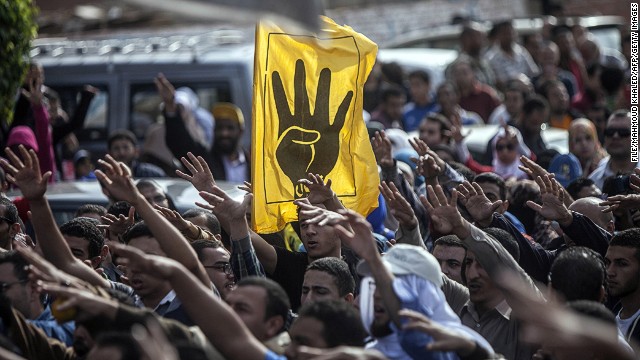
Following the military coup of former President Mohamed Morsi, mass pro-Muslim Brotherhood protests persisted throughout Egypt. Many of those protests quickly escalated into violence and led to the eventual military crackdown against members of the party.
In April a judge provided death sentences for 683 defendants, with all but 110 of them being tried in absentia. This was the largest death conviction the modern history of Egypt. Of the 683 sentenced to death, 183 had their sentence confirmed in June for their involvement in the attack on a Egyptian police station that resulted in the murder and attempted murder of police officers.
Two others have since joined the mass death sentencing, the most recent of which occurred on 2nd December. In this case, a judge found 188 defendants guilty in the attack on another police station that resulted in eleven deaths of police officers and two civilians deaths. This protest unfolded as a response to the ousting of former President Morsi in Giza.
There has been international condemnation of these mass death sentences as evidence is not being weighed against individuals but instead in mass. Though none of the death sentences have been carried out thus far, there remains a fear that a return to the days of Mubarak have descended back on Egypt.
Mexican Students Abducted And Killed By Government
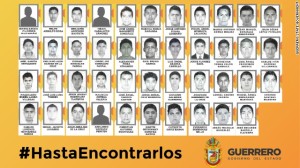
On 26th September, Mexico was rocked by speculation of local government’s involvement in the abduction of 43 students. Thousands have protested throughout the country and around the world in response to the police role in the abduction.
Mexico is still in turmoil as the remains of one of the 43 abducted students have been identified. This seems to be “the straw that broke the camels back” as many are tired of the continuous flow of allegations of corruption in all levels if the Mexican government. The protests were initially calling for the safe return of the students, however, it soon became evident that their return was not a reality and the protest tone changed to question the government involvement and lack of action.
Other Atrocities That Deserve Attention…
About the Author





