
Today marks World Human Rights Day. However, in today’s world, the term “human rights” often takes a somber tone. As we look back on 2014, it’s disappointing to note the sheer number of high profile human rights violations that have taken place around the world.
In fact, it could be easy to conclude that 2014 has seen far many more human rights disappointments than strides towards the universal application of human rights. With the high number of negative stories that are highlighted through our social media feeds and our major news outlets, the positive stories are often overshadowed or ignored completely, leaving space for the reporting on mass injustices committed against disenfranchised groups around the world. It’s easy to pick out the blatant violations of human rights that take place around the world, but positive change largely goes unnoticed.
While there have been many setbacks (all of which are worth noting to make sure we work on setting it right), it’s also important to remember and celebrate some of the successes that have been gained. When looking at how far we still must go, we must not forget how far we have come.
To celebrate Human Rights Day, we have put together a list of what we think are 2014’s proudest moments in the human rights arena. Here’s hoping to see many more in the new year.
The Nobel Peace Prize for 2014
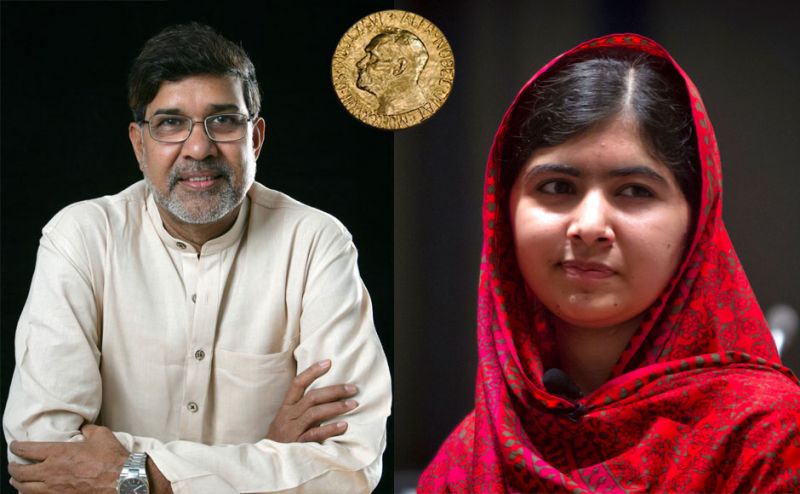
The 2014 Nobel Peace Prize was awarded to two extremely noteworthy people this year.
The first winner needed no introduction. We all know Pakistani teenager and girls’ rights advocate, Malala Yousafzai. We already know that Malala’s struggle to advance women’s right to education in Pakistan gained world notoriety when she was shot in the head by Taliban gunmen 2012. Those who have followed her inspiring recovery and what she went on to do will know that she has since gone on to become the most well known global advocate for education for women and girls, participating in events at the United Nations, as well as being nominated as TIME’s “100 Most Influential People In The World” in 2013.
However, what was truly special about the Nobel Peace Prize this year was that it shone a light on a man whose work has deserved recognition since well before Malala was born. 60-year-old Indian children’s rights activist, Kailash Satyarthi, is the Founder of Bachpan Bachao Andolan (translated: “Save the Childhood Movement”), an organisation that campaigns for the protection of children and ensures that they have “equality education”. The organisation has rescued over 82,000 victims of human trafficking, slavery and child labor and re-integrated them back into society. Satyarthi has maintained the tradition of Mahatma Gandhi by heading various forms of peaceful protests, “focusing on the grave exploitation of children for financial gain,” the Nobel committee said at the Nobel Institute in Oslo.
“It’s a great honor for all the Indians, it’s an honor for all those children who have been still living in slavery despite of all the advancement in technology, market and economy. And I dedicate this award to all those children in the world.” – Kailash Satyarthi
Despite the tremendous amount of work Satyarthi has done for children in India, the country never recognised his efforts until he won the Nobel Peace Prize. The Telegraph reported that on 10.02am on Friday, Satyarthi had only 100 followers on Twitter. An hour later, he had over 5,000 followers as people around the world begin to question why they have never heard of Kailash Satyarthi before.
Gay Rights Worldwide
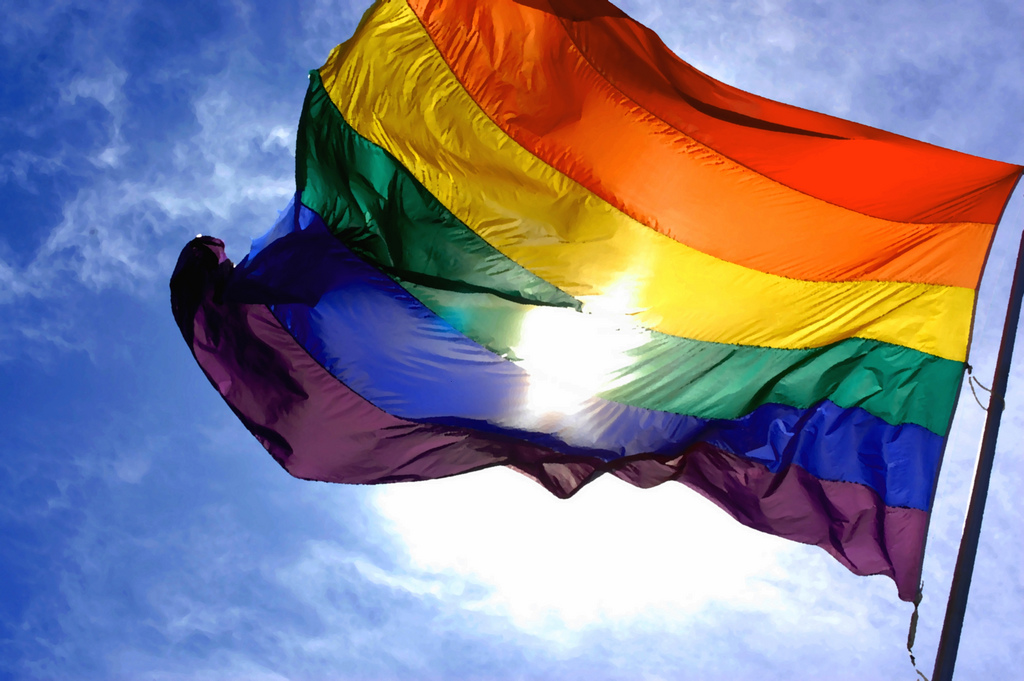
This year has seen significant advancements for LGBT communities around the globe. In the United States, 2014 saw 19 states bring in legislation allowing gay and same-sex marriage, bringing the US total to 35 states. It seems that the Supreme Court Decision of 2013 got the ball rolling and allowed for marriage-bans to be lifted across the country.
But this is not a trend that is limited to the boarders of the United States.
On November 28th Finland became the 12th county in Europe to legalise gay marriage.
In August 2014, a court in Uganda annulled the anti-homosexuality law, which stated that homosexuals could be jailed for life. Although homosexuality is still illegal in the country, it is no longer illegal to promote homosexuality or required by law to report homosexual acts. This opened the door for the first gay pride rally to take place in Uganda.
In Botswana, a LGBTI rights group won a massive victory from the High Court by gaining the right to operate as a legally registered independent organisation in the country.
The LGBT community also gained official support from the United Nations this year. In September, the U.N. passed a resolution that condemns violence and discrimination based on gender identity and/or sexual orientation. Although the resolution does not impact policy, it acts as a massive success in the fight for quality for homosexuals in countries where homosexuality is still frowned upon.
Finally, even Pope Francis spoke out in support of the LGBT community, stating that “homosexuals have gifts and qualities to offer to the Christian community”. While there’s still a long way to go for the Church and gay rights, the Pope’s comments signal a move in the right direction.
Olympics: Host City Contracts Will Include Rights Protection
The decision by the International Olympic Committee to link human rights practices to the offering of contracts for a host city is a large step in the right direction.
After the much-publicised failures of Beijing in 2008 and Sochi in 2014, linking human rights protection to future contracts will force bidders to take steps to ensure human rights in their country, should they wish to be involved in the international sporting arena.Often times, repressive governments ignore calls by the IOC to follow rules and regulations. This reform will hopefully provide the necessary enforcement mechanism.
It will be important to watch the impact of these October amendments on the bids by Kazakhstan and China for the winter 2022 Olympics.
“For years repressive governments have brazenly broken the Olympic Charter and the promises they made to host the Olympics. This reform should give teeth to the lofty Olympic language that sport can be ‘a force for good’.” – Minky Worden, director of global initiatives at Human Rights Watch.
Emma Watson’s Speech On Gender Equality
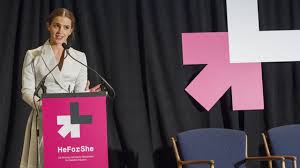
Social media exploded over the well-articulated and thoughtful speech given by Emma Watson at the United Nations earlier this year. Her debut appearance at the U.N. saw the Harry Potter star launch the HeForShe Campaign – a campaign calling on men to speak up for oppressed women and join the movement towards gaining gender equality worldwide. As the first of it’s kind at the UN, the HeForShe Campaign aims to galvanize as many men and boys as possible to be advocates for change. Watson called on men to take up this mantle, so that their wives, daughters and sisters can be free from prejudice, but also so that their sons and brothers can have the permission to be vulnerable and human.
Watson, who recently became the UN Women Goodwill Ambassador, used her speech at the UN to talk about feminism and the negative stigma that has begun to develop around the term. She expressed her sorrow at the fact that, today, more and more women are choosing not to identify themselves a “feminist” as the word has become associated with “men-hating”. Watson questions where this association has come from and explains that the standard definition of feminism is nothing more than “the belief that men and women should have equal rights and opportunities”. And who doesn’t want to be associated with fighting for that?
Not everyone agrees on the importance and relevance of Watson’s speech. However, there is no doubt that her speech grasped worldwide attention, got people talking about the issue, and put “feminism” back on the table for those who had been too ashamed to talk about it.
“Why is the word such an uncomfortable one? I am from Britain and think it is right that as a woman I am paid the same as my male counterparts. I think it is right that I should be able to make decisions about my own body. I think it is right that women be involved on my behalf in the policies and decision-making of my country. I think it is right that socially I am afforded the same respect as men. But sadly I can say that there is no one country in the world where all women can expect to receive these rights.” –Emma Watson
UN Affirms Abortion Rights Are Human Rights
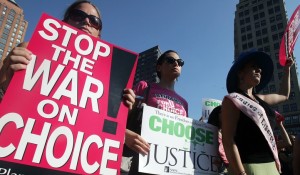
The United Nations has recently identified reproductive rights as key to advancing the Millennium Development Goals going forward. A newly released report from United Nations Secretary General, Ban Ki-moon, clearly states that reproductive rights are crucial to achieving gender equality worldwide.
Though limited publicity was received for this monumental step towards abortion rights of women, it sets the foundation for this discussion to take place. This is a movement away from draconian laws that have been prevalent in civil society.
“We commend Secretary-General Ban Ki-moon for recognising that human rights, and accountability for fulfilling them, are essential parts of development. But U.N. member states must place greater emphasis on ensuring that women’s reproductive rights and gender equality are top priorities in the final sustainable development goals.” – Lilian Sepúlveda, vice president of the Global Legal Program of the Center for Reproductive Rights.
About the Author


Two of the five involves millions of deaths… wonderful accomplishment. 20 million deaths due to aids and recreational sex and 10’s of millions of babies aborted… good job.