
The phrase “six degrees of separation” has its roots in the 1969 small-world experiment of Stanley Milgram. He distributed packages to citizens in Omaha and gave them only the most skeletal information about the unknown recipient. By the time of their arrival, some packages exchanged hands only once or twice; others, nine or ten. On average, packages leapfrogged six times before reaching their destination.
In 1969, world population was 3.612 billion. In 2013, world population railroaded over 7.125 billion. Six degrees of separation is rapidly becoming five and four and three, and with increased networking comes the eminent threat of bubonic plague, round two. Researchers and policymakers are looking to technological solutions to contain future disease outbreaks.
Technological solutions
Sweeping indiscriminately across Western Africa, Ebola is overwhelming the capacity of health units in rural towns and villages. Like many viruses, Ebola mutates quickly, foiling any vaccines. It spreads via physical contact and contaminated bodily fluids, and is currently showing no sign of retreat.
Innovations in health information technology are driving much of the progress towards containment and a cure, but there is still a long way to go. A recent survey conducted by HealthItJobs.com revealed that searches for health IT specialists are on the rise, particularly for those who possess formal training in telemedicine. Many hope that the success of new IT systems across Africa will help in stopping the chains of transmission in this epidemic.
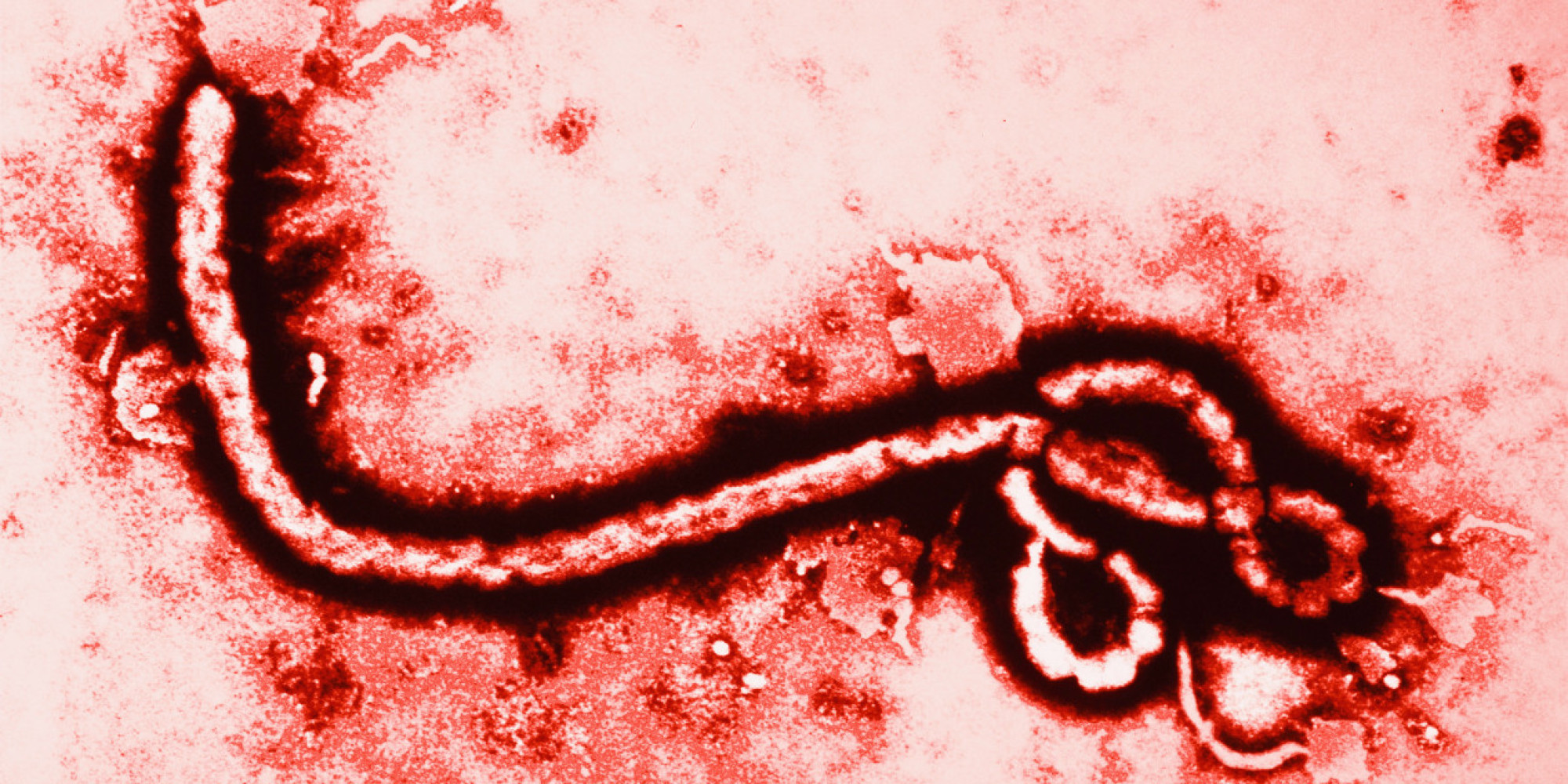
Ebola Virus. Image Credit: Huffington Post
This being the twenty-first century, robots were seen as an appropriate first response. In a number of American hospitals, trash can-sized machine robots have been employed to stop pathogens in their tracks. These robots blast hospital rooms with ultraviolet light 25,000 times stronger than the rays of the sun, damaging every germ hiding where light can ricochet. Some UV-cleaning robots are also available for hire.
Taskin Padir, assistant professor of robotics at Worcester Polytechnic Institute, has two other ideas: a decontamination robot with a pair of chlorine disinfectant power sprayer “arms,” and a telepresence robot – think Weebo from “Flubber” – to allow family members to communicate with their diseased loved ones without breaking quarantine.
Disease tracking
Bill Davenhall, global marketing manager at the software provider ESRI, believes he may have the answer – not just to Ebola, but to pathogenic outbreaks bar none. It is called a geographic information system (GIS). The principle is simple: By mapping the front lines of a disease outbreak and tracking the traffic of the sick and exposed, regions can be assigned probable risk. Early in the Ebola disaster, Doctors Without Borders sent an inquisitive cartographer to Guinea to do just that. In their following report, Doctors Without Borders recommended that GIS systems be implemented for future field operations.
Similar principles put malaria, the perennial scourge of South America, in their cross-hairs. RTI International, collaborating with scads of organizations from the United States and Tanzania, introduced the Coconut Surveillance programme in Zanzibar. Zanzibar is a breathtaking archipelago in the Indian Ocean, once infamous for malaria outbursts. Coconut Surveillance has three simple steps:
- Local malaria cases are reported via “dumbphone” handsets as part of the Malaria Early Epidemic Detection System (MEEDS), a system used across all 150 of Zanzibar’s health facilities.
- Coconut Surveillance alerts local Zanzibar Malaria Control Program (ZMCP) officers.
- ZMCP officers travel to the home, interview family members, and map the house.
Water filters
Others prefer K.I.S.S. solutions. If mosquitoes cause malaria, why not sell insecticidal nets made from high density polyethylene (HDPE) monofilament yarn? Such technology, manufactured by Disease Control Technologies LLC and promoted by the World Health Organisation, is currently being sold in tropical regions worldwide. Given that many pathogens spread via contaminated water, why not filter the liquid? Disaster response teams in Haiti, Thailand, Africa and South America have often relied on LifeStraw, a $20 filter which cleans out 99.9 percent of all microbes and parasites from enough water for one person for one year.
Telemedicine, geomedicine, LifeStraw – these are the three pillars embodied of a successful disease containment programme: affordable prevention, quick response, and standardised data. As countries in Western Africa continue to grapple with the Ebola epidemic, while trying to rebuild their shattered healthcare system, it’s clear that new data needs to be analysed to implement better policies and procedures. Technology, in all it’s imperfections, promises great potential to limit the spread of disease. But it is only as good as those who enforce it.
About the Author





[…] The phrase “six degrees of separation” has its roots in the 1969 small-world experiment of Stanley Milgram. He distributed packages to citizens in Omaha and gave them only the most skeletal information about the unknown recipient. […]