
2014 wasn’t too kind on humanity. There were times when our faith was faltering among all the war, conflicts and disharmony, however, some glimpses of hope helped us cling to our beliefs.
Here are 5 instances where religion stood for mercy, kindness, compassion, love and respect for human life and dignity.
1) Evangelicals for Marriage Equality
In September 2014, Evangelical Christians launched an initiative in support of marriage equality. Keeping in mind the social ostracisation that LGBTQ identifying people face, EME seeks to open up dialogue within evangelical churches, colleges, and institutions to help fight bigotry, homophobia and dispel myths about marriage equality and enlist greater support from the community on same-sex marriages. The initiative is one of a kind in its approach that seeks to send out a strong message of equality for people of non-normative sexualities.
2) Religious Leaders Condemn Senate Torture Report
Religious leaders have condemned the CIA’s torture tactics in the strongest of terms following the US Senate Intelligence Committee’s 500 page summary on the treatment of the CIA’s terrorist suspects. The National Religious Campaign Against Torture sees this gruesome practice as a sign of moral bankruptcy on the part of the government and aims to put an end to the CIA’s brutal measures. Respect of human dignity being of utmost importance to religious values and practices, this condemnation has shown what religion stands for.
3) Church Fights Ebola
When Liberian immigrant Eric Duncan contracted Ebola in the Vickery Meadows community, some residents of Dallas were apparently trying their best to avoid the community. However, Pastor Brent Barry of the local North Park Presbyterian Church was determined to change things. To that end, he lead an interfaith coalition of churches and temples to stand by the people of Vickery Meadows in the hour of need. After his church got involved, many more joined in large numbers and reached out to the community and help fight the disease and the stigmatisation it had brought along.
4) Religious Leaders Plead for Interfaith Tolerance in Jerusalem
Clergy representing Christians, Jews and Muslims plead for interfaith tolerance in Jerusalem after five people lost their lives in an attack. Religious tensions have always troubled the peace of the region, resulting in frequent life threatening consequences. Acknowledging their individual religious and political differences, the leaders emphasised that conflicts wouldn’t help resolve those differences. Given the the significance of interfaith tolerance needed in Jerusalem, religious leaders made a strong case for it.
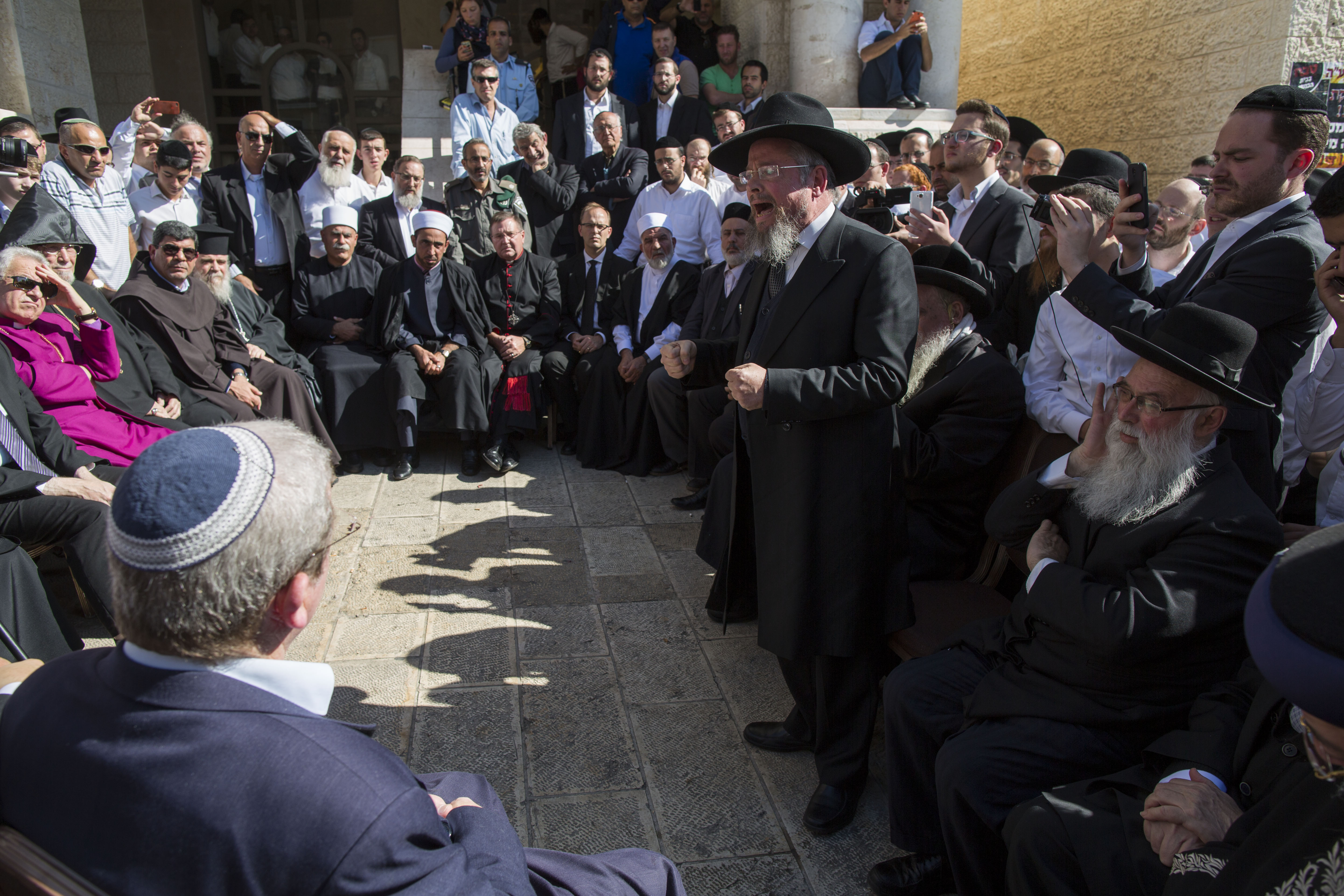
Clergy Plead For Interfaith Tolerance In Jerusalem. Image Source: http://bit.ly/1vssYVm
5) Religious Leaders Condemn ISIS
The Islamic State has consistently remained in the headlines this year for all the wrong reasons. It has unleashed a regime of terror through violence and used Islam to justify itself. Its actions have fuelled Islamophobia across the world. Considering the threat to humanity ISIS poses, senior Muslim, Christian and Jewish leaders united at a Saudi-backed conference in November to condemn violence by militants of ISIS. It was an important step towards dispelling myths about Islam, terrorism, and also aimed at promoting interfaith tolerance and harmony.
About the Author





