
The United Kingdom is one of the international leaders on topics such as Female Genital Mutilation, commonly known as FGM, with many summits on the topic held in London. However, the British government is much less progressive when it comes to granting asylum to those people in need.
Maimuna Jawo is a 40-year-old woman from a village named Willingara in The Gambia. She currently lives in a house provided by the Home Office in the West London borough of Hounslow. The 17 other bedrooms of the house are occupied mostly by women who, like her, have applied for asylum in the United Kingdom.
Maimuna has been put on to Detained Fast Track at Yarl’s Wood Immigration Removal Centre after her first claim for asylum. Being detained enabled her to meet with Movement for Justice, an organisation that helped to build up her case and to get a solicitor through Asylum Aid.
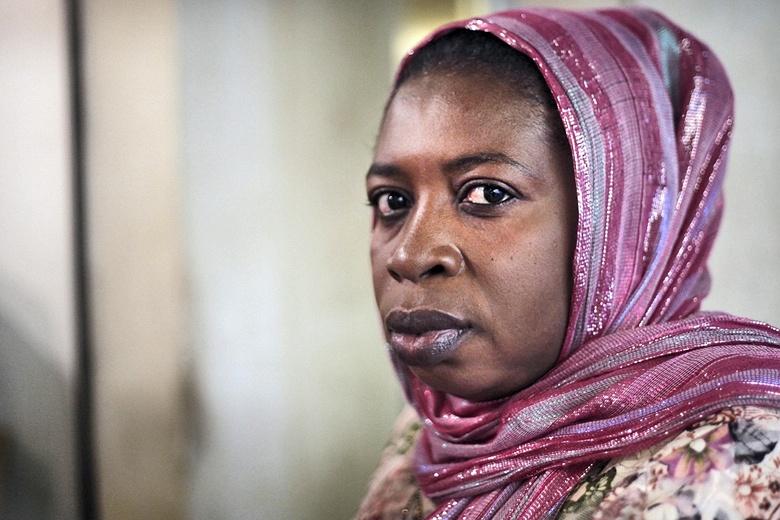
Maimuna. Photo credit: Sean O’Neill
Asylum Aid focuses on women’s asylum claims in particular because in many cases it is more difficult for them to get status. “One reason for this is that a woman seeking asylum may be fleeing something like FGM, domestic violence or rape, none of which are easy to evidence,” says Zoe Gardner, Communications Officer at Asylum Aid. “You do not get a certificate for being raped, or being at risk of FGM, and so women often rely simply on their own ability to tell their story and be believed.”
According to Asylum Aid, cultural and linguistic barriers, shame and the effect of trauma on memory and the ability to tell detailed, chronological stories can affect a woman’s ability to tell a story in a way that will be readily believed by Home Office caseworkers. Given this, the culture of disbelief in the Home Office works disproportionately against women making this kind of claim.
The reality of being an asylum seeker in the UK
“I was in a lot of trouble when I was in my country,” says Maimuna. She decided not to go back to The Gambia after she came the UK in 2009 for her brother’s wedding. After Maimuna’s mother prematurely passed away, she was the one who inherited the duty to perform FGM on the girls of her community.
“On the day that my mom cut my daughter, I knew I would not be able to do this,” she says. “I heard my blindfolded daughter, crying and calling my name, but I couldn’t help her because I was the one holding her down to facilitate the cutting”. That day, Maimuna promised herself that she would do whatever it takes to never have to perform FGM. That thought is what gives her the strength to fight everyday and why she needs to get granted asylum in the UK.
Once on the UK soil, Maimuna went from houses to houses to find a place where she could sleep. She eventually met with a Pakistani family who decided to host her. After staying there for a while, Maimuna started to open to them about her story. “That’s when they told me that I had to seek for asylum,” Maimuna says.
The father of the Pakistani family gave Maimuna the telephone number of the Home Office in order to start the asylum seeking process. “So I went to Croydon to do my screening interview and that’s when they told me that they were going to detain me,” says Maimuna.
Yarl’s Wood Immigration Removal Centre
“I didn’t know what was happening,” Maimuna says. “They told me I overstayed and they took me to Yarl’s Wood detention centre.”Maimuna says the officers took her phone and her SIM card away from her. “It was impossible for me to talk to anyone outside of the detention centre and to tell them where I was,” she says.
According to Antonia Bright of Movement for Justice By Any Means Necessary, “the Detained Fast Track process is nothing more than a set up to make the vast majority of cases fail.”
“Detention centres are worse than prison,” Maimuna says. “When we’re sick the staffs do not believe us and the only medication we are given is Paracetamol.” According to Maimuna, many of the women detained in Yarl’s Wood attempt to commit suicide and some of the women are sexually assaulted by the guards. “I know one of the women who got sexually assaulted by them, but nobody cares and nobody believe us,” she says.
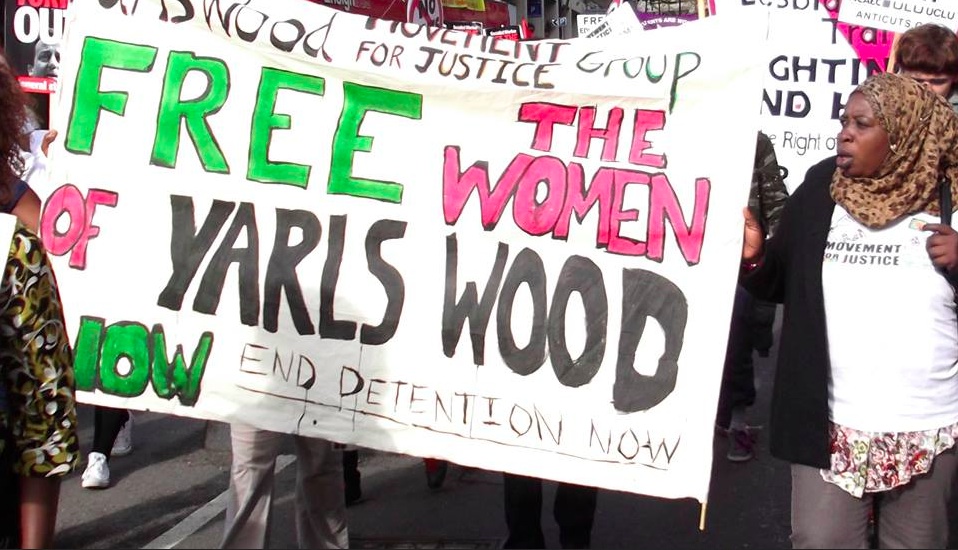
Maimuna protesting with Movement For Justice for the shut down of Yarl’s Wood Detention Immigration Removal Centre. Photo credit: Movement for Justice
Backlashes in The Gambia
Maimuna’s sister-in-law went to visit her in Yarl’s Wood before flying to The Gambia for her annual visit there. When in Willingara, her sister-in-law was harassed with questions by the elders of the community. “She said that she was very scared and she told them that she did not know where in the UK I was,” says Maimuna. “They told her ‘when you go back there, make sure to find Maimuna and to tell her to come back’.” When Maimuna’s sister-in-law asked the elders what would happen if she comes back but does not want to perform the FGM, they said that they will force her to do it anyway.
Maimuna’s children are still all in The Gambia. “They are staying in another village with different families because my people don’t accept them now,” she says. “They don’t want to look after them.”
“All of my friends were going to school except me”
“What made me angry was seeing my friends going to school when I was 12, but I couldn’t go because my mom was teaching me how to circumcise,” says Maimuna. Today the story repeats itself: her daughter does not go to school anymore because of the bullying that she is experiencing. “Not only her actually, they’re bullying all my children because I left,” she says. Her daughter’s dream is to become a beautician because according to her, “making a girl pretty is far more better cutting her”.
According to the study Gender in The Gambia in retrospect and prospect, “female circumcision is often popularly (and mistakenly) construed as an Islamic practice, but is actually a longstanding cultural tradition among a range of mainly African and Middle Eastern Groups. Estimates regarding the prevalence of circumcision among Gambian women range from just under two- thirds, to four-fifths”, yet Maimuna does not know any Gambian women from her region that has not been circumcised.
According to the World Health Organisation, there are four types of FGM. “In The Gambia they will cut you and use the blood coming out to seal the labia,” Maimuna says. “When you get married, you have to come back and they will cut you again, without any medications, to open the labia.
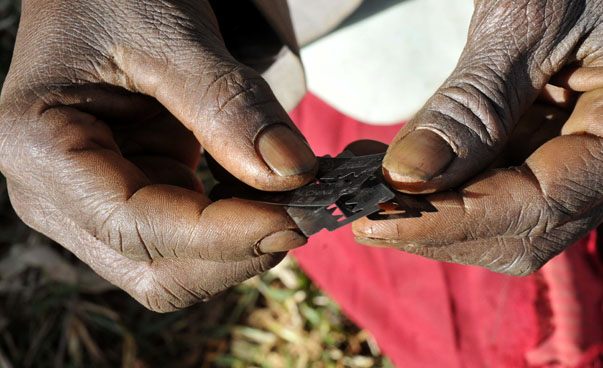
“In The Gambia they will cut you and use the blood coming out to seal the labia.” Image Source: http://bit.ly/18kFZMD
The Iranian and Kurdish Women’s Rights Organisation (IKWRO) looks at FGM as a form of honour-based violence to control women’s sexuality. “FGM is a violation of Human Rights,” says Sara Browne, Campaign Officer at IKWRO. “We say it is a brutal practice because girls have no control over it, nor say, and it is something that will affect them, physically and mentally for the rest of their life.”
FMG has been illegal in the UK since 1985. However, “a law on his own doesn’t do anything,” Sara Browne says. According to her, if you have a law in place but you have not raised enough awareness about it, the law will not be effective.
“It’s recently with the media that we have had a huge rising profile of this issue and people are talking about it,” she says. “The Evening Standard in particular took up this issue. With that comes difficulties because people worry about demonizing communities, but that’s always the issue when you’re challenging anything that seems cultural.”
IKWRO’s priority has to be protecting women and children. “We have to go through this process of change so simultaneously, we need to fight racism and the right-wing agenda,” Sara Browne says.
Waiting for an answer
As of today, Maimuna is still an asylum seeker. Movement For Justice By Any Means Necessary protested last week in front of the Home Office headquarters in Cardiff to ask the officials to come up with verdict about Maimuna’s case. After two refusals, it is Maimuna’s third claim for asylum. The Home Office usually answers the claims within six months, but a year have passed already and Maimuna is still waiting for an answer. “It might be ‘yes’, it might be ‘no’,” Maimuna says. “I don’t know what will happen if it is ‘no’. If the BBC documentary is not enough to prove them that I’m telling the truth, then I don’t know what else I can do.”
According to Sara Browne, it is extremely difficult to get asylum in the UK. “As an ex-immigration solicitor, I felt like asylum seekers were perceived as liars,” she says.
“It’s a very lengthy and difficult process and I think immigration officers are sort of trained to have the mindset of saying ‘no’.”
Maimuna says that if she is sent back to The Gambia, she will be forced to perform FGM. “It will be either you do it, or you die,” Maimuna says.
According to Sylvia Chant, professor of Developmental Geography and an expert on The Gambia, if Maimuna is deported, it would be difficult for her to reacommodate herself in her community, especially if she comes from a family line specialised in this practice. “It might also be difficult as a single woman to start life anew without family support, especially given the limited openings for women in Gambian labour markets and their low earnings,” she says.
UK’s double standard
Asylum Aid sees a double standard in the way that women who are fleeing FGM are treated. “While we have seen commendable efforts from the government to eradicate the practice of FGM here in the UK, the same concern is not being shown to refugee women and girls at risk,” Zoe Gardner says.
The Girl Summit, held in London last July, focused particularly on FGM and child and forced marriage. “A lot of big statements have been made there about FGM, but I will take those words with caution because when it comes to immigration, it’s a whole new ball game,” says Sara Browne.
“While politicians cry out that every single instance of cutting is a disgrace to the country, they are happy to return women and young girls to countries where the practice is not only legal, but condoned by all levels of society, arguing that they are not truly at risk,” Zoe Gardner says. “If the government wants to protect women and girls from FGM, we have to stop sending them back to where they will face it.”
Looking ahead
Maimuna says she would have never imagined having to go through all those obstacles while seeking asylum in the UK. “I would do it again because I believe in the fight against FGM,” she says.If she is finally granted asylum, Maimuna would like to devote her life to campaigning against FGM. “If we start with educating the next generation about its dangers, I believe one day FGM will die.”
About the Author






There is a wonderful documentary, called “Honor Diaries”, which was shown at UCL this week which presents this topic in an accessible light, I recommend getting a hold of the documentary and getting in touch with some of the speakers:
http://events.ucl.ac.uk/event/event:g5q-i55eokfs-l4wby7