
Successful peacebuilding depends on involving young people. Governments, international organisations and NGOs often focus on how young people are endangered by armed conflict and are at risk of taking up arms in future violence, but young people are also prominent activists and peacebuilders themselves and need to be more deeply involved in peacebuilding.As the United Network of Young Peace-builders (UNOY) argue: “Youth have agency, youth are resilient and have the capacity to become productive and peaceful citizens in post-conflict contexts.” For peace-building to work, young people need to be seen, not just as the targets or beneficiaries of peace-building programmes, but as potential peacebuilders in their own right.
Why are young people so important for peace-building?
- Young people are not only the most likely to be adversely affected by the success or failure of peace-building efforts, but they also have the capacity to make powerful and productive contributions to peace. They are tomorrow’s decision-makers, so their outlook, attitude and skills as peacebuilders are all crucial to a long term approach to peace.
- Problems should be solved by those who are most affected by them if the solutions are to be just, consensual and durable. Armed conflict profoundly affects young people, so there are both ethical reasons for taking their participation in peacebuilding seriously as well as sound practical reasons for deep and broad youth involvement. Any long term perspective on conflict resolution has to both consider how young people are affected by conflict and how young people can be involved in the process of building peace and resolving conflicts.
- Long running conflicts harden attitudes, leaving people unwilling to make the change in perspective required to move beyond cycles of violence and counter-violence. Peacebuilding can therefore benefit from a generational change in attitudes, when a new generation decides not to make the same mistakes their predecessors made, or to suffer the consequences of conflicts that were not of their making.
Peacebuilding in Georgia: Kartlosi’s approach
Many grassroots NGOs are leading the effort to involve young people in peacebuilding and give them the tools and the capacity to take action in their communities. One example of this is Kartlosi, a local peacebuilding NGO in Georgia where I am currently completing an European Voluntary Service project. Kartlosi was founded in 2006 by Georgian and Ossetian youths from the village of Pkhvenisi, 5km from Tskhinval/i, the de facto capital of the breakaway region of South Ossetia (the name Kartlosi comes from the combination of ‘Kartl’, which means Georgian, and ‘Osi’, which means Ossetian). It’s mission is to support the sustainable development of local communities in the Shida Kartli Region of Georgia (which borders the breakaway region), contribute to the peace process and the settlement of the conflict in South Ossetia (or Tskhinvali Region, as the area is called in Georgia), and carry out dialogues between communities that have been divided by the conflict. A major part of this mission involves raising the local civic participation of young people in the region, especially in conflict affected areas.
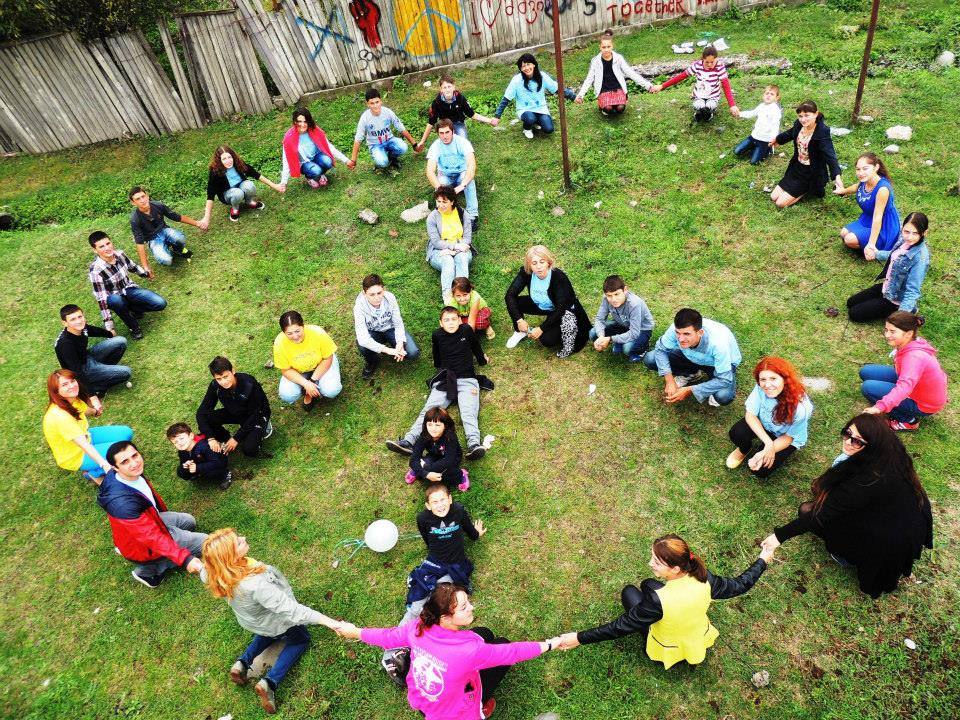
Nikozi World Peace Day 2014. Image Source: http://on.fb.me/1C6Qcdt
How does Kartlosi involve young people in peacebuilding? A project currently underway is called “Empowering engagement of local youth on the regional level in Georgia”. Young people from the conflict-affected region are working with Kartlosi to identify and document problems faced by communities who live in villages on the Administrative Boundary Line (ABL) between Georgian-controlled territory and breakaway region. Since the 2008 war, for example, the people in these villages have faced daily insecurity and the risk of being kidnapped and detained on the South Ossetian/Tskhinval/i side of the fence where the location of the ABL is unclear. They also have to deal with a lack of water for irrigating their crops because the source of their water lies on the Ossetian side of the ABL, and severe depopulation of the region as young people move away from the conflict zone. The volunteers assist with researching areas of concern and lobbying local government.
According to Giorgi Stepnadze, the 27 year-old head of Kartlosi’s Conflict and Negotiations Group, young people have an important role to play in building peace in the region, especially those who live in ABL villages: they know better than anyone how much peace matters, and they “know the price of peace.” Giorgi’s family come from the conflict-affected region and he has been involved in trying to build bridges and open channels of communication between Georgians and Ossetians for many years, even before the 2008 war. A strong advocate for greater youth involvement in peacebuilding, Giorgi told me about the need to include young Georgians and Ossetians in the peace process. If Georgian and Ossetian youth are able to communicate and develop ideas together, he argues, they will be able to break down stereotypes and not see each other as enemies. And while the older generation cannot forgive each other, young people “don’t speak and live in the past” and had no involvement in previous conflicts. They are focused on the future development of their communities, which for them means a proper education and good working conditions – both vital elements of a long term plan for peace.
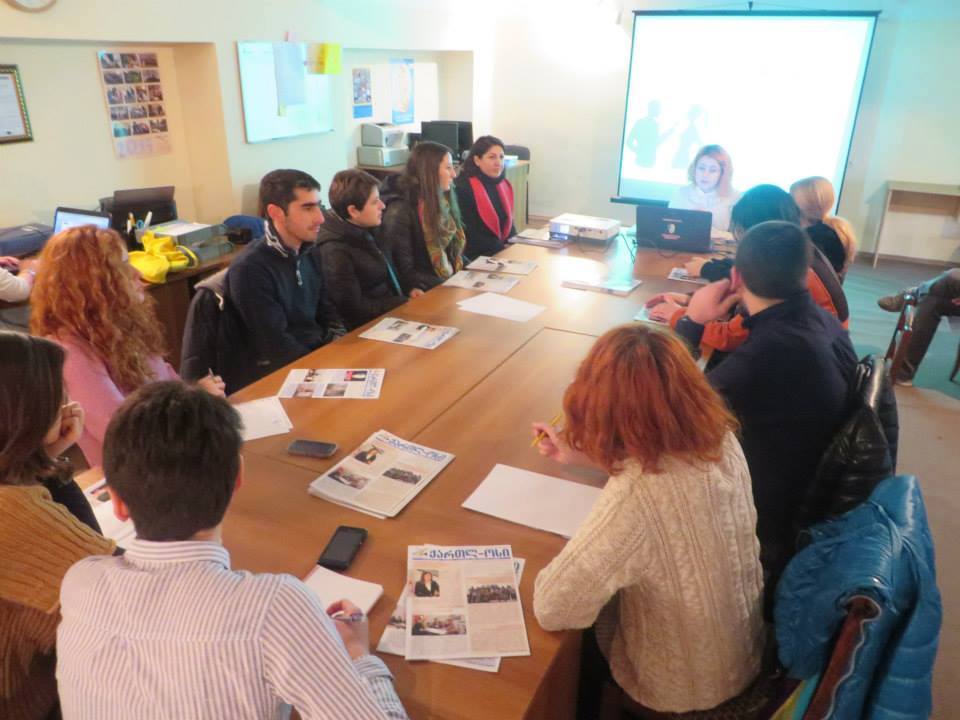
Youth training at Kartlosi. Image Source: http://on.fb.me/1C6Qcdt
While young people are often drivers of change and at the heart of peacebuilding work, they can also be the beneficiaries of peacebuilding projects. Youths in conflict affected areas often lack the opportunities they need most if future conflict is to be avoided and divided communities are to be reconciled. This is why it is important for peacebuilding NGOs to provide training to youth in conflict affected areas, providing them with the skills they and their communities need. This is part of a long term peacebuilding strategy that goes beyond the immediate requirements of conflict management. For example, Kartlosi has been involved in multiple projects that aim to empower local youth and increase their civic engagement, from teaching school children debating skills and foreign language training for local students, to media training and international exchanges. Self-governance is the key term here: training the next generation of civil society activists and community leaders who will bring about lasting change in conflict affected areas.
Youth involvement is only one part of a complex set of issues that make up peacebuilding and the long, hard work of creating a just and lasting peace. “Peacebuilding is a long term process”, Giorgi told me, and “step-by-step” organisations like Kartlosi and its young peacebuilders “will create a field for reconciliation.” The most important thing is that around the world, from Shida Kartli to Sarajevo, from Pkhvenisi to Pristina, young people aren’t waiting for permission to be involved in the peace processes that will determine what kind of future their countries have. They are already building peace in their communities.
About the Author





Very good and encouraging. I hope your study has a lasting effect in Georgia, and is taken up across the world.
I am surprised to be the first to reply, and obviously want to encourage my nephew.
[…] an earlier article, I wrote about the importance of youth participation in peacebuilding. The media is another […]