
Yolanda Alcino is stateless. She has no health insurance, can’t report domestic abuse and her children are not registered as being born.
She’s not alone. An estimated 10-12 million people globally face a similar plight. However that could soon change following the launch of a United Nations Refugee Agency (UNHCR) campaign last September, which aims to eradicate statelessness by 2024.
Alcino was refused Dominican Republic identification when she turned 18-years-old in 2007, the same year the government ceased recognising those of Haitian descent as citizens. “I don’t understand,” she said. “I was born here, I live here. Now suddenly I am told I am not from here.”
Stateless people are not recognised citizens of any nation. They have limited or no rights to education, employment, voting and movement between countries.
Leigh Foster from the UNHCR said: “Statelessness may occur for various reasons including discrimination against ethnic groups, the break-up of states or change of borders. There is not a region in the world unaffected by statelessness.”
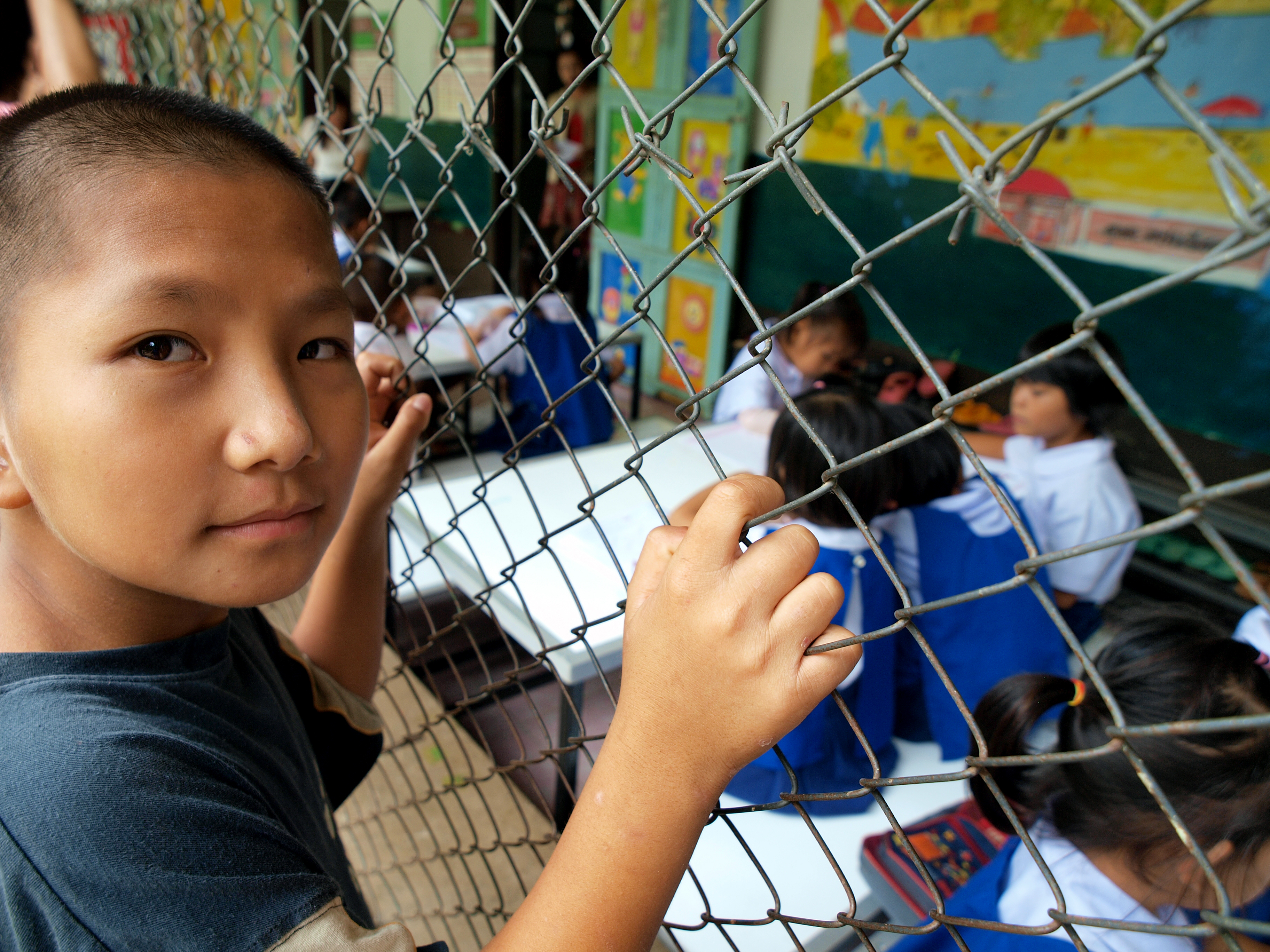
Stateless Child Barred from Thai Government School (Credit – Joseph Quinnell)
The UNHCR campaign will focus on pressing governments to implement the two UN statelessness conventions: the 1954 convention to provide rights until nationality is obtained and the 1961 convention to prevent statelessness.
Since the campaign began, seven countries: Argentina, Mozambique, Peru, El Salvador, Mozambique, Niger and Turkey, have signed up to one or both conventions, bringing the signatory totals to 85 for the 1954 convention and 63 for the 1961 convention.
However not all countries are heading in the right directing, including the UK. Despite adopting both UN stateless conventions and being one of the few countries with a statelessness determination procedure, the Home Secretary Theresa May pushed through legislation in early 2014 allowing her to strip Britons not born in the UK of their citizenship, even if it results in them becoming stateless.
As a result some campaigners and stateless people see it as an uphill battle.
“It’s a very difficult situation, even in democracies it’s a long journey to claim such rights,” said Mohamed Alenezi. Originally from Kuwait and of Bedouin descent, he faced a similar situation to Yolanda. He was stateless until he became a British citizen after migrating to the UK using a false passport.
“There are many activists trying to change things, but governments use their power against them. If they wanted, governments could tomorrow give nationality to all the stateless, but they won’t.”
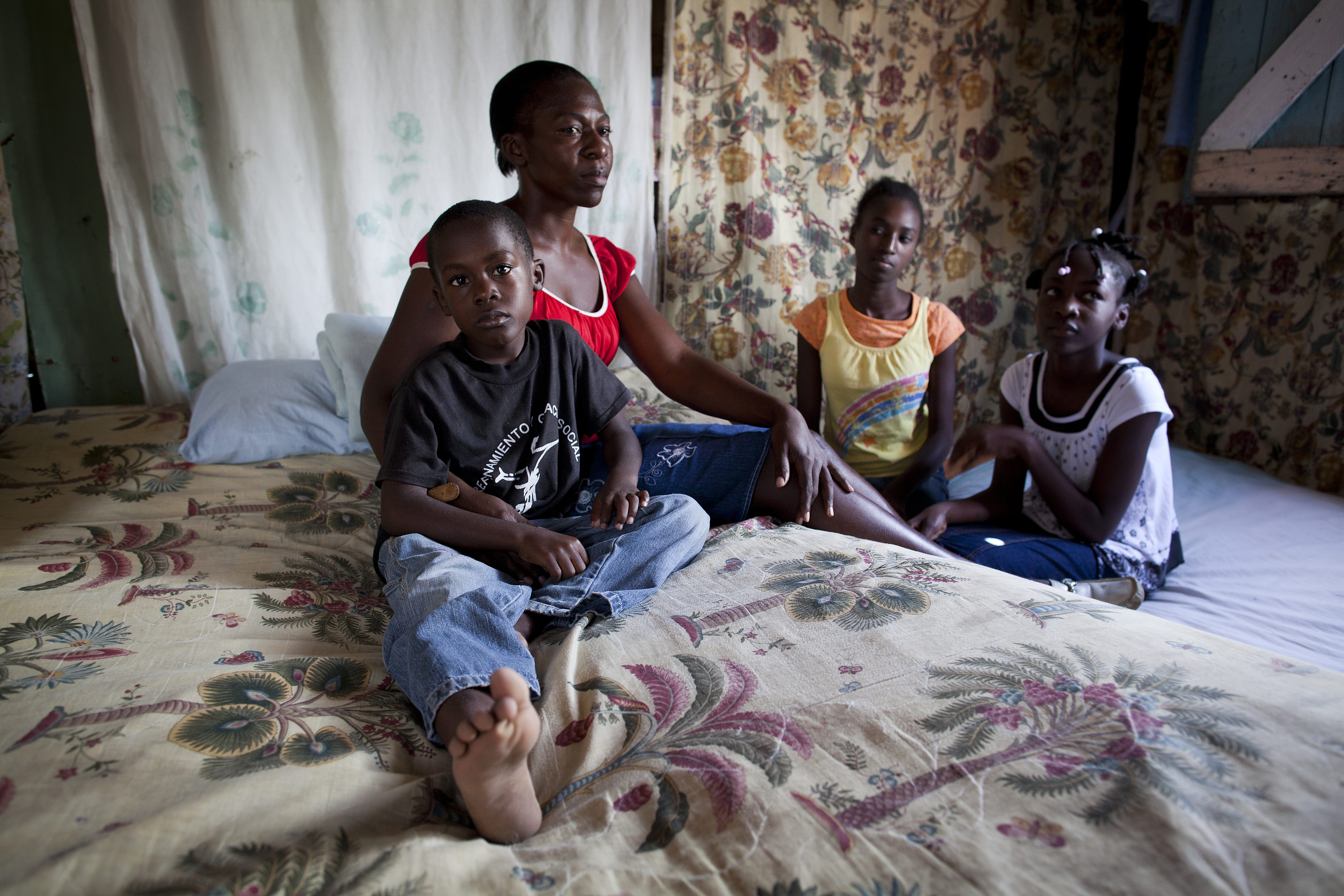
Dominican Republic: Yvonne at the home she shares with her 5 children and 81 year old mother.
She arrived from Haiti some 18 years ago after working as an activist for the deposed haitian leader Aristede. She travelled whilst pregnant, accompanied by her sister and then 3 children.
Yvonne was given a residents card in November of 1996, but it expired and was never renewed by the DR government.
Whilst she says she was never detained by immigration authorities she says that her when her 13 year old daughter was raped by a local Dominican man, she reported the crime to the Police who failed ot take any action. Not only did they refuse to press charges against the assailant but later returned and watched as the assailants family came to her home and physically beat her for reporting the incident tot he police.
She says she has escalated the complaint but no action has been taken by authorities.
She lives in a 3 room house and pays rent of 3000 pesos per month. UNHCR provided materials so she could keep in home in a decent state of repair.
Yvonne says that her first 3 children were given birth certificates in DR, but the last 2 children do not have birth certificates. Her eldest daughter is in her 2nd year of Medical School, and she has to work several jobs to help her daughter pay her way through University, where course fees run to 3500-4000 pesos per month.
She says her main complaint is the crime which is soaring in the area after the closure of the local sugar refinery. She also fears for the fate of her 2 children that do not have birth certificates as they will not be allowed to be enrolled in high school or university with proof of identity.
As well as working several jobs, Yvonne is also Vice President of the Refugee Association.
UNHCR/Jason Tanner/April 2012 *** Local Caption ***

Dominican Republic: Julien Jean Larosse a 42 year old beneficiary of the ASCALA Project. He received his official Haitian Passport in December 2011.
Without a passport he described life as being like a ‘goat in the mountains’. With a passport, he says that if he dies in the street then at least he can be recognised, identified, he IS someone.
Coming from Haiti in the 1990’s to work the sugar plantations, he now buys and sells good int he community, However, some weeks ago a thief tried to steal his goods and when he resisted, he was shot twice in the leg. He says he managed ot get to hospital and have the wound treated but as soon as the hospital realised that he did not have official papers they refused to do surgery on the leg, merely removing the billets and dressing the wound. He no walks with a sever limp that will prevent him seeking any employment that requires physical movement or extensive use of his legs.
He says he stumbled upon the services of ASCALA 4 years ago when he was starving and in need of food. He was given food and encouraged to apply to apply for a passport on condition that he personally met 50% of the cost of the passport and ASCALA met the remaining 50%. Each passport costs US$80.
ASCALA helps Haitians in the community of San Pedro Marcoris obtain official identity papers such as birth certificated and passports (Haitian).
UNHCR/Jason Tanner/April 2012 *** Local Caption ***
About the Author






[…] the full article on The International Political […]