
Throughout the last 60 years, the Colombian government has made numerous attempts to tackle one of the world’s oldest and largest, internal armed conflicts. Negotiations continue today in a bid to end to the war with Fuerzas Armadas Revolucionarias de Colombia (FARC).
These attempts at negotiation come as a response to the complex relations between the armed and unarmed actors involved in conflict and the understanding that a military solution will not bring about peace. The government, interest groups and NGOs have brought to the public agenda a new preoccupation with ending the conflict that was born out of drug trafficking, ideology, social discord, war for control of territories. This may well be one of the last chances to negotiate peace in Colombia, according to representatives from the Catholic Church, NGOs and different leaders from within Colombian civil society. These negotiations offer a golden opportunity as they have come at a time of huge public support for a negotiated end of conflict, something previously disliked due to the former failed attempts.
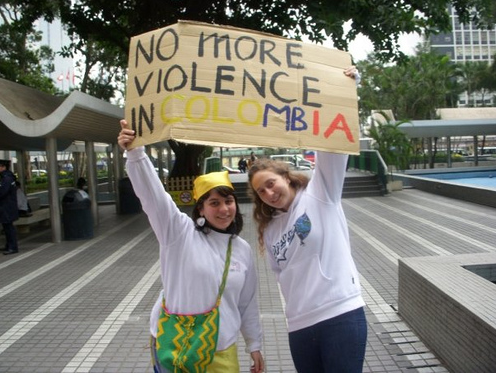
Can there be an end to violence in Colombia? Image Credit: equinoXio/Flickr
As a result, it is important for the process to be participative and assertive in regards to the opinions of different sectors within Colombian society. Successfully overcoming the conflict is not possible and would be politically immoral, if the solutions lack support from the public who have been so thoroughly engaged in the violence.
In Colombia, the government has enabled different mechanisms for participation in order to give legitimacy to the process and to make it viable in front of the media and the international community. The issues that are being discussed are about the political projects of the government and FARC and the agenda includes issues about land and models of development for the current government; ultimately these are issues relevant for the whole of society.
The mechanism activated by the government is a website where every Colombian citizen can send a proposal for discussion in the official negotiation rounds in Sweden. The site has received more than 4000 proposal from different citizens and associations that have been presented to the representatives of both FARC and the government, as possible solutions and as matters to be discussed. Nowadays, the internet is a vital tool for legitimising and making peace negotiations effective. The events of the Arab Spring and other new social movements based on the interaction of anonymous people on social media networks have shown that importance of the internet as a tool for mass social mobilization.
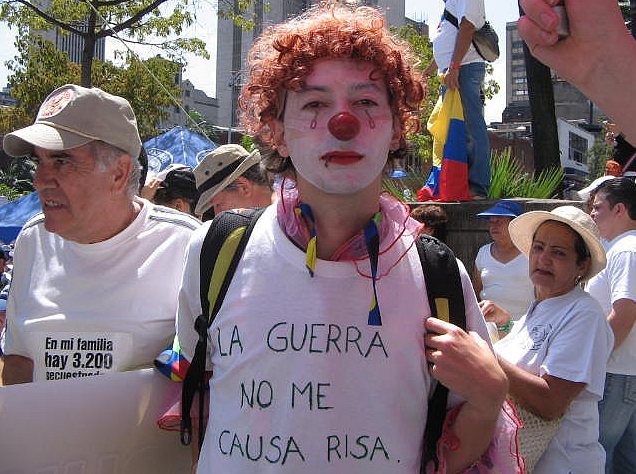
Image credit: medea_material/Flickr
For this new strategy, neither the government nor FARC had expected such a high level of public response. In the past, negotiations had involved the participation of interest groups and different members of the public, conducted by different kinds of mechanisms that included public consultation (for example the Mandato Por la Paz in 1997, a consultation that called on the government to end the armed conflict with Farc), rounds of conversation with representatives of NGOS and political and economic groups as well as public proposals made by different social groups. However, none of these attempts have triggered as much response as the meetings in Oslo this year.
Beyond the internet, the government has also accepted proposals from special meetings with Colombian organisations for victims of the conflict, NGOS and other groups. This participation is fundamental and it will not be useful if these demands are ignored at the Oslo negotiations. However, they must be handled carefully because not all the proposals created by the public can be met and the negotiators must not appear to favour particular groups. In short, they must work to follow the priorities of the previously accorded agenda.
Peace is a common objective shared by the general public, the Colombian government and FARC, but it can fail if the meetings do not establish some early agreements enough basic realities and requirements for society, such as land ownership. The content of the proposals sent via internet could well be a guideline for the negotiators as it is so important for them to keep the attention and support of the public. The former president, Alvaro Uribe Velez has sought to discredit this round of talks, with the support of some Colombian organisations on the basis that FARC is a group that should not be recognised or viewed as an equal nor worthy of meeting with to discuss the future of the country.
Proper use of the internet and its available tools could be a fast and accurate way to measure the responses to the negotiations and to assure their legitimacy.
About the Author





