
March of 2011 marked the beginning of the Syrian revolution. The struggle that rages on as I write this article has seen the lives of at least 60, 000 Syrians claimed by the regimes’ war machine. This astonishingly high figure means that the conflict has now passed the point of no-return. Yet some are still uncomfortable with calling it a revolution. The United Nations, for that matter, recognises it only as a “civil war”. Regardless of these discrepancies, all seem to agree that this revolution is at its final stages; the fall of the Assad dynasty is imminent.
On the internationally recognized opposition coalition:
Late last year, the US, along with its ally Qatar brokered a deal to unify the anti-Assad opposition. Once formed, the new alliance was hailed as the legitimate representative of the Syrian people and many donor-nations have pledged significant aid to the cause, which essentially amounts to the arming rebel fighters.
This move was very radical, for the US and its international allies refused for months to promise any kind of aid to the rebels. On the ground, the absence of defensive gear, such as anti-tank and surface-to-air missiles enabled Assad’s regime to pour bombs on civilians free from any resistance, leading to massive casualties and massacres that have shocked the world
The alliance, known as the “National Coalition of Syrian Revolutionary and Opposition Force”, has been the organization of the transitional period. It has an lengthy name, but what it doesn’t have is revolutionary legitimacy as it has not sprung from any revolutionary forces on the ground. As the regime heads further towards total collapse, because of heavy territorial losses and internal desertion, the international community seeks an entry point into the path towards the post-Assad era, so they can help define what it will look like. In the new Syria, the grassroots revolutionary structures and organizations will have to fight hard to stay on top and avoid losing all their power to the umbrella and maybe puppet, coalition.
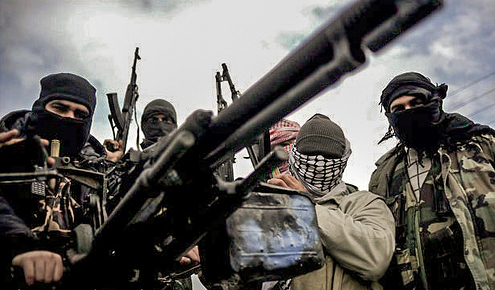
Syrian rebel army patrol an area near Homs (FreedomHouse/Flickr)
Islamisation of the revolution: “The Threat”
The term “Islamisation” has been thrown around since the first few months of the uprising. Many cited it as the reason the rebels should not be backed in their efforts to oust Assad. There were fears that any military aid could fall in the hands of pan-national Jihadi groups allied with Al-Qaida. However, viewing political Islam as a threat is not coherent with the current western countries’ foreign policies. Both Egypt and Tunisia, are governed by Islamist parties and continue to be allies of leading western countries.
On the other hand the “Islamisation” itself is not consistent with the facts on the ground. If there were any Islamist-hijacking of the Syrian revolution, it would have happened in the first day of the revolution; the protests in Syria started from within the Mosques on every Friday following the weekly prayer.
The threat of Islamisation is a vicious pretext used by some in the international community for failure to prevent large scale massacres by the Syrian regime. Realistically, the Islamic influence in the Syrian revolution has to be recognized as a legitimate choice by the Syrian people. In the post-Assad era, the ballot should be the only way to discriminate against any political affiliation.
The US and “Islamic terror” in Syria:
The US has officially designated a key fighting group in Syria, “Jabhat Al-Nusra” (Arabic for: “front for the help”), as a terrorist organization, in part due to the group’s jihadi take on the war. Moreover, Jabhat Al-Nusra rely more on foreign fighters than other Syrian free army battalions. The action by the US was aimed at “isolating extremists” from other rebels. The effects of the listing, both to date and projected are of strategic implication and unfortunately detrimental both to the US and Syria.
This move was countered by widespread popular protests in Syria. The US attempts to alienate the front has created and strengthened a new enemy. While hampering the revolutionary war effort, the gained popularity is drawing Jihadi pan-national ideologies closer to the Islamic mainstream. For Syria, this may poses a threat on the democratic process yet to come. After the US listing, which antagonizes the front, the threat of hostile attacks aimed directly at America’s interest looms greater.
Repelling the designation seems to be the wisest action until the revolutionary war effort ends and the standing of each group in Syria is made clearer.
Iran and Hezbollah: After Assad
In the international arena, Iran is one country that is most threatened by the revolution. Even though its ruling regimes differs radically on ideology, Iran has forged a precious alliance with Assad. Through their pact, Iran has been able to threaten Israel directly and has been accused of supplying Hezbollah with arms through the shared Syrian-Lebanese border.
The alliance with Assad, gives Iran considerable leverage in any negotiations with its adversaries. Aid from Iran and Hezbollah proved vital to the sheer existence of the Syrian regime, however, the image that they cultivate in Arab countries, as an Islamic force for the oppressed people in the fight against their puppet, western-backed governments, has fallen. It is not a question anymore of whether Iran is aware that the current status quo in Syria is unsustainable, the question is how and when will they dump their costly ally, Bashar al-Assad?
Revolutionary Aspirations: A Free Syria
The dawn of liberation from the oppression of Assad and his party is near. Nevertheless, the birth of a free Syria will be as difficult, if not more so, than its liberation.
The aspirations of Islamist factions fighting in Syria will inevitably clash with their liberal rivals in the opposition and this clash could be fatal to the hopes of Syrians. However, if the democratic institutions to be created are solid enough to accommodate both parties, the worst can be averted.
Equally, pervasive foreign influences will threaten the sovereignty of Free Syria. Aid from rich countries will definitely be coupled with attempts of interference with internal political choices. The socio-entrepreneurial spirit that the revolution produced is the best assurance and asset of Syria’s future and a wealth of new media outlets, NGOs, administrative prowess and decentralized governance experience should be the cornerstone of the new state. Moreover, the volunteering and social-work spirit can help in the difficult task of rebuilding a country currently in ruins.
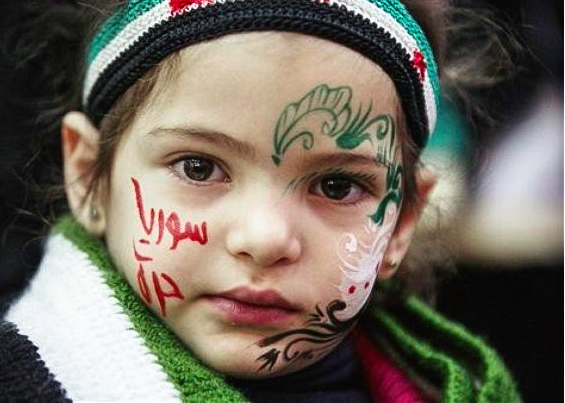
A Syrian girl living in Yemen with colours of the Syrian revolutionary flag painted on her face and Arabic that reads,”Syria is free.”(FreedomHouse2/Flickr)
Sourya Bedda Houriya! (Syria deserves freedom, a popular slogan in Syria)
About the Author






good analyze
Thank you. greatly appreciated.
سميرة المرابط
بارك الله فيك فراس، بداية موفقة ان شاء الله ،أرجو لك مستقبلا زاهرا!
شكرا شكرا سيّدتي.
Perfect !
This is helpful, good work! 🙂 Although you mentioned the International security concerns of the revolution very briefly.