
Ten years ago today, on March 19 2003, the USA and its allies launched the second Iraq war in a bid to radically change the face of the region. To this day, after the toppling of Saddam Hussein’s regime and the complete withdrawal of coalition troops, we see no change. Thousands of lives, millions of refugees and billions of dollars later, the violence continues as the country enters a decade of uncertainty. What has the world learned from ‘Operation Iraqi Freedom’?
While toppling a dictatorship and freeing the people may be a noble endeavour, the Bush administration and top military officials in the Pentagon failed to look to the future. The administration squandered any chance at a fast reconstruction of the country when it failed to heed the ethnic and religious complexities of the country and focused instead on attributing rebuilding contracts to the highest bidders trying to solve the vast quandary by ‘throwing money at it’. This created a bureaucratic merry-go-round that is still on-going today revealing the tip of the iceberg as reconstruction efforts achieved nothing.
The initial operation should have been, in essence, a matter of unifying the freed Iraqis and coordinating military efforts in order to keep the country safe. Instead, the reconstruction operations were outsourced to unscrupulous private military contractors laying bare American intentions of taking over the considerable resources of Iraq.
This strategy, or lack of one, has drawn the country in a spiral of violence with no way out in sight. In the process it has taught the United States an expensive and bloody lesson laying bare a reckless foreign policy and showing that while military actions can be seen as promising and even positive on paper, this is certainly not the case on the ground. What this military expedition has taught us is that, entering a war is easy, but achieving tangible and durable results and getting out of it is the hardest part.
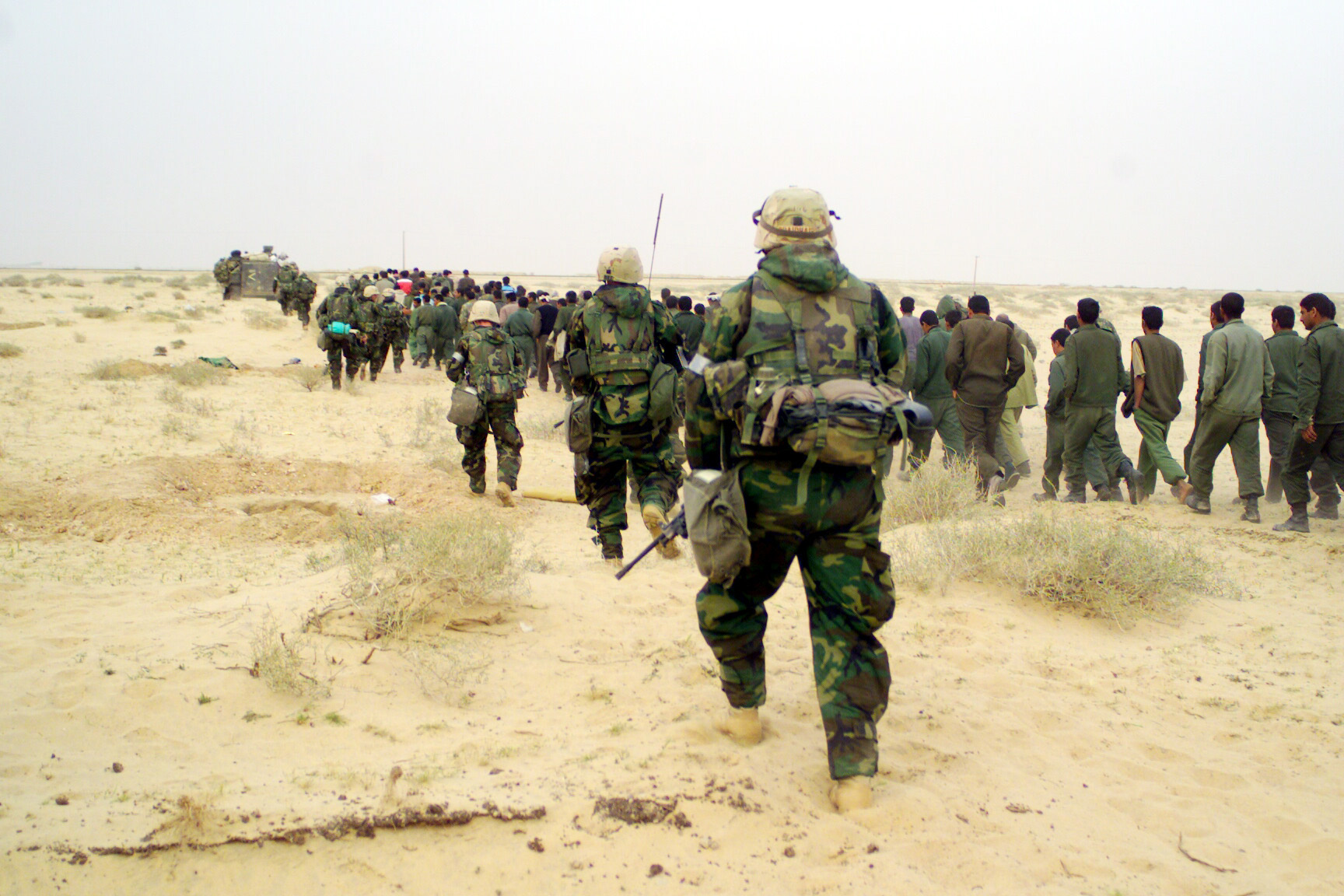
Image Credit: US Marine Corps
Are the Neoconservatives, massively present in the Bush administration at fault here? Certainly for having steered US policy after the 9/11 attacks in a direction concomitant to their ideological agenda and for having influenced a president with little experience in foreign affairs. Though it is too late to point fingers the fact is that, no matter what kind of administration is in power, U.S foreign policy still relies on the antiquated cold war ideology of ‘spreading democracy’. Elections in Iraq have happened, but the violence between Shhites, Sunis and Kurds continues unabated. People are still dying; money is still being spent aimlessly. To put it bluntly, President Obama, now entering his second term in office, has a lot on his plate. He needs a thorough exit strategy on this one, for fear of this turning into the biggest military blunder since Saigon in ’75.
Pessimistic attitudes aside, there is still hope. As President Obama’s re-election slogan states ‘FORWARD’. For the sake of the country, let us hope he moves U.S foreign policy towards an era of sensible decision making, a responsible approach towards other nations and even-handed policies in the Middle East.
About the Author






Great insight. Looking forward to more comementaries from Nadim Souss.
Great article on Iraq Nadim – such an important and timely subject. I would like to know more about how the violence between Shhites, Sunis and Kurds can be calmed and resolved with the support (both financial and practical) from Obama, the US and the West – is it possible?