
UN Resolution 1738 (2006), Article 79 of the Additional Protocol I of the Geneva Conventions (1977), and Article 19 of the Universal Declaration of Human Rights (1948) jointly protect the rights of all journalists and media personnel in dangerous areas of armed conflict. In spite of international agreements recognizing the freedom of press as a human right, journalists in traditional and digital media, working in conflict zones or under oppressive regimes, risk being targeted, detained, and sometimes never released.
The Regent’s College Media and Society Series hosted UK Director of Reporters Without Borders, Heather Blake, to discuss their NGO work in promoting freedom of information and defending the human rights of journalists. Founded in 1985 in France by four journalists: Robert Ménard, Rémy Loury, Jacques Molénat and Émilien Jubineau, RSF has correspondents in 150 countries and has consultant status at the United Nations and UNESCO. As one of the world’s leading effort to protect journalists and freedom of information, RSF’s mission is:
- To continuously monitor attacks on freedom of information worldwide;
- To denounce any such attacks in the media;
- To act in cooperation with governments to fight censorship and laws aimed at restricting freedom of information;
- To morally and financially assist persecuted journalists, as well as their families;
- To offer material assistance to war correspondents in order to enhance their safety
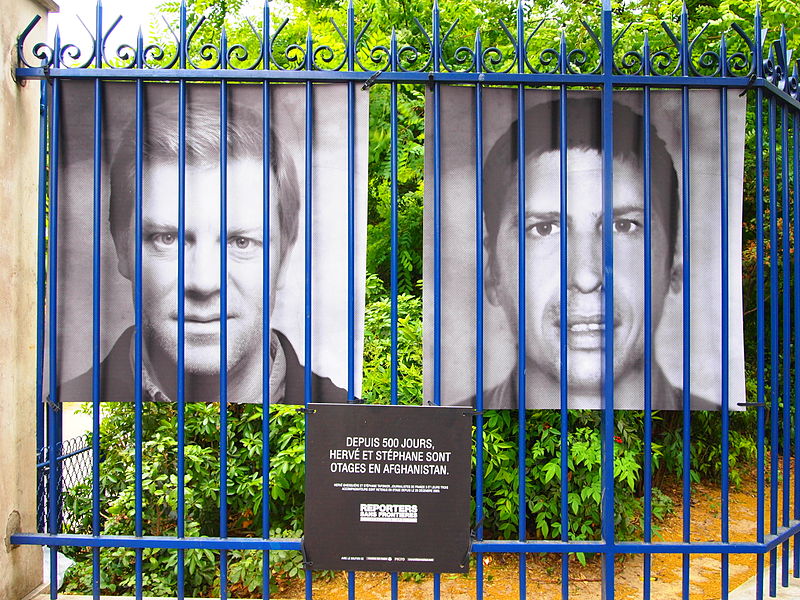
A display by Reporters Without Borders, raising awareness of two reporters who had been held hostage in Afghanistan for over 500 days. Image: Wikimedia Commons
Ms. Blake underlined that freedom of information is a fundamental universal human right while pointing out examples of abuse and mistreatment of journalists in the Middle East and North Africa. When reporting on the brutal governmental crackdowns in the recent Arab Uprisings, local and foreign journalists were often times harassed, detained and frequently had their cameras and equipment confiscated or thrown to the ground by armed state officials or rebels.
For example, with Syria’s harsh censorship laws and surveillance prohibiting traditional and digital news outlets from exposing the truth to the international community, there are alarming cases of journalists being kidnaped, imprisoned, killed, or threatened to have their families harmed.
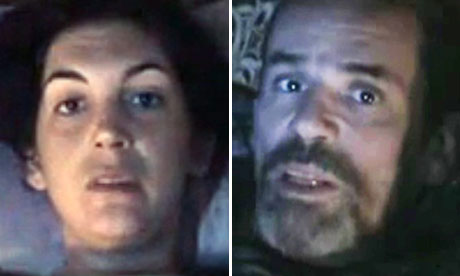
Journalists Edith Bouvier (left) and Paul Conroy were kidnapped in Syria in 2012. Photograph: AFP/Getty Images
Ms. Blake reminded us that, ‘Freedom of information is the foundation of any democracy. Yet almost half of the world’s population is still denied it.’ Whether newly installed governments in the post-Arab uprisings region will recognize freedom of expression and information as a fundamental universal human right remains uncertain. However, RSF encourages the wider international community to be actively informed and partake in citizen journalism to focus attention and denounce human rights violations practiced by corrupted governments and armed militants. Perhaps in the long run with greater social action towards this global cause, torture, war crimes against humanity, massacres and genocide could be prevented. Reporters Without Borders promote and defend the rights of all journalists because ‘when you silence the media, you silence citizenry.’
About the Author





