
What are the chances that an average Egyptian watches Bassem Youssef’s show? Considering digital-television penetration in Egypt is less than 58%, slim to none.
Bassem Youssef’s arrest has garnered international media attention. His stunts as the presenter of a satirical political program, ‘El Barnameg’ on the CBC television channel made him popular around the world, with videos of his strips viewed thousands of time on Youtube. Still, considering internet penetration in Egypt, which is at a mere 35.6%, it is unlikely that Egyptians have ever actually come across him, or laughed at his jokes.
What every-day Egyptians do come across on a daily basis, however, is poverty, inequality, and the lack of access to basic medication and education. Often, they’re left with nothing to do but laugh at their situation, which has been at a stalemate for years. Literacy rates in Egypt rose by a sheer 4.1% between 2000 and 2010 (from 74.1 to 78.2 %), compared to the annual Internet growth rate of 8.14%. Why is it that there are more people being given access to the World Wide Web, and being taught how to use it, than those being taught how to read and write?
The estimated 5.5 million Egyptians living in slums in urban areas won’t know what the large black hat that Bassem Youssef wore to his courthouse appearance was meant to poke fun of, and not because they don’t know that President Morsi was awarded an honorary PhD during his recent visit to Pakistan; rather because they’re probably unaware of the significance of a PhD or what it means to ones career. A career they probably don’t have.
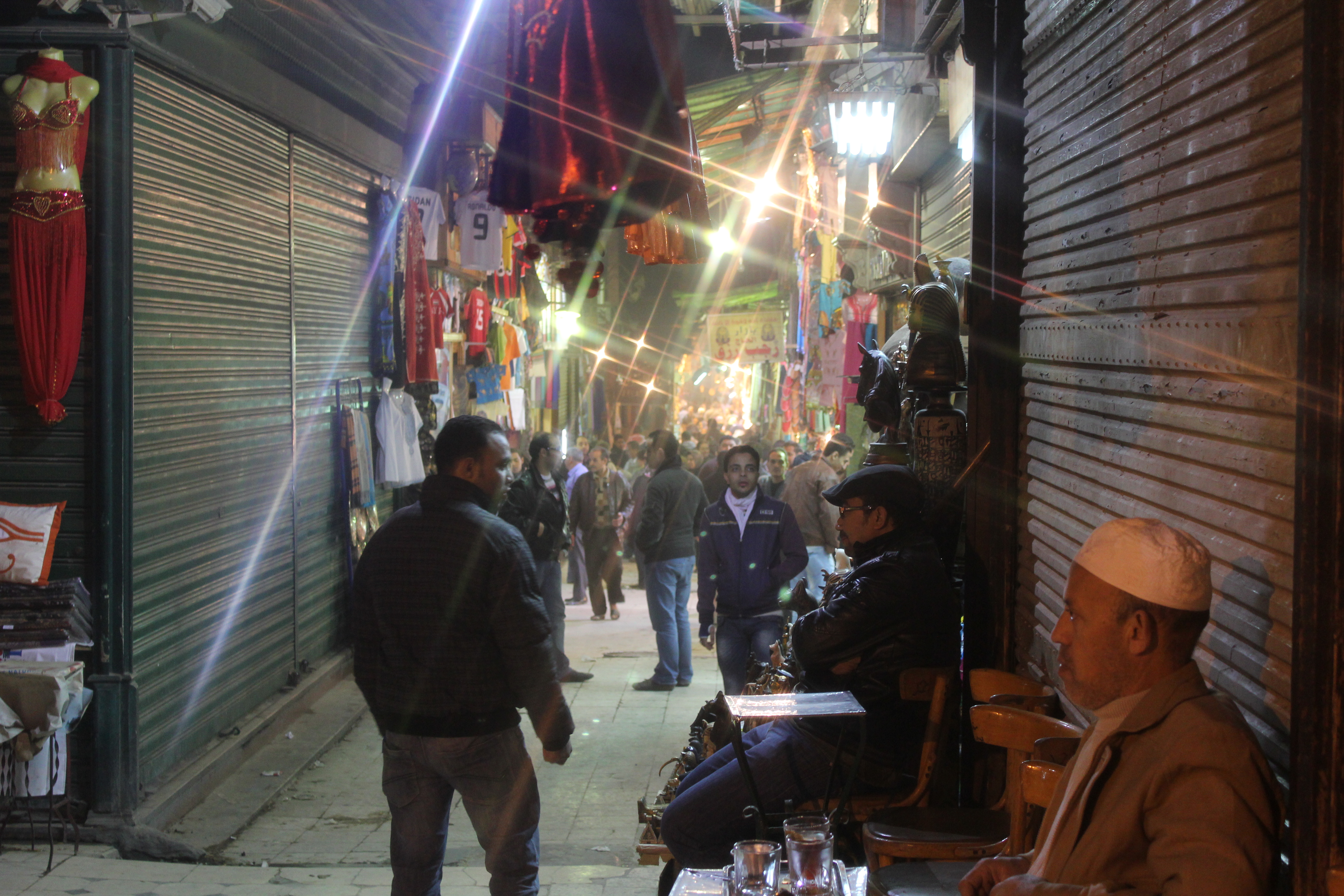
Streets of Cairo, with not a TV in sight. Image Credit: Yasir Khan.
Indeed, it’s a miracle that the Egyptian government has time to watch television shows or focus on the likes of Bassam Youssef when the country is suffering an unemployment rate of 13%, or when its tourism industry, which accounts for one-eighth of the jobs in the country, shrunk by 30% in 2012. Perhaps rather than arresting a man who has the courage to speak his mind on national television and say something that could possibly be deemed offensive by a small percentage of the Egyptian population, the government should focus on arresting the cowardly men who offend at least 50% of the Egyptian population: the men on the streets of Cairo who whisper, shout, and murmur obscenities to women as they harass them.
The likes of Bassem Youssef did not lead the Egyptian revolution that toppled Mubarak; TV hosts and social media celebrities weren’t the reason that the regime fell, rather they acted as an accelerator to a car that was already going at 80 miles per hour. The Wael Ghoniem’s of the revolution brought attention to it and to the injustices that occur every day, and yes, during the revolution there were thousands who were being arrested for what they posted on Facebook or Twitter, just like Wael. How many people are being arrested for referring to President Morsi as ‘Super Morsi’ now? What is limiting the freedom of speech in a country where the rights to healthcare are limited? A distraction from what really matters.
Bassem Youssef is brilliant. To many, his sharp wit serves as a distraction from counting down the days till the next pay-cheque comes in so they can pay their medical bills. What’s even better is that when he’s not distracting the 58% or so of Egyptians who might watch his television program, he is putting his degree in cardiac surgery to good use. Perhaps the entire television show is a distraction from saving lives.
About the Author





