
When educational leaders claim that the Future of Education is in Choice, they are spot on. The new global information age will level the playing field for education across the world. As we speak, thousands of teenagers browse the webpages of universities they aspire to attend. Right now, these same universities are placing more content online than ever before, with the Massive Open Online Courses (MOOCs) opening a revolution in e-learning.
Across Europe, teenagers are looking abroad in search of better (and cheaper!) educational opportunities, even in countries that boast highly prestigious higher education sectors, such as the United States and Britain. Employers themselves highly value study abroad experiences, making Universities seek more and more partnerships with other institutions in far-away countries. Even abroad, this globalisation trend has provoked a rapid growth in the number of English-taught programmes in non-English-speaking countries.
However, in spite of these transformations, for most, the choice of an educational institution, particularly at a pre-tertiary level, remains predominantly local. Considering only Higher Education, there are two obvious objections. Dozens of millions in Europe, and billions across the entire world, are disenfranchised by the disparity of secondary education programmes, and the little knowledge we have of each other’s programmes. Rather more insurmountable than lack of information about different qualifications is the problem of costs. For too many, higher education is a luxury, let alone study abroad. While the grant in the EU’s renown Erasmus programme has helped combat this, there is no sign whether it will fall victim to Europe’s self-defeating obsession with cuts. If we consider primary and secondary education, these issues are accentuated by greater difficulties in mobility and equal and fair access to education – parents have to take time or pay money to take their children to and from school. There is a limit to how far a school the government can ask a child to attend, especially if this is because (s)he isn’t ‘good enough’ for the local school.
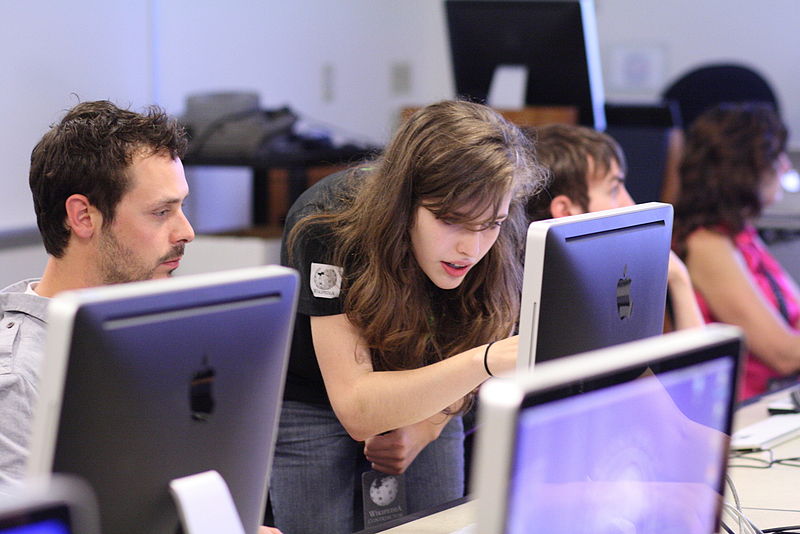
Image Credit: Sage Ross/Wikipedia
If there are so many practical problems with implementing school choice, why has it stubbornly remained an issue to be reckoned with in the field of educational reform, with recent successes such as the Free Schools initiative? The answer lies in the ideological agenda that is hidden within. The greatest problem with school choice, and the depraved privatization agenda that has been enacted in its name, is the same problem pedagogues have with grammar schools. While we all empathise with the ideal of a better education, it hardly seems fair to give up on delivering this to a given section of the population, because of their performance at a certain age or on a certain test. Regardless of whether tuition fees even come into the picture to make this solution even more toxic, the effects of greater school choice equate to those of grammar schools: segregation and alienation of the poorest and least ‘able’ in society.
My contention however does not lie with those who wish to establish a meritocratic society. While I’d rather have a society that is both inclusive and rewarding of merit, my argument is instead that this system is not at all meritocratic, for different talents get unappreciated and underdeveloped. It is saddening that public discourse on education reform focuses on increasing assessment and rote learning, when educators warn us of a greater need to teach our young soft skills and to adapt to their different learning style preferences, interests and vocations. It is curious that the Right do not criticise these less-than-traditional educational techniques in the private schools they want the State to help fund, through vouchers and other such measures. The hypocrisy of their privatisation agenda is that they are unwilling to give to the public sector what the private sector has achieved through years of speculation, dispossession and excess profits. If we want an independent and progressive education policy that can have a positive impact on our schools, we must resolutely reject the privatisation agenda.
We must revisit and rethink our vision for education. In my view, the concept of choice is not mistaken. We cannot slip again into a spirit of ‘one size fits all’ that stinks of a distant and disconnected bureaucracy. Just as we reject the determination of life possibilities by social and economic elites, we should do the same about the government’s attempts to bind individuals to a certain life path. Instead, we should design our curriculum to fit, making it broader, more diverse and inclusive. The solution is simple, and ticks all the usual boxes for sensible educational reform: give teachers greater autonomy in designing modules, let students choose and help them discover which modules are right for them, and use new technologies to widen choice and access as much as possible.
To empower, through collective action, the average Joe and Jane to choose their future for themselves, and thereby build a fairer society – This is Education’s Vocation, which our schools are frustrating. We can and must change that.
About the Author






[…] This article was originally published in the International Political Forum, the home of politically engaged young people across the world. You can find the original article here. […]