
The by-election victory of Aung San Suu Kyi last year promised much hope for Burma. Since then, and with pressure from the international community, the government of Thein Sein has been slowly forthcoming with reforms. However, abuses committed against the country’s minorities in recent months – in particular the Muslim population – have threatened to stall progress.
The targeting of Muslims in Burma is nothing new. In 1962, the then Prime Minister Ne Win introduced a series of anti-Muslim laws which, since then, have created a palpable tension between the country’s majority Buddhist population and the Rohingya, a native Muslim minority who currently number around 800,000. Further to this, legislation was passed in 1982 effectively denying the Rohingya Burmese citizenship: it is difficult for native Muslims to travel between townships without strict special permissions, and the number of children that Rohingya can have, as well as their rights to marriage, is also restricted.
Hostility towards Burma’s Muslim population goes back further, though. Many originally came to the country on the back of the British Empire to work and live, but this has been manipulated by anti-Muslim protestors to portray the Rohingya as a people who took local jobs and eroded national culture. Yet those who resent the presence of the Rohingya forget that they were residing in Burma for some time before the British arrived. The Muslim population, it seems, is an easy scapegoat for those with pent-up anger.
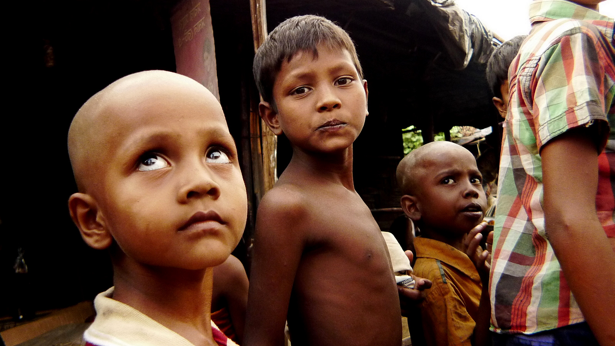
Rohingya children on the Bangladesh-Burmese border. Image Credit: No_Direction_Home/Flickr
In some ways, however, the newly found reform-mindedness of the government may have in fact inflamed, rather than cooled, ethnic tensions. Indeed, the very fact that the government is loosening its iron grip over the country may in reality have served to open up old wounds. Fifty years of draconian rule is being peeled away, but is revealing a new, darker face to Burma: one in which once-peaceful Buddhists are taking to the streets and inciting racial violence. This has perhaps most startlingly manifested itself in the self-proclaimed “969 Movement”, which openly promotes anti-Muslim rhetoric.
According to the organisation Human Rights Watch, more than 125,000 Rohingya and Kaman Muslims have been internally displaced since June of last year. Despite international condemnation of attacks against Muslims, the issue refuses to die down: last week 15 children died from smoke inhalation when a building they were in caught fire (although the government was quick to paper-over the story, claiming it was an accident caused by an overheating transformer). Three weeks prior to this 43 Muslims were killed when violence broke out in the central city of Meiktila, leaving a further 12,000 homeless. Harrowing satellite images have revealed the scale of the destruction in the city after more than 800 homes were laid to waste.
Many of those affected by the violence now live in segregated camps. Here they are guarded round-the-clock by government personnel and are not permitted to leave. The conditions inside these camps are also appalling: food and water are in short supply, there is little adequate shelter and access to proper medical treatment is scarce. The displacement of tens of thousands of Burmese Muslims has even prompted some human rights agencies to call the situation a “humanitarian crisis”, and has raised the possibility of a UN intervention.
Yet the Rohingya are not the only of Burma’s minorities to have been alienated. In Kachin, Burma’s northernmost state which borders China, the native people (who share their name with the region) are suffering a similar fate. The area – known for its richness in natural resources including jade, gold and tropical hardwood – has been a hotbed of political ferment. The ongoing dispute over a controversial dam site to be built in the area, which boasts strong hydroelectric potential due to its location on the Irrawaddy River, has been at the forefront of protests.
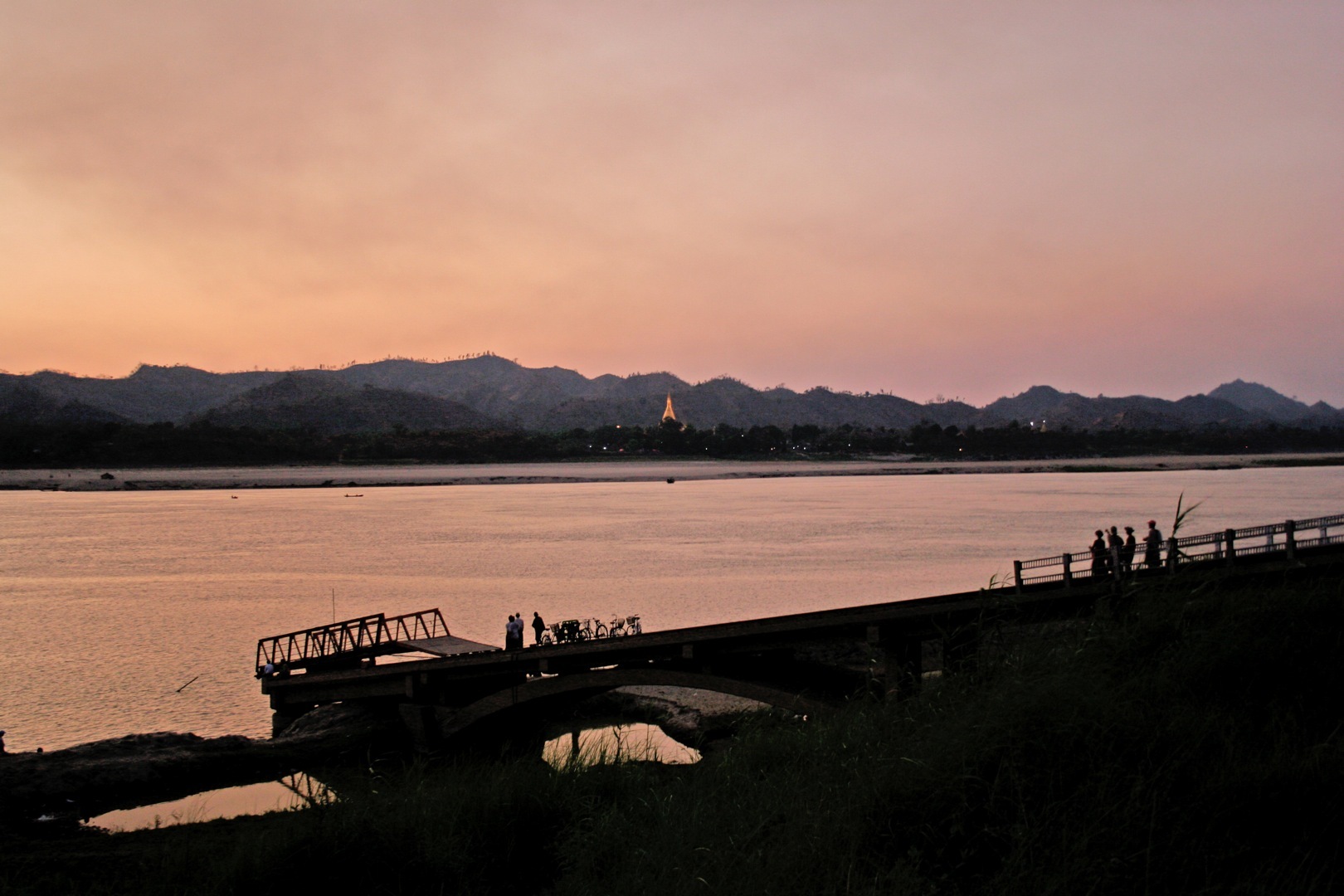
The sun sets over the Irrawaddy. Image Credit: Jean-Marie Hullot
The Myitsone dam project, which is run from Beijing, was set to generate electricity for China in exchange for $17 billion over a fifty-year period. The project, which now looks set to be put on ice, highlights the plight of the native Kachin people. Since an army attack on a Kachin Independence Army (KIA) outpost near the dam site last year, more than 75,000 natives have been forcibly displaced. Many are now stranded on the Chinese side of the border, where they receive minimal aid, whilst a further 12,000 have been moved into Chinese-built ‘model villages’ in a ruthless attempt to clear space for the dam. Due to the potentially lucrative nature of the deal, both the Burmese and Chinese authorities have turned a blind eye to human rights abuses, focusing instead on the financial gain on offer. The Burmese army, meanwhile, stands guilty of rape, torture and allegations of arbitrary execution.
The situation of Burma’s minorities, especially its Muslim population, is becoming desperate. ‘Reform’ and ‘progress’ had been the buzzwords in Naypyidaw, the country’s new capital. Now though, it looks as if the country has taken a disastrous u-turn and, instead of taking strides forward, has taken a huge leap back. The latest bout of violence will test the gumption of both the government and the country’s talismanic icon, Aung San Suu Kyi. Now, more than ever, they must show strength to overcome what may be one of the biggest obstacles in the way of a peaceful and democratic Burma.
About the Author






[…] Related: Nowhere To Turn: The Eviction of Burma’s Minorities […]
[…] http://archive.the-ipf.com/nowhere-to-turn-the-eviction-of-burmas-minorities/ […]