
At only 14 years old Luis took his first steps towards entrepreneurial innovation by teaching himself computer science and the ins and outs of digital electronics. At 16, he became the first ever developer of a video game system in Honduras. After moving from his home of Honduras to Colorado Springs, he met a paraplegic student who dramatically changed his perspective. Realising that high levels of technology were not always available to those with disabilities, he set about dedicating himself to providing inexpensive solutions for the benefit of others.
Hundreds of hours of research and troubleshooting later, Luis’ admirable persistence and dedication paid off. Luis had created his own eyeball-tracking device that detected eye movements and worked to form words on a computer screen, allowing disabled people such as paraplegics and quadriplegics, to communicate with more ease. An inexpensive system with a prototype build that cost less than $300, Luis had already developed something that would benefit thousands across the globe. Not owning a business or knowing how to get the technology to those who would need it, Luis decided to create a tutorial and published this along with the schematics and coding details. Since then, others have replicated his technology, and given the Eyeboard to disabled family members or friends. It has even been used for educational purposes.
Even with the help of a few online donors who wish to see Luis have the future opportunities for further innovations and inventions, Luis’ family have struggled to pay for his education in the U.S. Yet he still wishes to follow a path of social responsibility over one of private financial prosperity. In a question posted to his readers, he reminds us of not only his commendable entrepreneurship but the values that have guided his dedication: “Would you rather succeed in your goals, or help society? What if you could choose both?”
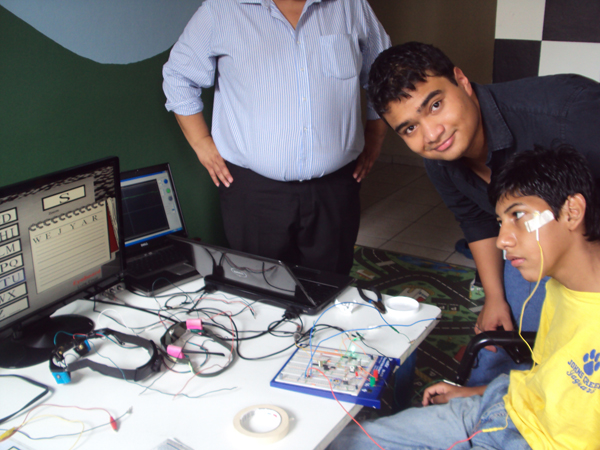
Image Credit: infosurhoy.com
About the Author






[…] mouse with their hands, to move a cursor on the computer screen. Luis Fernando’s prototype of the monitoring bioelectrical signals costs less than $300, while other similar biomedical systems are available […]