
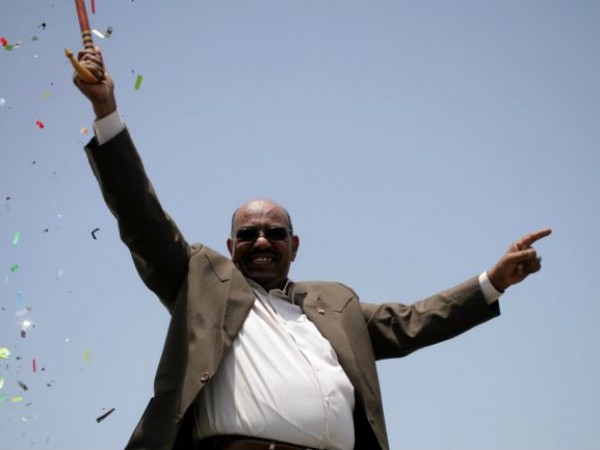
Ever since 2003, the crisis in Darfur has grown consistently worse. At the moment, human rights activists are vehemently protesting for the arrest of Sudanese President Omar al-Bashir for war crimes and charges of genocide after years of organizing and raising awareness. Why has it taken so long for action against him?
Perhaps because the conflict in Darfur has been misunderstood for a while now.
Don’t get me wrong — the millions of people that have been displaced from their homes, murdered, raped, and attacked are certainly worthy of intervention on both a domestic and global scale. Something has to be done to end the horror that the Sudanese people are constantly living in, but arresting al-Bashir is not going to put a final end to this.
First of all, the term “genocide” has not exactly worked in favor of the activists who have worked so hard to help the people of Darfur. By definition, a genocide is an planned execution of violent crimes committed against groups with the intent to destroy their existence. According to that definition, that is not exactly what happened.
When the violence began in 2003, Janjaweed fighters infiltrated Darfur and began their brutal attacks led by Musa Hilal, one of the most wanted war criminals in the world and later government aide. While many people assumed his incentive was simply driven by ethnicity, it was his father, Hilal Abdalla, that was his biggest inspiration.
Abdallah, an Arab sheik, became concerned about the changes to the land surrounding him starting in the mid-1980s. As fertile land became a rarity, herders and farmers became desperate and extremely territorial. Fast forward to 2003 after years of conflict over land (which did lead to racial divides), a rebellion began against the government due to their neglect of the ongoing regional issues. Although the rebels were initially a collective action made up of all races, the divide between who supported the government and who didn’t fell among racial lines.
While ethnicity has a part to play in the internal conflict that’s tearing Darfur apart, the driving fact behind this conflict has to do with climate change. Even though environmental issues do not equate to serious regional conflict, it has proven through Darfur’s current situation that it can lead to difficult, complex problems. Additionally, this climate change was not simply impacted by the people in Darfur only – there’s been a global influence, and that makes all of us involved whether we like it or not.
So now what do we do? Instead of claiming that the internal conflict in Darfur is only racially charged, lets talk about the other issue on hand – global climate change – and how we can deal with the root causes instead of the surface issues.
This article was originally published on the Urban Times.
About the Author





